


The Effect of Virtual Reality Exercise Program on Sitting Balance Ability of Spinal Cord Injury Patients
- PMID: 33572242
- PMCID: PMC7915104
- DOI: 10.3390/healthcare9020183
The Effect of Virtual Reality Exercise Program on Sitting Balance Ability of Spinal Cord Injury Patients
Abstract
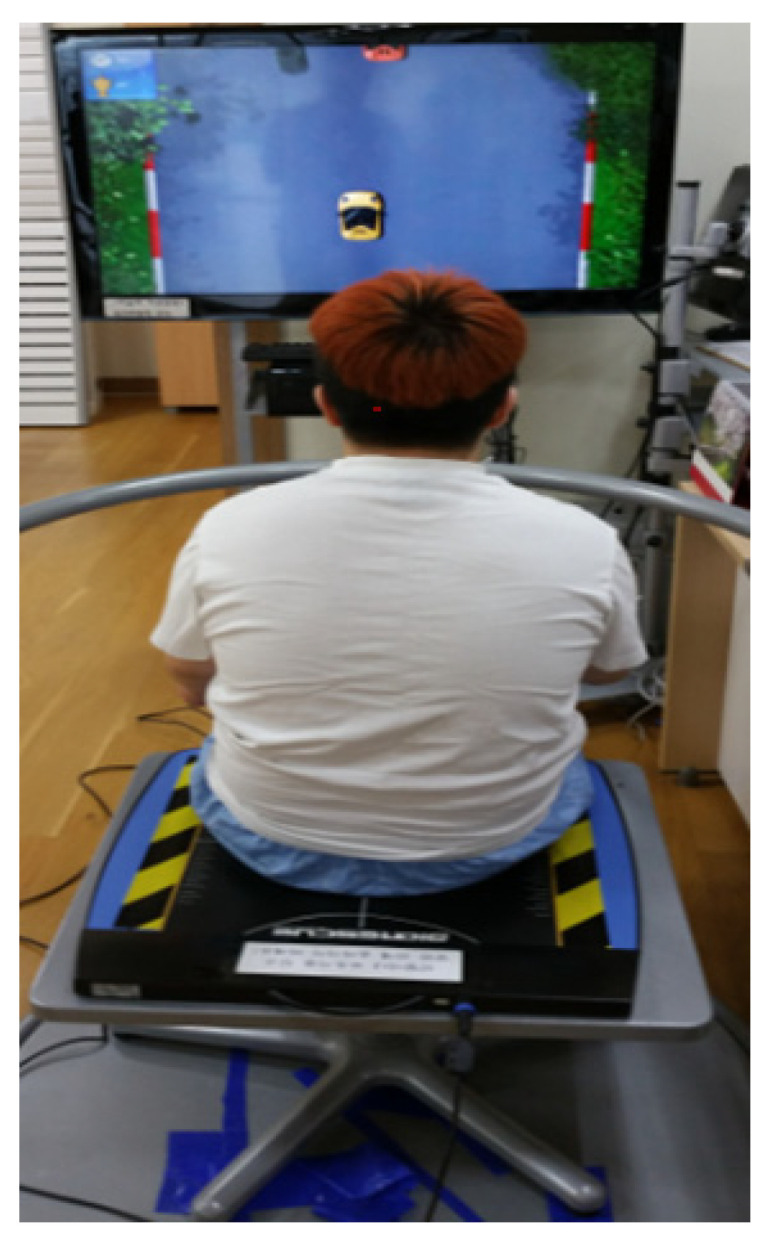
(1) Background: Virtual reality (VR) is a useful device for rehabilitation therapy. The purpose of this study was to examine the effect of virtual reality exercise program on sitting balance with spinal cord injury; (2) Methods: 20 subjects who selected on the basis of the screening criteria were divided into the experimental group (n = 10) who underwent the virtual reality exercise program and rehabilitation therapy and the control group (n = 10) who underwent a regular sitting balance training program and a regular rehabilitation therapy. Each intervention consisted of a 30-min session a day, three times a week, for eight weeks. In order to measure functions of the sitting balance, FSA (force sensitive application) and LOS (limit of stability) were used before and after the treatment intervention; (3) Results: We found significant differences for the FSA, LOS between pre-test and post-test in the 2 groups; (4) Conclusions: The findings of this study suggest that virtual reality exercise program can be applied as a useful approach for spinal cord injury patients.
Keywords: sitting balance ability; spinal cord injury; virtual reality system.
Conflict of interest statement
The authors declare no conflict of interest.
References
Grants and funding
LinkOut - more resources
Full Text Sources
Other Literature Sources
