


Inducible Pluripotent Stem Cells as a Potential Cure for Diabetes
- PMID: 33573247
- PMCID: PMC7911560
- DOI: 10.3390/cells10020278
Inducible Pluripotent Stem Cells as a Potential Cure for Diabetes
Abstract
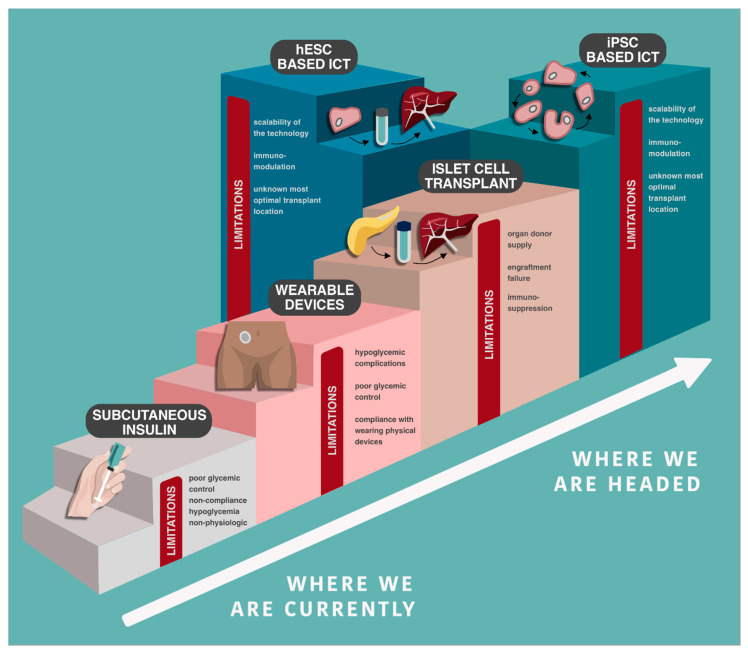
Over the last century, diabetes has been treated with subcutaneous insulin, a discovery that enabled patients to forego death from hyperglycemia. Despite novel insulin formulations, patients with diabetes continue to suffer morbidity and mortality with unsustainable costs to the health care system. Continuous glucose monitoring, wearable insulin pumps, and closed-loop artificial pancreas systems represent an advance, but still fail to recreate physiologic euglycemia and are not universally available. Islet cell transplantation has evolved into a successful modality for treating a subset of patients with 'brittle' diabetes but is limited by organ donor supply and immunosuppression requirements. A novel approach involves generating autologous or immune-protected islet cells for transplant from inducible pluripotent stem cells to eliminate detrimental immune responses and organ supply limitations. In this review, we briefly discuss novel mechanisms for subcutaneous insulin delivery and define their shortfalls. We describe embryological development and physiology of islets to better understand their role in glycemic control and, finally, discuss cell-based therapies for diabetes and barriers to widespread use. In response to these barriers, we present the promise of stem cell therapy, and review the current gaps requiring solutions to enable widespread use of stem cells as a potential cure for diabetes.
Keywords: diabetes; immune reset; immunosuppression; inducible pluripotent stem cells; insulin; islet cell transplant.
Conflict of interest statement
AMJS serves as a consultant to ViaCyte Inc., Diagon Inc., Protokinetix Inc. and Pelican Therapeutics Inc.
Figures

References
-
- Williams P. Notes on diabetes treated with extract and by grafts of sheep’s pancreas. BMJ. 1894;2:1303.
-
- Banting F.G. Nobel Lecture. [(accessed on 25 May 2020)]; Available online: https://www.nobelprize.org/prizes/medicine/1923/banting/lecture/
-
- Foster N.C., Beck R.W., Miller K.M., Clements M.A., Rickels M.R., DiMeglio L.A., Maahs D.M., Tamborlane W.V., Bergenstal R., Smith E., et al. State of Type 1 Diabetes Management and Outcomes from the T1D Exchange in 2016–2018. Diabetes Technol. Ther. 2019;21:66–72. doi: 10.1089/dia.2018.0384. - DOI - PMC - PubMed
Publication types
MeSH terms
LinkOut - more resources
Full Text Sources
Other Literature Sources
Medical
