


Transcriptomic Insights into the Insect Immune Response to Nematode Infection
- PMID: 33573306
- PMCID: PMC7911283
- DOI: 10.3390/genes12020202
Transcriptomic Insights into the Insect Immune Response to Nematode Infection
Abstract
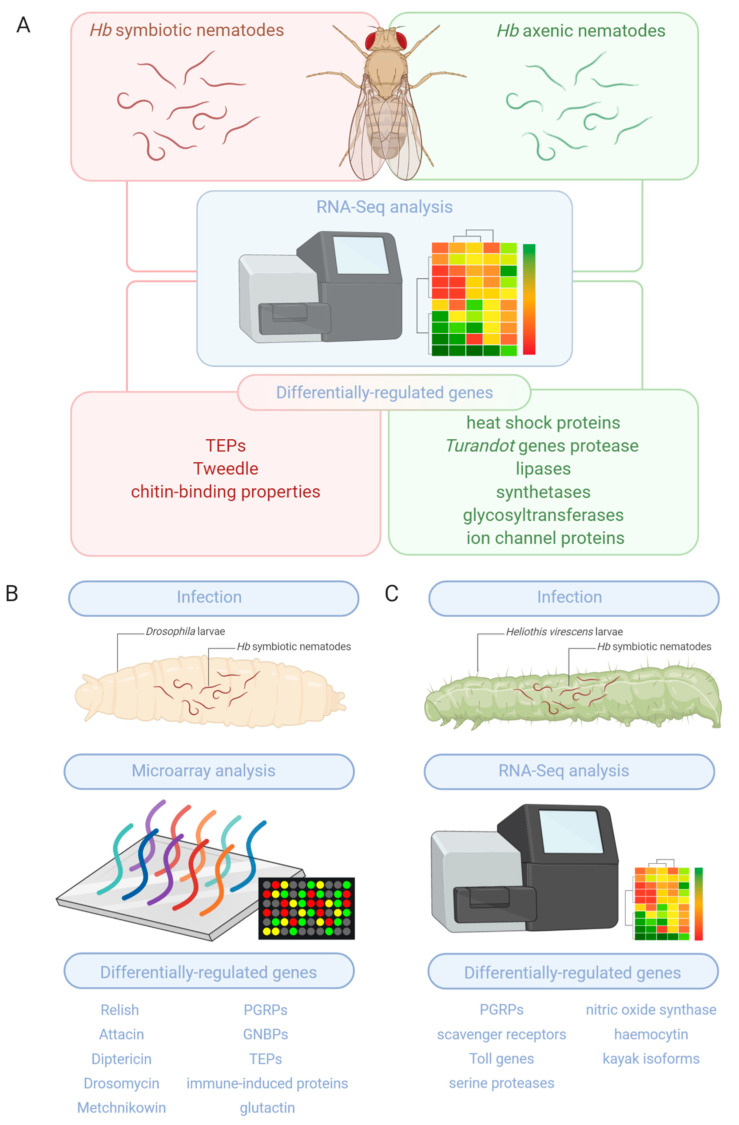
Insects in nature interact with a wide variety of microbial enemies including nematodes. These include entomopathogenic nematodes that contain mutualistic bacteria and together are able to infect a broad range of insects in order to complete their life cycle and multiply, filarial nematodes which are vectored by mosquitoes, and other parasitic nematodes. Entomopathogenic nematodes are commonly used in biological control practices and they form excellent research tools for understanding the genetic and functional bases of nematode pathogenicity and insect anti-nematode immunity. In addition, clarifying the mechanism of transmission of filarial nematodes by mosquitoes is critical for devising strategies to reduce disease transmission in humans. In all cases and in order to achieve these goals, it is vital to determine the number and type of insect host genes which are differentially regulated during infection and encode factors with anti-nematode properties. In this respect, the use of transcriptomic approaches has proven a key step for the identification of insect molecules with anti-nematode activity. Here, we review the progress in the field of transcriptomics that deals with the insect response to nematode infection. This information is important because it will expose conserved pathways of anti-nematode immunity in humans.
Keywords: immunity; infection; insect; nematodes; transcriptomics.
Conflict of interest statement
The authors declare no conflict of interest. The funders had no role in the design of the study; in the collection, analyses, or interpretation of data; in the writing of the manuscript, or in the decision to publish the results.
Figures
References
Publication types
MeSH terms
LinkOut - more resources
Full Text Sources
Other Literature Sources
Molecular Biology Databases
