Failure to Advance Access to Kidney Transplantation over Two Decades in the United States
- PMID: 33574159
- PMCID: PMC8017535
- DOI: 10.1681/ASN.2020060888
Failure to Advance Access to Kidney Transplantation over Two Decades in the United States
Abstract
Background: Extensive research and policies have been developed to improve access to kidney transplantation among patients with ESKD. Despite this, wide variation in transplant referral rates exists between dialysis facilities.
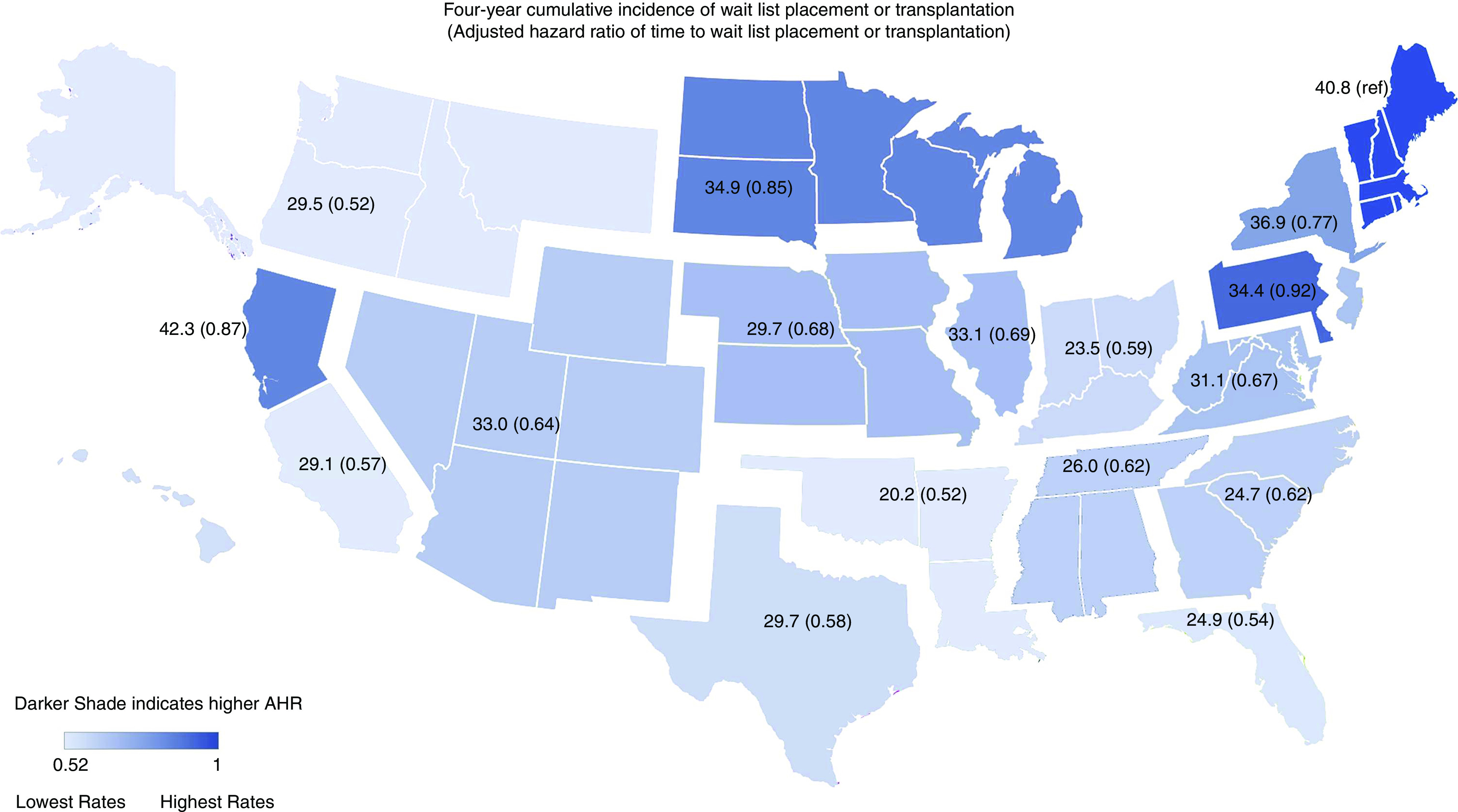
Methods: To evaluate the longitudinal pattern of access to kidney transplantation over the past two decades, we conducted a retrospective cohort study of adult patients with ESKD initiating ESKD or placed on a transplant waiting list from 1997 to 2016 in the United States Renal Data System. We used cumulative incidence models accounting for competing risks and multivariable Cox models to evaluate time to waiting list placement or transplantation (WLT) from ESKD onset.
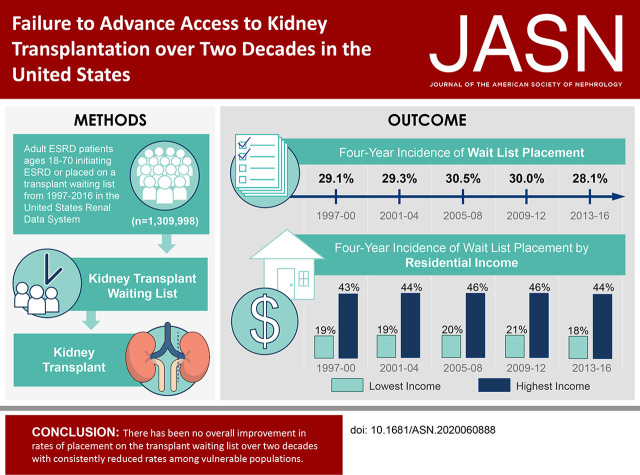
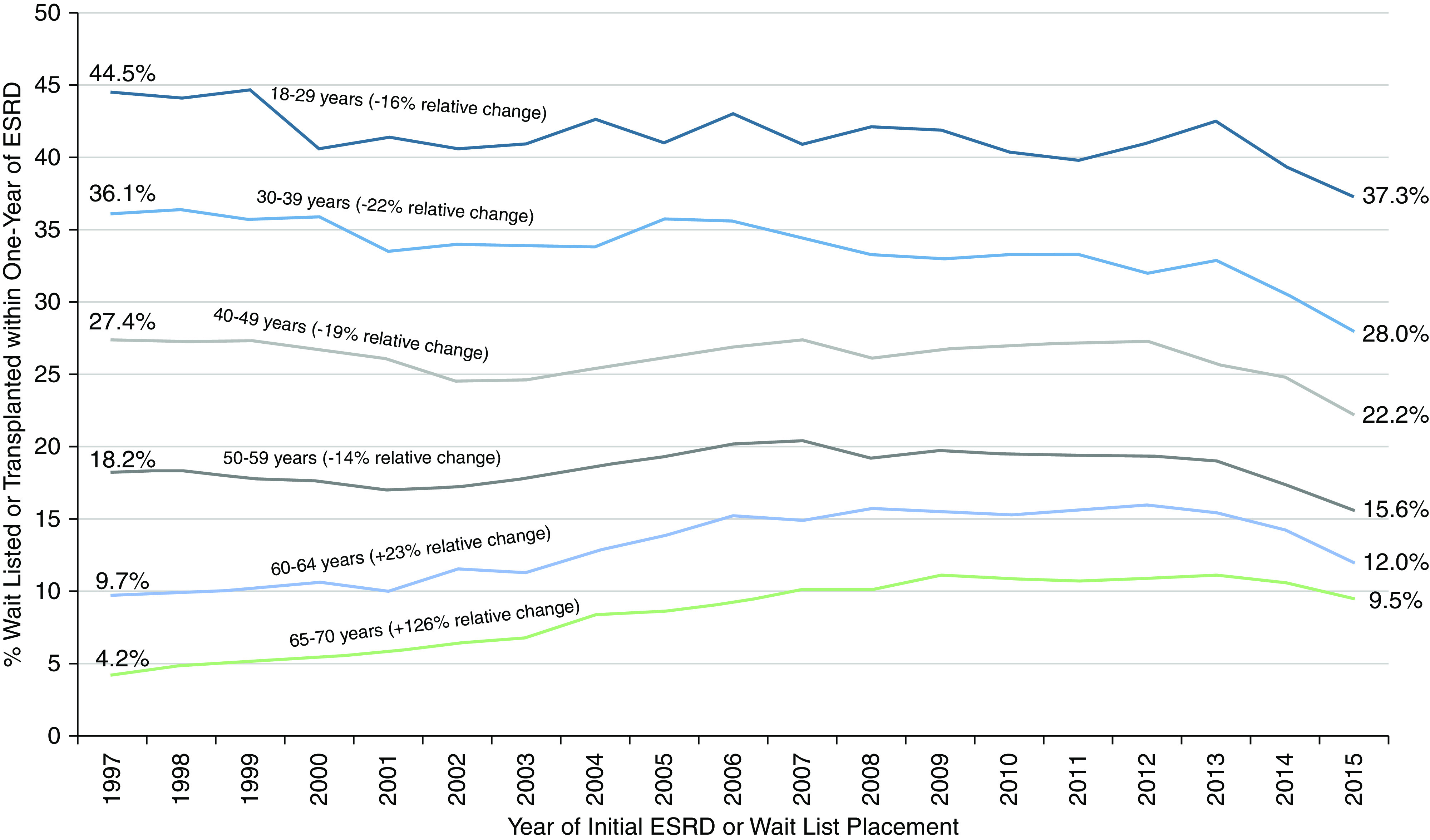
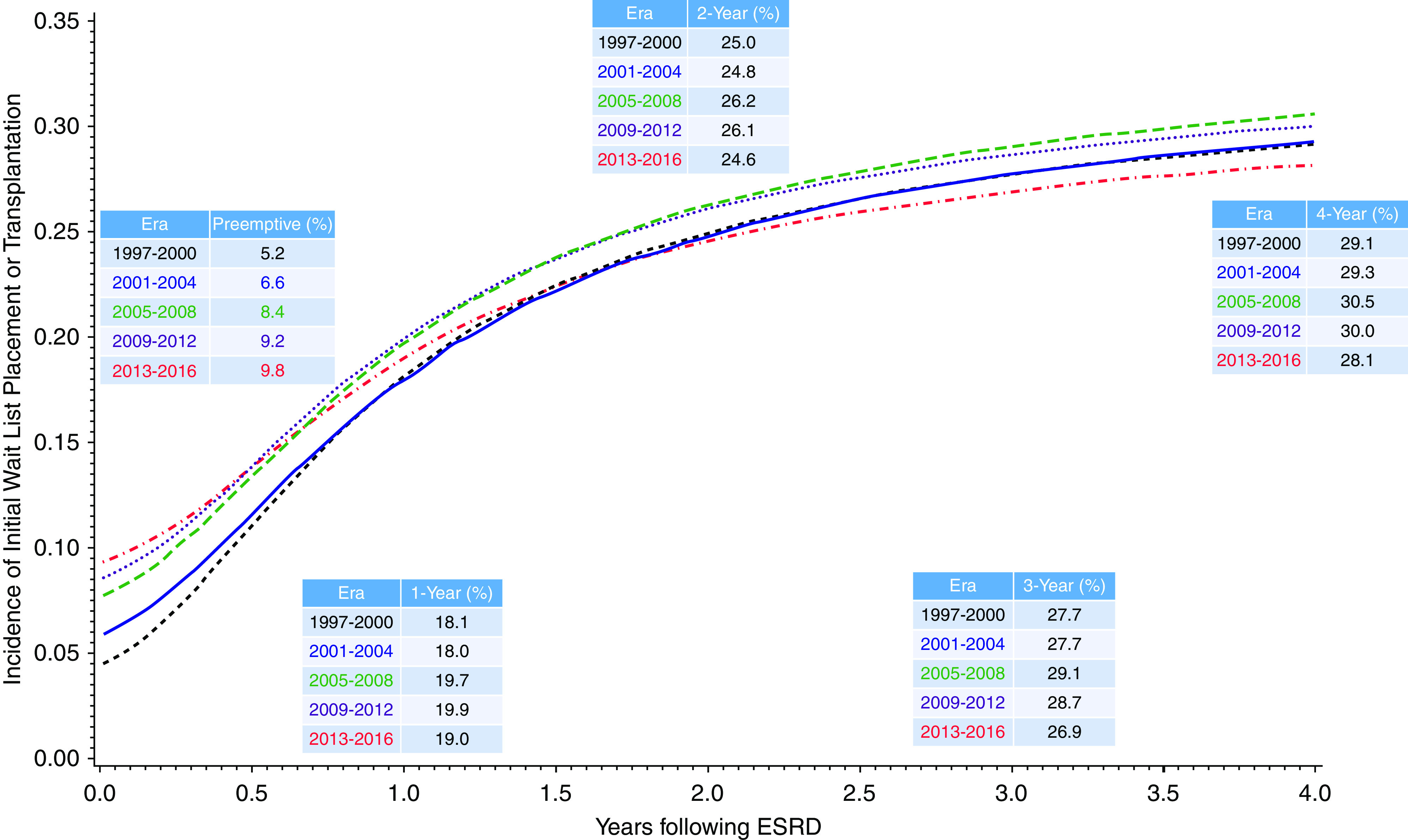
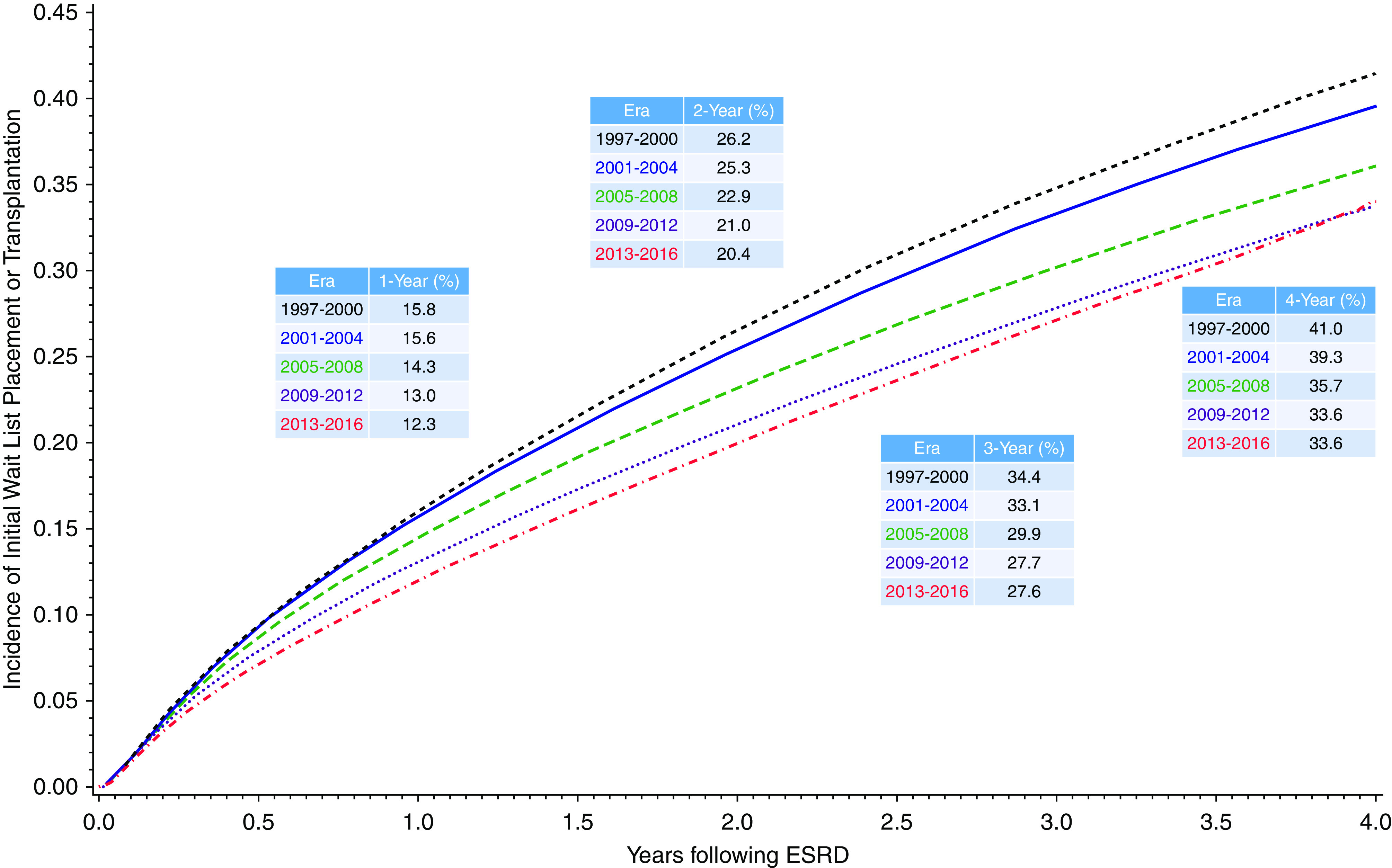
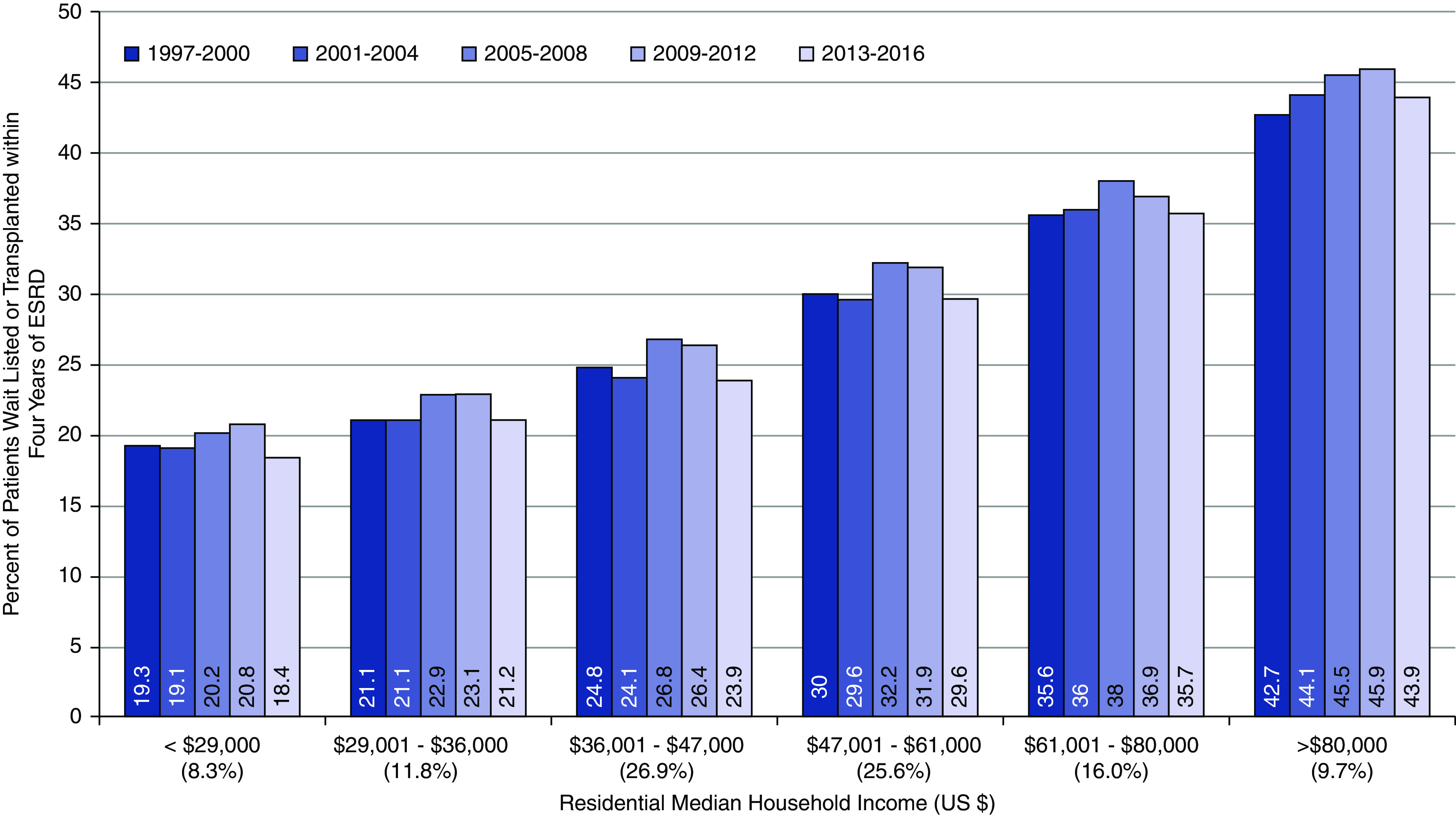
Results: Among the study population of 1,309,998 adult patients, cumulative 4-year WLT was 29.7%, which was unchanged over five eras. Preemptive WLT (prior to dialysis) increased by era (5.2% in 1997-2000 to 9.8% in 2013-2016), as did 4-year WLT incidence among patients aged 60-70 (13.4% in 1997-2000 to 19.8% in 2013-2016). Four-year WLT incidence diminished among patients aged 18-39 (55.8%-48.8%). Incidence of WLT was substantially lower among patients in lower-income communities, with no improvement over time. Likelihood of WLT after dialysis significantly declined over time (adjusted hazard ratio, 0.80; 95% confidence interval, 0.79 to 0.82) in 2013-2016 relative to 1997-2000.
Conclusions: Despite wide recognition, policy reforms, and extensive research, rates of WLT following ESKD onset did not seem to improve in more than two decades and were consistently reduced among vulnerable populations. Improving access to transplantation may require more substantial interventions.
Keywords: end-stage renal disease; kidney transplantation; risk factors.
Copyright © 2021 by the American Society of Nephrology.
Figures
References
-
- Merion RM, Ashby VB, Wolfe RA, Distant DA, Hulbert-Shearon TE, Metzger RA, et al.: Deceased-donor characteristics and the survival benefit of kidney transplantation. JAMA 294: 2726–2733, 2005 - PubMed
-
- Wolfe RA, Ashby VB, Milford EL, Ojo AO, Ettenger RE, Agodoa LY, et al.: Comparison of mortality in all patients on dialysis, patients on dialysis awaiting transplantation, and recipients of a first cadaveric transplant. N Engl J Med 341: 1725–1730, 1999 - PubMed
-
- Axelrod DA, Schnitzler MA, Xiao H, Irish W, Tuttle-Newhall E, Chang SH, et al.: An economic assessment of contemporary kidney transplant practice. Am J Transplant 18: 1168–1176, 2018 - PubMed
-
- Landreneau K, Lee K, Landreneau MD: Quality of life in patients undergoing hemodialysis and renal transplantation--a meta-analytic review. Nephrol Nurs J 37: 37–44, 2010 - PubMed
Grants and funding
LinkOut - more resources
Full Text Sources
Other Literature Sources
Miscellaneous