


Role of Oxidative Stress in the Mechanisms of Anthracycline-Induced Cardiotoxicity: Effects of Preventive Strategies
- PMID: 33574985
- PMCID: PMC7857913
- DOI: 10.1155/2021/8863789
Role of Oxidative Stress in the Mechanisms of Anthracycline-Induced Cardiotoxicity: Effects of Preventive Strategies
Abstract
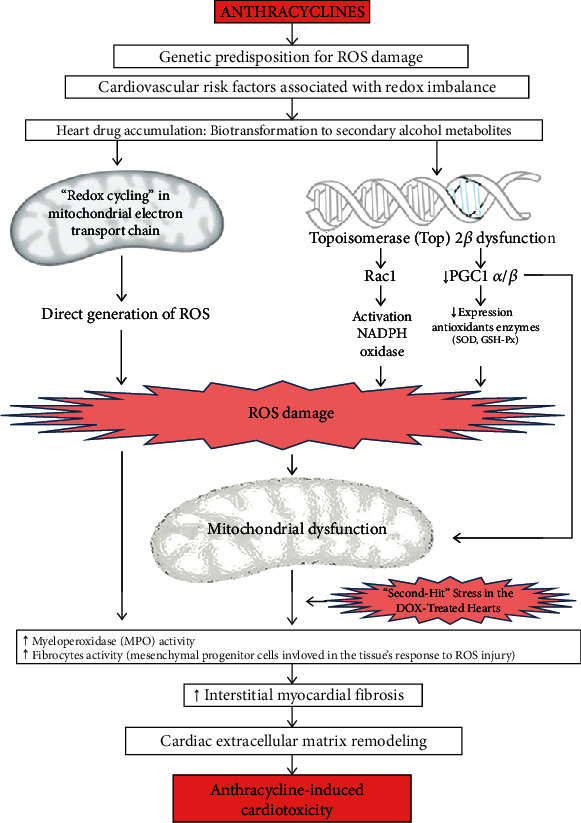
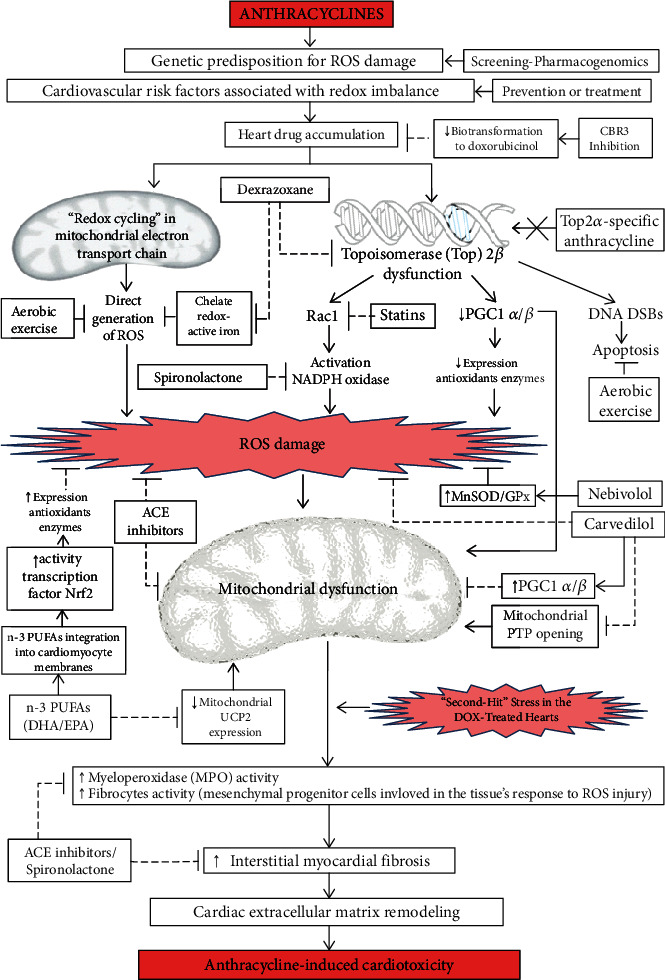
Anthracycline-induced cardiotoxicity (AIC) persists as a significant cause of morbidity and mortality in cancer survivors. Although many protective strategies have been evaluated, cardiotoxicity remains an ongoing threat. The mechanisms of AIC remain unclear; however, several pathways have been proposed, suggesting a multifactorial origin. When the central role of topoisomerase 2β in the pathophysiology of AIC was described some years ago, the classical reactive oxygen species (ROS) hypothesis shifted to a secondary position. However, new insights have reemphasized the importance of the role of oxidative stress-mediated signaling as a common pathway and a critical modulator of the different mechanisms involved in AIC. A better understanding of the mechanisms of cardiotoxicity is crucial for the development of treatment strategies. It has been suggested that the available therapeutic interventions for AIC could act on the modulation of oxidative balance, leading to a reduction in oxidative stress injury. These indirect antioxidant effects make them an option for the primary prevention of AIC. In this review, our objective is to provide an update of the accumulated knowledge on the role of oxidative stress in AIC and the modulation of the redox balance by potential preventive strategies.
Copyright © 2021 Rodrigo Carrasco et al.
Conflict of interest statement
The authors declare that there is no conflict of interest regarding the publication of this paper.
Figures
Comment in
-
The Role of Anthracyclines in Cardio-Oncology: Oxidative Stress, Inflammation, and Autophagy.Oxid Med Cell Longev. 2022 Apr 14;2022:9862524. doi: 10.1155/2022/9862524. eCollection 2022. Oxid Med Cell Longev. 2022. PMID: 35464757 Free PMC article. No abstract available.
References
-
- Edwards B. K., Noone A.-M., Mariotto A. B., et al. Annual report to the nation on the status of cancer, 1975-2010, featuring prevalence of comorbidity and impact on survival among persons with lung, colorectal, breast, or prostate cancer. Cancer. 2014;120(9):1290–1314. doi: 10.1002/cncr.28509. - DOI - PMC - PubMed
Publication types
MeSH terms
Substances
LinkOut - more resources
Full Text Sources
Other Literature Sources
