


Anaesthesia considerations and techniques for Pressurised IntraPeritoneal Aerosol Chemotherapy (PIPAC)
- PMID: 33575459
- PMCID: PMC7823152
- DOI: 10.1515/pp-2019-0013
Anaesthesia considerations and techniques for Pressurised IntraPeritoneal Aerosol Chemotherapy (PIPAC)
Abstract
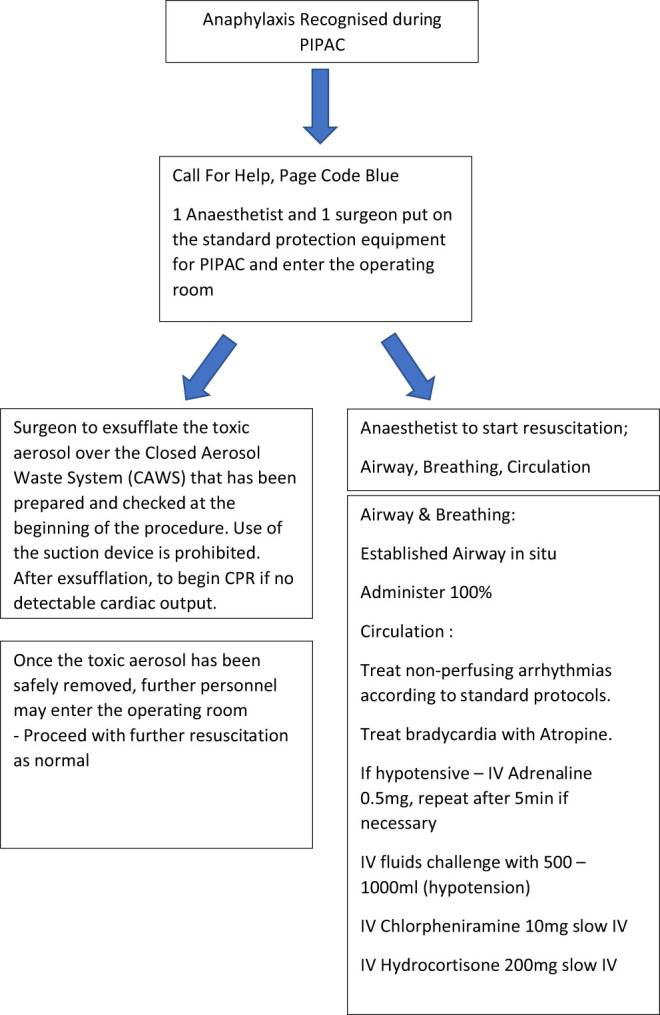
Pressurised IntraPeritoneal Aerosol Chemotherapy (PIPAC) is a novel surgical technique to administer aerosolized chemotherapy into the abdominal cavity as treatment for peritoneal metastasis from various cancers. As the surgery is unique and there are concerns about occupational hazards, specific anaesthetic setup and techniques are required. Notably, our institution's experience with PIPAC has enlightened us that anaesthesia requirements during PIPAC are generally uncomplicated and that the majority of the patients undergoing PIPAC do not require invasive monitoring, advanced intra or postoperative analgesia like epidurals or PCA. The need for postoperative intensive unit care is also not required in routine PIPAC cases. We describe the anaesthetic considerations involved and the detailed preparation of staff, space, anaesthetic equipment and drugs to facilitate the appropriate modifications for anaesthesia monitoring and maintenance for an elective set up as well as our standard operating procedure for an emergency situation should it arise.
Keywords: Pressurised IntraPeritoneal Aerosol Chemotherapy (PIPAC) anaesthesia considerations; anaesthesia setup; total intravenous anaesthesia (TIVA).
© 2020 Venkatesan Shree et al., published by De Gruyter, Berlin/Boston.
Conflict of interest statement
Competing interests: Authors state no conflict of interest or affiliations.
Figures
References
-
- Solass W, Kerb R, Mürdter T, Giger-Pabst U, Strumberg D, Tempfer C, et al. Intraperitoneal chemotherapy of peritoneal carcinomatosis using pressurized aerosol as an alternative to liquid solution: first evidence for efficacy. Ann Surg Oncol 2014. 21:553–9. 10.1245/s10434-013-3213-1 24006094. - DOI - PMC - PubMed
-
- Girshally R, Demtroder C, Albayrak N, Zieren J, Tempfer C, Reymond MA. Pressurized IntraPeritoneal Aerosol Chemotherapy (PIPAC) as a neoadjuvant therapy before cytoreductive surgery and hyperthermic intraperitoneal chemotherapy. World J Surg Oncol 2016;14:364–71. 10.1186/s12957-016-1008-0. - DOI - PMC - PubMed
-
- Khosrawipour V, Diaz-Carballo D, Ali-Haydar A, Khosrawipour T, Falkenstein TA, Wu D, et al. Cytotoxic effect of different treatment parameters in pressurized intraperitoneal aerosol chemotherapy (PIPAC) on the in vitro proliferation of human colonic cancer cells. World J Surg Oncol 2017;15:1109–14. 10.1186/s12957-017-1109-4. - DOI - PMC - PubMed
LinkOut - more resources
Full Text Sources