


Adaptive threshold-based alarm strategies for continuous vital signs monitoring
- PMID: 33575922
- PMCID: PMC9123069
- DOI: 10.1007/s10877-021-00666-4
Adaptive threshold-based alarm strategies for continuous vital signs monitoring
Abstract
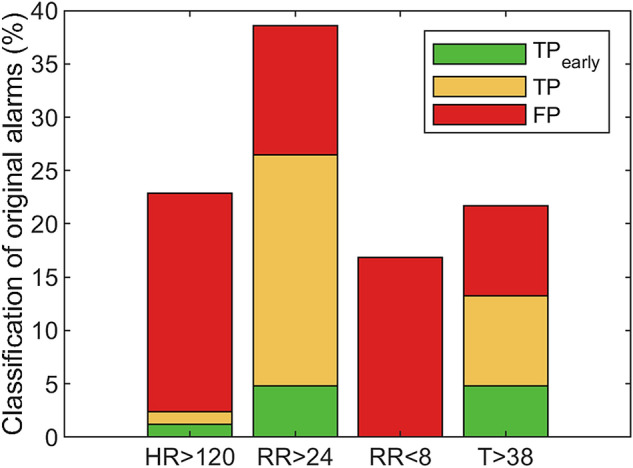
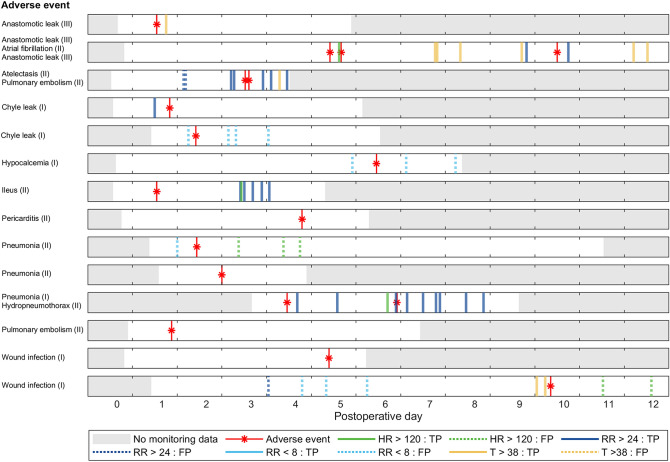
Continuous vital signs monitoring in post-surgical ward patients may support early detection of clinical deterioration, but novel alarm approaches are required to ensure timely notification of abnormalities and prevent alarm-fatigue. The current study explored the performance of classical and various adaptive threshold-based alarm strategies to warn for vital sign abnormalities observed during development of an adverse event. A classical threshold-based alarm strategy used for continuous vital signs monitoring in surgical ward patients was evaluated retrospectively. Next, (combinations of) six methods to adapt alarm thresholds to personal or situational factors were simulated in the same dataset. Alarm performance was assessed using the overall alarm rate and sensitivity to detect adverse events. Using a wireless patch-based monitoring system, 3999 h of vital signs data was obtained in 39 patients. The clinically used classical alarm system produced 0.49 alarms/patient/day, and alarms were generated for 11 out of 18 observed adverse events. Each of the tested adaptive strategies either increased sensitivity to detect adverse events or reduced overall alarm rate. Combining specific strategies improved overall performance most and resulted in earlier presentation of alarms in case of adverse events. Strategies that adapt vital sign alarm thresholds to personal or situational factors may improve early detection of adverse events or reduce alarm rates as compared to classical alarm strategies. Accordingly, further investigation of the potential of adaptive alarms for continuous vital signs monitoring in ward patients is warranted.
Keywords: Clinical alarms; Clinical deterioration; Physiological monitoring; Telemonitoring; Vital signs.
© 2021. The Author(s).
Conflict of interest statement
M.C. van Rossum, L.B. Vlaskamp, L.M. Posthuma, M.J. Visscher, H.J. Hermens, and C.J. Kalkman, declare that they have no conflicts of interest. M.J.M Breteler is part-time employee of Luscii Healthtech BV (Health ICT company, Amsterdam, The Netherlands). B. Preckel takes part in an advisory board for Sensium Healthcare, United Kingdom. No competing financial interests exist.
Figures
References
MeSH terms
LinkOut - more resources
Full Text Sources
Other Literature Sources
