


The effects of cardiac stretch on atrial fibroblasts: analysis of the evidence and potential role in atrial fibrillation
- PMID: 33576384
- PMCID: PMC8803074
- DOI: 10.1093/cvr/cvab035
The effects of cardiac stretch on atrial fibroblasts: analysis of the evidence and potential role in atrial fibrillation
Abstract
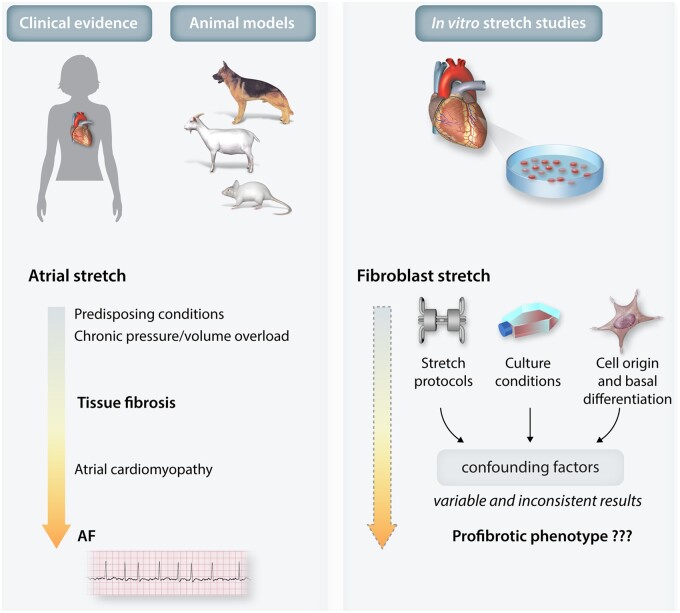
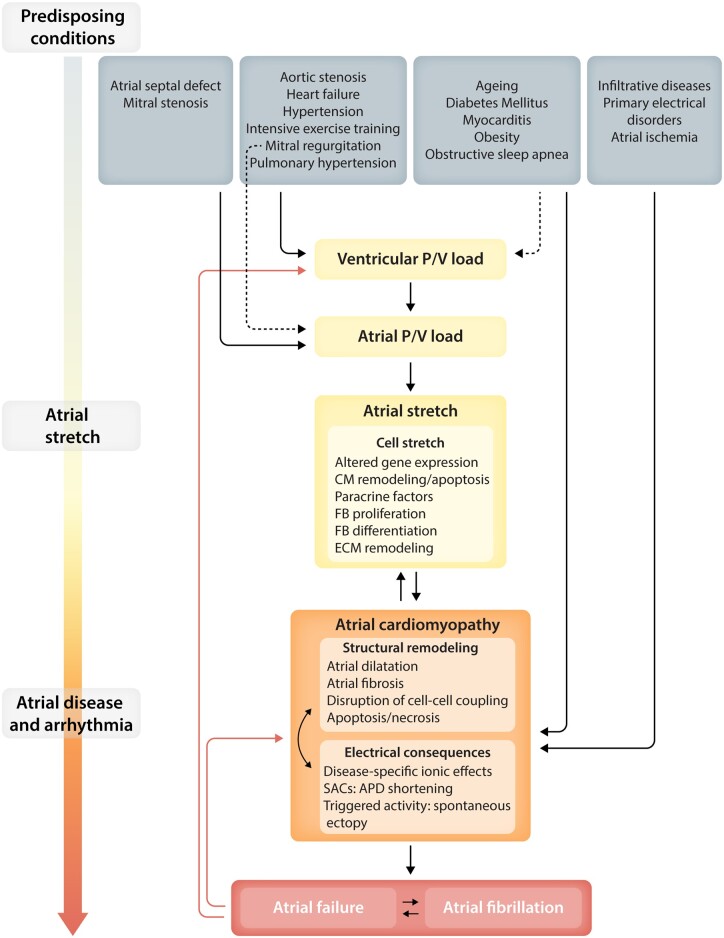
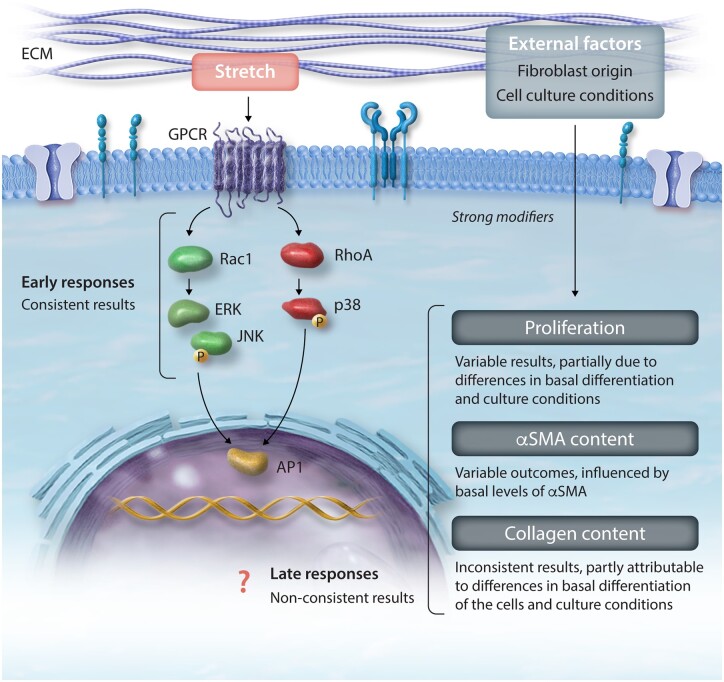
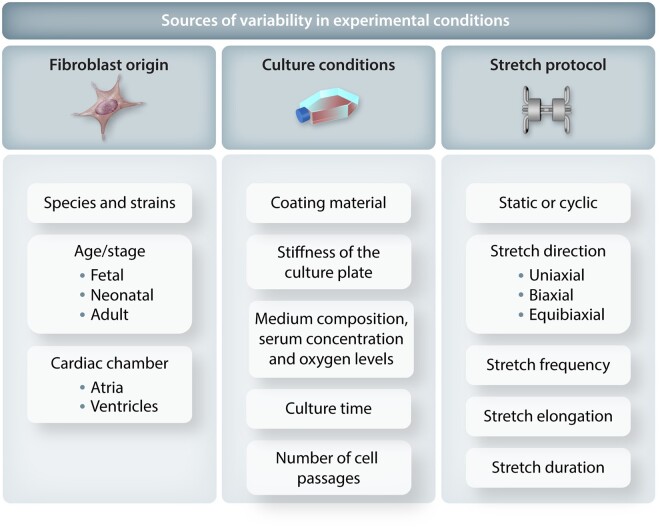
Atrial fibrillation (AF) is an important clinical problem. Chronic pressure/volume overload of the atria promotes AF, particularly via enhanced extracellular matrix (ECM) accumulation manifested as tissue fibrosis. Loading of cardiac cells causes cell stretch that is generally considered to promote fibrosis by directly activating fibroblasts, the key cell type responsible for ECM production. The primary purpose of this article is to review the evidence regarding direct effects of stretch on cardiac fibroblasts, specifically: (i) the similarities and differences among studies in observed effects of stretch on cardiac fibroblast function; (ii) the signalling pathways implicated; and (iii) the factors that affect stretch-related phenotypes. Our review summarizes the most important findings and limitations in this area and gives an overview of clinical data and animal models related to cardiac stretch, with particular emphasis on the atria. We suggest that the evidence regarding direct fibroblast activation by stretch is weak and inconsistent, in part because of variability among studies in key experimental conditions that govern the results. Further work is needed to clarify whether, in fact, stretch induces direct activation of cardiac fibroblasts and if so, to elucidate the determining factors to ensure reproducible results. If mechanical load on fibroblasts proves not to be clearly profibrotic by direct actions, other mechanisms like paracrine influences, the effects of systemic mediators and/or the direct consequences of myocardial injury or death, might account for the link between cardiac stretch and fibrosis. Clarity in this area is needed to improve our understanding of AF pathophysiology and assist in therapeutic development.
Keywords: Atrial fibrillation; Cardiac fibroblast; Fibrosis; Mechanical strain; Pressure overload; Stretch.
Published on behalf of the European Society of Cardiology. All rights reserved. © The Author(s) 2021. For permissions, please email: journals.permissions@oup.com.
Figures
References
-
- Andrade J, Khairy P, Dobrev D, Nattel S.. The clinical profile and pathophysiology of atrial fibrillation: relationships among clinical features, epidemiology, and mechanisms. Circ Res 2014;114:1453–1468. - PubMed
-
- Satoh T, Zipes DP.. Unequal atrial stretch in dogs increases dispersion of refractoriness conducive to developing atrial fibrillation. J Cardiovasc Electrophysiol 1996;7:833–842. - PubMed
-
- Sideris DA, Toumanidis ST, Thodorakis M, Kostopoulos K, Tselepatiotis E, Langoura C, Stringli T, Moulopoulos SD.. Some observations on the mechanism of pressure related atrial fibrillation. Eur Heart J 1994;15:1585–1589. - PubMed
-
- Gottdiener JS, Seliger S, deFilippi C, Christenson R, Baldridge AS, Kizer JR, Psaty BM, Shah SJ.. Relation of biomarkers of cardiac injury, stress, and fibrosis with cardiac mechanics in patients ≥ 65 years of age. Am J Cardiol Elsevier 2020;136:156–163. - PubMed
Publication types
MeSH terms
LinkOut - more resources
Full Text Sources
Other Literature Sources
Medical
