Cardiovascular mortality in peritoneal dialysis: the impact of mineral disorders
- PMID: 33576763
- PMCID: PMC8257281
- DOI: 10.1590/2175-8239-JBN-2020-0040
Cardiovascular mortality in peritoneal dialysis: the impact of mineral disorders
Abstract
Introduction: Mineral and bone disorders (MBD) are associated with higher mortality in dialysis patients. The main guidelines related to the subject, Kidney Disease Outcomes Quality Initiative (KDOQI) and Kidney Disease: Improving Global Outcomes (KDIGO), were elaborated based on published information from hemodialysis participants. The aim of our study was to evaluate the impact of calcium (Ca), phosphorus (P), and parathyroid hormone (PTH) (according to guideline ranges from KDOQI and KDIGO) on the cardiovascular mortality of peritoneal dialysis (PD) patients.
Methods: We used the BRAZPDII database, an observational multi-centric prospective study, which assessed participants on PD between December 2004 and January 2011. Amongst 9,905 participants included in this database, we analyzed 4424 participants who were on PD for at least 6 months. The appropriate confounding variables were entered into the model. Serum levels of Ca, P, and PTH were the variables of interest for the purposes of the current study.
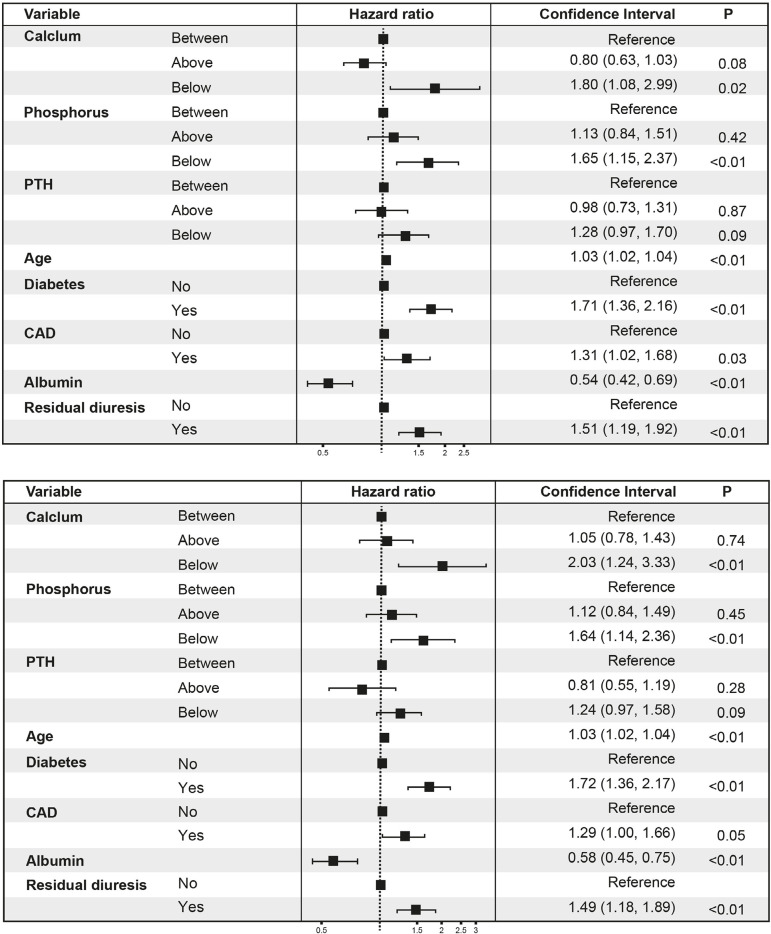
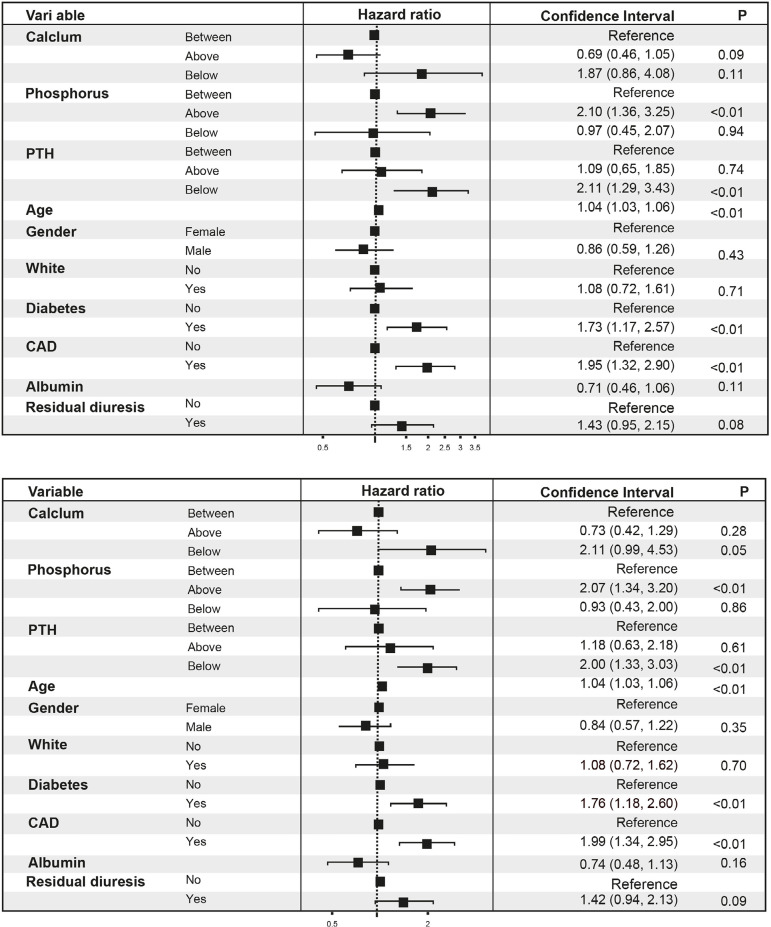
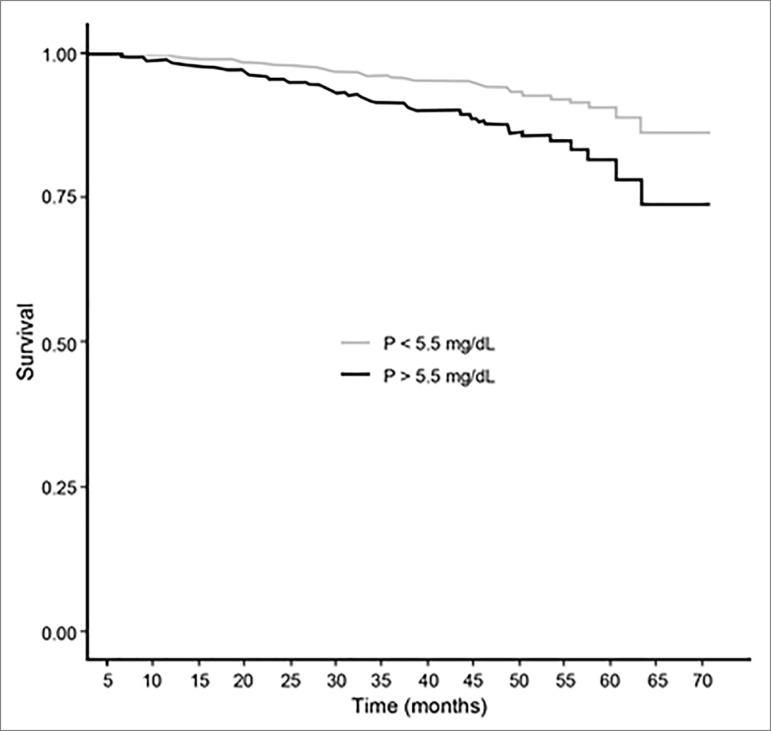
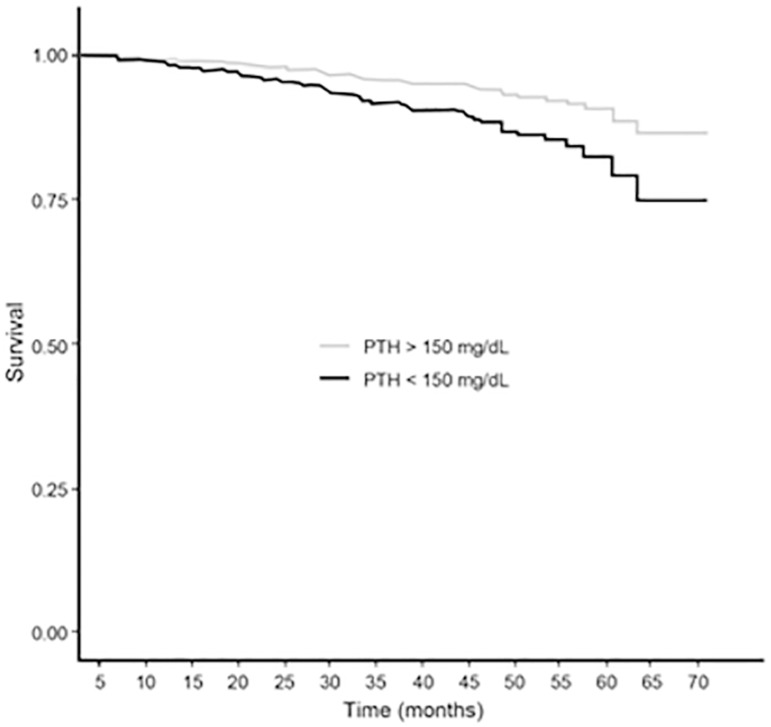
Results: We found a significant association between high P serum levels, categorized by KDOQI and KDIGO (P above 5.5 mg/dL), and cardiovascular survival (p < 0.01). Likewise, a compelling association was found between lower levels of PTH, categorized by guidelines (KDOQI and KDIGO - PTH less than 150 pg/mL, p < 0.01), and cardiovascular survival.
Conclusion: In conclusion, levels of P above and PTH below the values proposed by KDOQI and KDIGO were associated with cardiovascular mortality in PD patients.
Introdução:: Os distúrbios minerais e ósseos (DMO) estão associados a maior mortalidade em pacientes de diálise. As principais diretrizes relacionadas ao assunto, Kidney Disease Outcomes Quality Initiative (KDOQI) e Kidney Disease: Improving Global Outcomes (KDIGO) foram elaboradas com base em informações publicadas de pacientes em hemodiálise. O objetivo do nosso estudo foi avaliar o impacto do cálcio (Ca), fósforo (P) e paratormônio (PTH) (de acordo com as faixas propostas pelas diretrizes do KDOQI e KDIGO) na mortalidade cardiovascular de pacientes em diálise peritoneal (DP).
Métodos:: Utilizamos o banco de dados BRAZPDII, um estudo prospectivo observacional multicêntrico, que avaliou participantes de DP entre dezembro de 2004 e janeiro de 2011. Entre os 9.905 participantes incluídos neste banco de dados, analisamos 4.424 que estavam em DP há pelo menos 6 meses. As variáveis de confusão apropriadas foram inseridas no modelo. Os níveis séricos de Ca, P e PTH foram as variáveis de interesse para os fins do presente estudo.
Resultados:: Encontramos uma associação significativa entre níveis séricos de P elevados, categorizados por KDOQI e KDIGO (P acima de 5,5 mg/dL), e sobrevivência cardiovascular (p < 0,01). Da mesma forma, foi encontrada uma associação convincente entre níveis mais baixos de PTH, categorizados por diretrizes (KDOQI e KDIGO - PTH inferior a 150 pg/mL, p < 0,01), e sobrevivência cardiovascular.
Conclusão:: Em conclusão, níveis de P acima e PTH abaixo dos valores propostos por KDOQI e KDIGO foram associados à mortalidade cardiovascular em pacientes de DP.
Conflict of interest statement
The authors declare that they have no conflict of interest related to the publication of this manuscript.
Figures
References
-
- Selby NM, Kazmi I. Peritoneal dialysis has optimal intradialytic hemodynamics and preserves residual renal function: why isn't it better than hemodialysis? Semin Dial. 2019 Jan;32(1):3–8. - PubMed
-
- Kalantar-Zadeh K, Kuwae N, Regidor DL, Kovesdy CP, Kilpatrick RD, Shinaberger CS. Survival predictability of time-varying indicators of bone disease in maintenance hemodialysis patients. Kidney Int. 2006 Aug;70(4):771–780. - PubMed
-
- Fernández-Martín JL, Martínez-Camblor P, Dionisi MP, Floege J, Ketteler M, London G. Improvement of mineral and bone metabolism markers is associated with better survival in haemodialysis patients: the COSMOS study. Nephrol Dial Transplant. 2015 Sep;30(9):1542–1551. - PubMed
MeSH terms
Substances
LinkOut - more resources
Full Text Sources
Other Literature Sources