


Application and Reliability of Accelerometer-Based Arm Use Intensities in the Free-Living Environment for Manual Wheelchair Users and Able-Bodied Individuals
- PMID: 33578639
- PMCID: PMC7916413
- DOI: 10.3390/s21041236
Application and Reliability of Accelerometer-Based Arm Use Intensities in the Free-Living Environment for Manual Wheelchair Users and Able-Bodied Individuals
Abstract
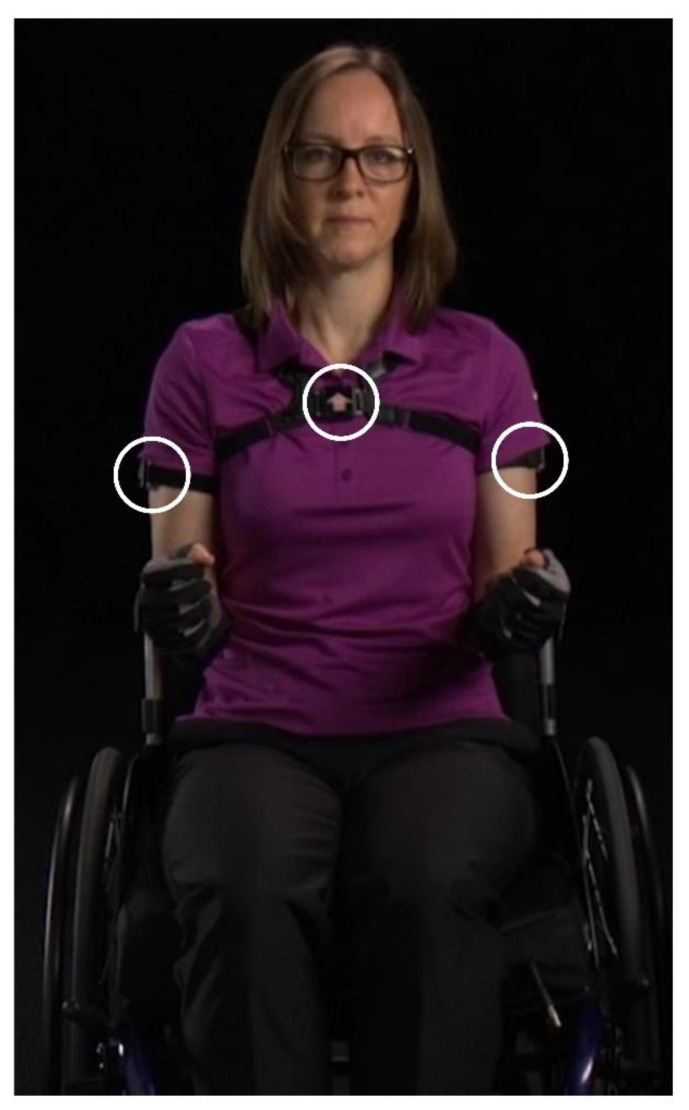
Arm use in manual wheelchair (MWC) users is characterized by a combination of overuse and a sedentary lifestyle. This study aimed to describe the percentage of daily time MWC users and able-bodied individuals spend in each arm use intensity level utilizing accelerometers. Arm use intensity levels of the upper arms were defined as stationary, low, mid, and high from the signal magnitude area (SMA) of the segment accelerations based on in-lab MWC activities performed by eight MWC users. Accelerometry data were collected in the free-living environments from forty MWC users and 40 sex- and age-matched able-bodied individuals. The SMA intensity levels were applied to the free-living data and the percentage of time spent in each level was calculated. The SMA intensity levels were defined as, stationary: ≤0.67 g, low: 0.671-3.27 g, mid: 3.27-5.87 g, and high: >5.871 g. The dominant arm of both MWC users and able-bodied individuals was stationary for most of the day and less than one percent of the day was spent in high intensity arm activities. Increased MWC user age correlated with increased stationary arm time (R = 0.368, p = 0.019). Five and eight days of data are needed from MWC users and able-bodied individuals, respectively, to achieve reliable representation of their daily arm use intensities.
Keywords: free-living data collection; inertial measurement units; spinal cord injury; upper extremity; wearable sensors.
Conflict of interest statement
The authors declare no conflict of interest.
Figures



References
-
- Kaye H., Kang T., LaPlante M. Mobility Device Use in the United States. U.S. Department of Education, National Institute on Disability and Rehabilitation Research; Washington, DC, USA: 2000. Disability Statistics Report 14.
MeSH terms
Grants and funding
LinkOut - more resources
Full Text Sources
Other Literature Sources
Medical
Miscellaneous
