


Role of Vascular Endothelial Growth Factor (VEGF) in Human Embryo Implantation: Clinical Implications
- PMID: 33578823
- PMCID: PMC7916576
- DOI: 10.3390/biom11020253
Role of Vascular Endothelial Growth Factor (VEGF) in Human Embryo Implantation: Clinical Implications
Abstract
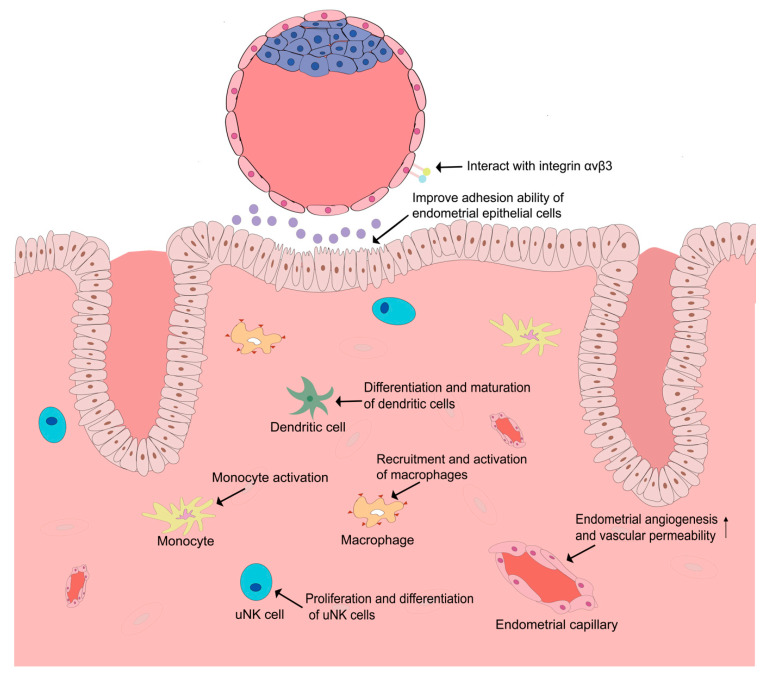
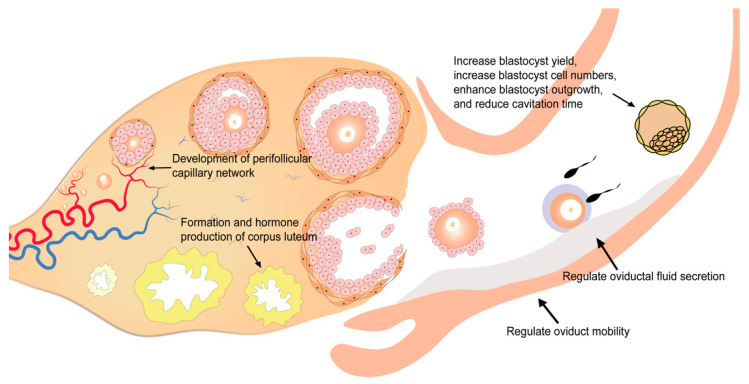
Vascular endothelial growth factor (VEGF) is a well-known angiogenic factor that plays a critical role in various physiological and pathological processes. VEGF also contributes to the process of embryo implantation by enhancing embryo development, improving endometrial receptivity, and facilitating the interactions between the developing embryo and the endometrium. There is a correlation between the alteration of VEGF expression and reproductive failure, including recurrent implantation failure (RIF) and recurrent miscarriage (RM). In order to clarify the role of VEGF in embryo implantation, we reviewed recent literature concerning the expression and function of VEGF in the reproductive system around the time of embryo implantation and we provide a summary of the findings reported so far. We also explored the effects and the possible underlying mechanisms of action of VEGF in embryo implantation.
Keywords: embryo implantation; reproductive failure; vascular endothelial growth factor (VEGF).
Conflict of interest statement
The authors declare no conflict of interest.
Figures
References
-
- Melincovici C.S., Boşca A.B., Şuşman S., Mărginean M., Mihu C., Istrate M., Moldovan I.M., Roman A.L., Mihu C.M. Vascular endothelial growth factor (VEGF)—Key factor in normal and pathological angiogenesis. Rom. J. Morphol. Embryol. 2018;59:455–467. - PubMed
-
- Carmeliet P., Moons L., Luttun A., Vincenti V., Compernolle V., De Mol M., Wu Y., Bono F., Devy L., Beck H., et al. Synergism between vascular endothelial growth factor and placental growth factor contributes to angiogenesis and plasma extravasation in pathological conditions. Nat. Med. 2001;7:575–583. doi: 10.1038/87904. - DOI - PubMed
Publication types
MeSH terms
Substances
Grants and funding
LinkOut - more resources
Full Text Sources
Other Literature Sources
