


Heparin-Induced Thrombocytopenia: A Review of New Concepts in Pathogenesis, Diagnosis, and Management
- PMID: 33578859
- PMCID: PMC7916628
- DOI: 10.3390/jcm10040683
Heparin-Induced Thrombocytopenia: A Review of New Concepts in Pathogenesis, Diagnosis, and Management
Abstract
Knowledge on heparin-induced thrombocytopenia keeps increasing. Recent progress on diagnosis and management as well as several discoveries concerning its pathogenesis have been made. However, many aspects of heparin-induced thrombocytopenia remain partly unknown, and exact application of these new insights still need to be addressed. This article reviews the main new concepts in pathogenesis, diagnosis, and management of heparin-induced thrombocytopenia.
Keywords: Bayesian diagnostic thinking; diagnosis; heparin-induced thrombocytopenia (HIT); immune PF4/heparin/antibody complexes; intravenous immunoglobulins (IVIG); management; new concepts; pathogenesis; therapeutic plasma exchange.
Conflict of interest statement
The authors declare no conflict of interest.
Figures
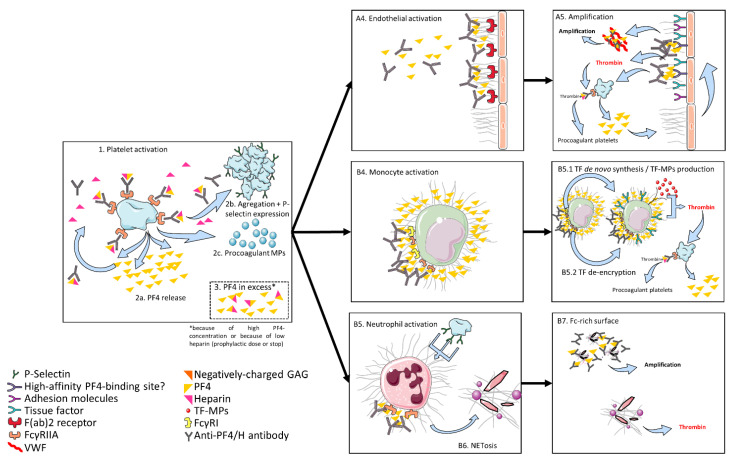
References
-
- Rauova L., Poncz M., McKenzie S.E., Reilly M.P., Arepally G., Weisel J.W., Nagaswami C., Cines D.B., Sachais B.S., Herre J., et al. Ultralarge complexes of PF4 and heparin are central to the pathogenesis of heparin-induced thrombocytopenia. Blood. 2005;105:131–138. doi: 10.1182/blood-2004-04-1544. - DOI - PubMed
-
- Krauel K., Fürll B., Warkentin T.E., Weitschies W., Kohlmann T., Sheppard J.I., Greinacher A. Heparin-induced thrombocytopenia—Therapeutic concentrations of danaparoid, unlike fondaparinux and direct thrombin inhibitors, inhibit formation of platelet factor 4-heparin complexes. J. Thromb. Haemost. 2008;6:2160–2167. doi: 10.1111/j.1538-7836.2008.03171.x. - DOI - PubMed
Publication types
LinkOut - more resources
Full Text Sources
Other Literature Sources
Miscellaneous
