Clinical Trial
. 2021 Feb 12;7(7):eabe6855.
doi: 10.1126/sciadv.abe6855. Print 2021 Feb.

Insights into neutralizing antibody responses in individuals exposed to SARS-CoV-2 in Chile

Affiliations
Clinical Trial

Insights into neutralizing antibody responses in individuals exposed to SARS-CoV-2 in Chile

Carolina Beltrán-Pavez et al. Sci Adv. .

Abstract

Chile has one of the worst numbers worldwide in terms of SARS-CoV-2 positive cases and COVID-19-related deaths per million inhabitants; thus, characterization of neutralizing antibody (NAb) responses in the general population is critical to understanding of immunity at the local level. Given our inability to perform massive classical neutralization assays due to the scarce availability of BSL-3 facilities in the country, we developed and fully characterized an HIV-based SARS-CoV-2 pseudotype, which was used in a 96-well plate format to investigate NAb responses in samples from individuals exposed to SARS-CoV-2 or treated with convalescent plasma. We also identified samples with decreased or enhanced neutralization activity against the D614G spike variant compared with the wild type, indicating the relevance of this variant in host immunity. The data presented here represent the first insights into NAb responses in individuals from Chile, serving as a guide for future studies in the country.


Figures

Fig. 1
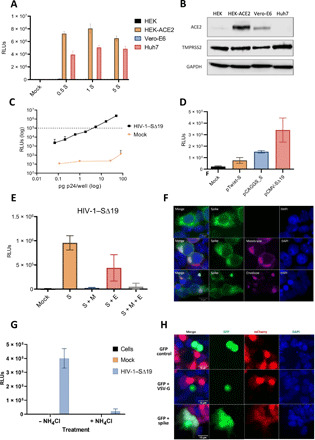
Fig. 1. Characterization of an HIV-1–based SARS-CoV-2 pseudotype.
(A) Infectivity of HIV-1–SΔ19 pseudovirus generated with increasing amounts of SARS-CoV-2–SΔ19 expression plasmid. Firefly luciferase activity was measured at 48 hours after infection, and results are expressed in relative light units (RLUs) ± percent coefficient of variation (%CV). (B) ACE2 and TMPRSS2 expression in HEK, HEK-ACE2, Vero-E6, and Huh7 cell lines. (C) Titration of the HIV-1–SΔ19 pseudotype using increasing amounts of p24. (D) Infectivity of HIV-1–based pseudotypes carrying full-length S protein (pTwist-S and pCAGGS-S plasmids) or SΔ19 (pCMV-SΔ19) in HEK-ACE2 cells. (E) Infectivity of HIV-1–SΔ19 pseudotypes generated in presence of M, E, or both expression vectors (molar ratio S:M:E of 1:0.5:0.5). (F) Subcellular localization of S:M or S:E (molar ratio of 1:0.5) in HEK cells immunostained for Flag-spike (green), Strep-tag–Membrane (magenta), or Strep-tag–Envelope (magenta). Nuclei were stained with 4′,6-diamidino-2-phenylindole (DAPI; blue). (G) Inhibition of entry of SARS-CoV-2 S pseudotype on HEK-ACE2 by NH4Cl (20 mM). (H) S-mediated cell-cell fusion assay. HEK cells transiently expressing GFP together with SΔ19 or VSV glycoprotein (VSV-G) were coincubated for 5 hours with HEK-ACE2 cells expressing mCherry. Nuclei were stained with DAPI (blue). Images are representative from two independent experiments. Scale bars, 10 μm. GAPDH, glyceraldehyde-3-phosphate dehydrogenase; GFP, green fluorescent protein.
Fig. 2
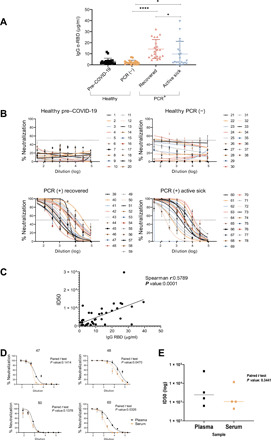
Fig. 2. Measurement of neutralizing activity in samples from volunteers using the HIV-1–SΔ19 pseudotype.
Plasma or serum samples were collected from prepandemic volunteers, SARS-CoV-2 PCR healthy donors, and PCR+ recovered and actively sick patients. (A) Absolute quantification of IgG anti-spike RBD ELISA. (B) Neutralization curves of HIV-1–SΔ19 pseudotype in serum/plasma samples. Samples were titrated in triplicate at serial threefold dilutions (1:40 to 1:87,480) and are expressed as percent of neutralization ± %CV. Statistical differences between volunteers or patient groups were assessed by Wilcoxon-Mann-Whitney t test. (C) Spearman’s rank correlation between ID50 and anti-RBD ELISA absolute quantification (μg/ml) in the total samples analyzed. (D) Titration of neutralization activity using paired plasma and serum samples from four donors. Statistical differences in paired samples were calculated by Paired t test. (E) ID50 differences between plasma and serum samples. Each dot represents an individual. Statistical comparison was calculated by Paired t test. For all statistical tests, P values below 0.05 were considered statistically significant. *P < 0.05 and ****P < 0.0001.
Fig. 3
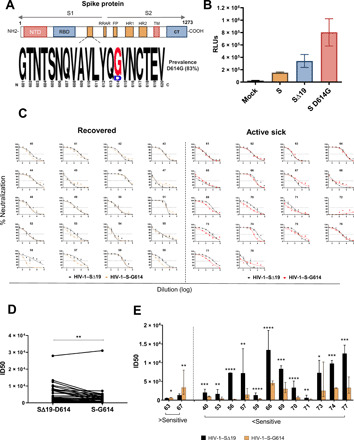
Fig. 3. Impact of the G614 spike variant on neutralizing activity in samples from individuals exposed to SARS-CoV-2 in Chile.
(A) Schematic representation of the SARS-CoV-2 spike protein and frequency plot of D/G variant at the 614 position in 228 SARS-CoV-2 genomes sequenced in Chile. NTD, N-terminal domain; FP, fusion peptide; HR1 and HR2, heptad-repeat region 1 and 2, respectively; TM, transmembrane region; CT, cytoplasmic tail. (B) Infectivity of HIV-1 pseudotyped with full-length S (D614), SΔ19 (D614), and full-length S (G614). Results are expressed in relative light units (RLU) ± %CV and correspond to a representative assay performed in triplicate. (C) Impact of D614 or G614 mutation in neutralization activity of serum samples of HIV-1–based pseudovirus. Neutralizing curves were performed to calculate ID50 titers. Results are expressed as percent of neutralization ± %CV and correspond to a representative assay performed in triplicate. (D) ID50 comparison between samples tested with SΔ19-D614 and S-G614 pseudovirus by Welch’s t test. (E) Serum samples with significant differences in sensitivity to neutralization by both S variants. Error bars indicate asymmetrical confidence intervals (profile likelihood intervals) 95% CIs. Statistical differences were calculated by extra sum-of-squares F test. P values below 0.05 were considered statistically significant. *P < 0.05, **P < 0.01, ***P < 0.001, and ****P < 0.0001.
Fig. 4
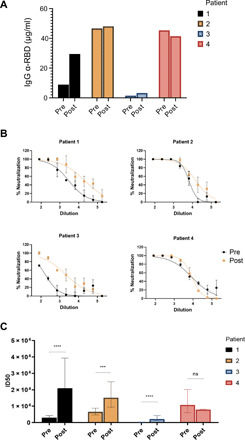
Fig. 4. Convalescent plasma transfer induces an increase in the NAb titers in some patients.
(A) Absolute quantitation of IgG α-RBD in SARS-CoV-2 S protein by ELISA. (B) NAb titration curves of serum from patients before (pre) and after (post) transfusion. Results are expressed as percent of neutralization ± %CV as described in Materials and Methods and correspond to a representative assay performed in triplicate. (C) ID50 value comparison between serum samples pre- and post-convalescent plasma transfusion. Error bars indicate asymmetrical confidence intervals (profile likelihood intervals) 95% CIs. Statistical differences were calculated by extra sum-of-squares F test. P values below 0.05 were considered statistically significant. *P < 0.05, **P < 0.01, ***P < 0.001, ****P < 0.0001. ns, nonsignificant.

References

    1. Zhu N., Zhang D., Wang W., Li X., Yang B., Song J., Zhao X., Huang B., Shi W., Lu R., Niu P., Zhan F., Ma X., Wang D., Xu W., Wu G., Gao G. F., Tan W.; China Novel Coronavirus Investigating and Research Team , A novel coronavirus from patients with pneumonia in China, 2019. N. Engl. J. Med. 382, 727–733 (2020). - PMC - PubMed
    1. Zhou P., Lou Yang X., Wang X. G., Hu B., Zhang L., Zhang W., Si H. R., Zhu Y., Li B., Huang C. L., Chen H. D., Chen J., Luo Y., Guo H., Di Jiang R., Liu M. Q., Chen Y., Shen X. R., Wang X., Zheng X. S., Zhao K., Chen Q. J., Deng F., Liu L. L., Yan B., Zhan F. X., Wang Y. Y., Xiao G. F., Shi Z. L., Addendum: A pneumonia outbreak associated with a new coronavirus of probable bat origin. Nature 579, 270–273 (2020). - PMC - PubMed
    1. COVID-19 Map—Johns Hopkins Coronavirus Resource Center; https://coronavirus.jhu.edu/map.html.
    1. Burki T., COVID-19 in Latin America. Lancet Infect. Dis. 20, 547–548 (2020). - PMC - PubMed
    1. Castillo A. E., Parra B., Tapia P., Acevedo A., Lagos J., Andrade W., Arata L., Leal G., Barra G., Tambley C., Tognarelli J., Bustos P., Ulloa S., Fasce R., Fernández J., Phylogenetic analysis of the first four SARS-CoV-2 cases in Chile. J. Med. Virol. 92, 1562–1566 (2020). - PMC - PubMed

Publication types

Substances