


Severe Acute Neurologic Involvement in Children With Hemolytic-Uremic Syndrome
- PMID: 33579812
- PMCID: PMC7919116
- DOI: 10.1542/peds.2020-013631
Severe Acute Neurologic Involvement in Children With Hemolytic-Uremic Syndrome
Abstract
Background and objectives: Acute severe neurologic involvement is the most threatening complication in children with hemolytic-uremic syndrome (HUS). Our primary study objectives were to describe the association between acute neurologic manifestations (ANMs) and in-hospital mortality among children with HUS.
Methods: Using the Pediatric Health Information System database, in this retrospective multicenter cohort study, we identified the first HUS-related inpatient visit among children ≤18 years (years 2004-2018). Frequency of selected ANMs and combinations of ANMs, as well as the rate of mortality, was calculated. Multivariate logistic regression was used to identify the association of ANMs and the risk of in-hospital mortality.
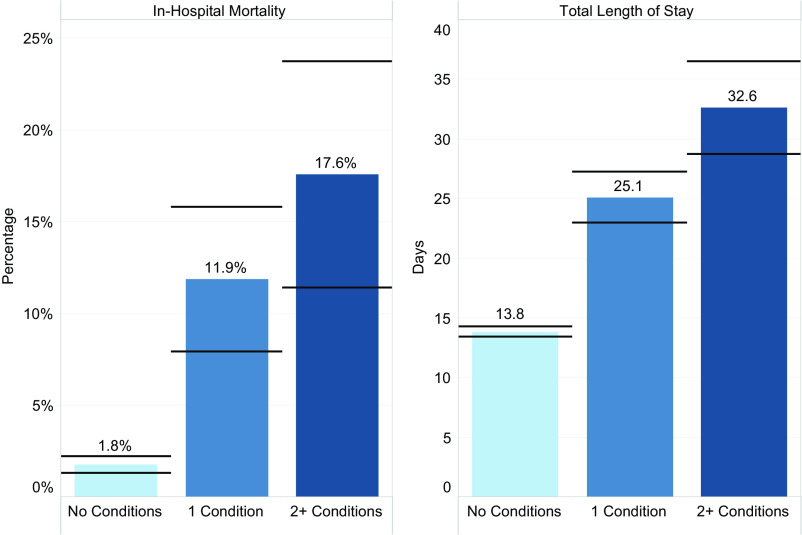
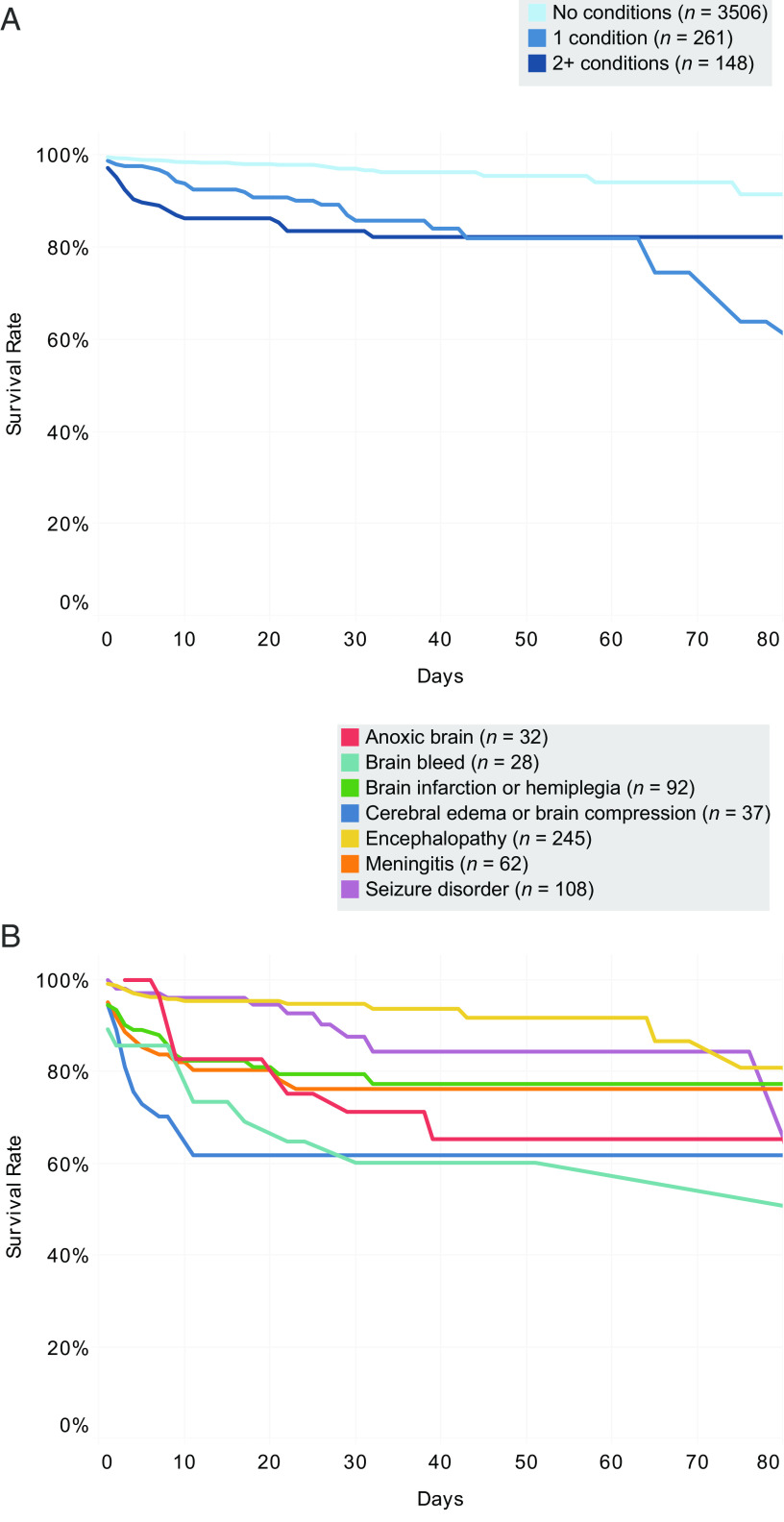
Results: Among 3915 patients included in the analysis, an ANM was noted in 10.4% (n = 409) patients. Encephalopathy was the most common ANM (n = 245). Mortality was significantly higher among patients with an ANM compared with patients without an ANM (13.9% vs 1.8%; P < .001). Individuals with any ANM had increased odds of mortality (odds ratio [OR]: 2.25; 95% confidence interval [CI]: 1.29-3.93; P = .004), with greater risk (OR: 2.60; 95% CI: 1.34-5.06; P = .005) among patients with ≥2 manifestations. Brain hemorrhage (OR: 3.09; 95% CI: 1.40-6.82; P = .005), brain infarction (OR: 2.64; 95% CI: 1.10-6.34; P = .03), anoxic brain injury (OR: 3.92; 95% CI: 1.49-10.31; P = .006), and brain edema (OR: 4.81; 95% CI: 1.82-12.71; P = .002) were independently associated with mortality.
Conclusions: In this study, the largest systematic assessment of ANMs among children with HUS to date, we identify differences in in-hospital mortality based on the type of ANM, with increased risk observed for patients with multiple ANMs.
Copyright © 2021 by the American Academy of Pediatrics.
Conflict of interest statement
POTENTIAL CONFLICT OF INTEREST: The authors have indicated they have no potential conflict of interest to disclose.
Figures
References
-
- Siegler RL. The hemolytic uremic syndrome. Pediatr Clin North Am. 1995;42(6):1505–1529 - PubMed
-
- Walsh PR, Johnson S. Treatment and management of children with haemolytic uraemic syndrome. Arch Dis Child. 2018;103(3):285–291 - PubMed
-
- Fidan K, Göknar N, Gülhan B, et al. Extra-renal manifestations of atypical hemolytic uremic syndrome in children. Pediatr Nephrol. 2018;33(8):1395–1403 - PubMed
-
- Trachtman H, Austin C, Lewinski M, Stahl RA. Renal and neurological involvement in typical Shiga toxin-associated HUS. Nat Rev Nephrol. 2012;8(11):658–669 - PubMed
-
- Tavasoli A, Zafaranloo N, Hoseini R, Otukesh H, Hooman N, Panahi P. Chronic neurological complications in hemolytic uremic syndrome in children. Iran J Kidney Dis. 2019;13(1):32–35 - PubMed
Publication types
MeSH terms
Grants and funding
LinkOut - more resources
Full Text Sources
Other Literature Sources
Medical
