


Country-level structural stigma, identity concealment, and day-to-day discrimination as determinants of transgender people's life satisfaction
- PMID: 33582826
- PMCID: PMC8429389
- DOI: 10.1007/s00127-021-02036-6
Country-level structural stigma, identity concealment, and day-to-day discrimination as determinants of transgender people's life satisfaction
Abstract
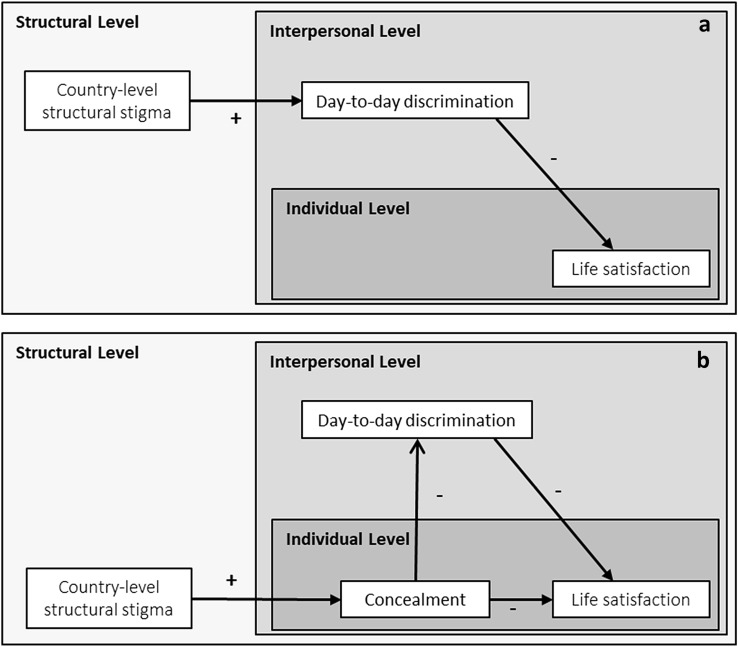
Purpose: Discriminatory laws, policies, and population attitudes, surrounding transgender people vary greatly across countries, from equal protection under the law and full acceptance to lack of legal recognition and open bias. The consequences of this substantial between-country variation on transgender people's health and well-being is poorly understood. We therefore examined the association between structural stigma and transgender people's life satisfaction across 28 countries.
Methods: Data from transgender participants (n = 6771) in the 2012 EU-LGBT-survey regarding identity concealment, day-to-day discrimination, and life satisfaction were assessed. Structural stigma was measured using publicly available data regarding each country's discriminatory laws, policies, and population attitudes towards transgender people.
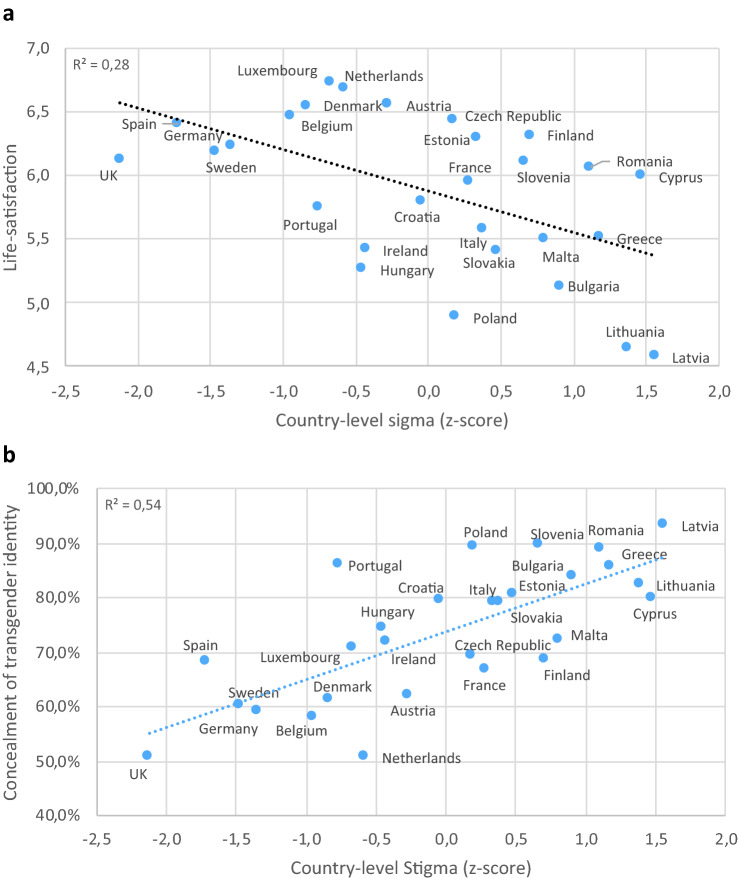
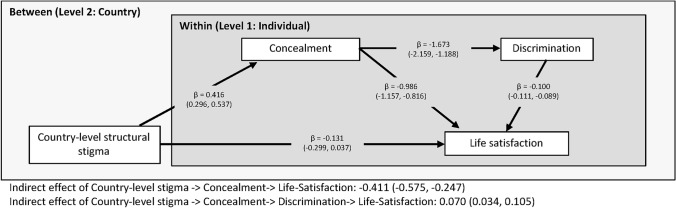
Results: Multilevel models showed that country-level structural stigma was associated with lower life satisfaction, an association largely explained by higher levels of identity concealment in higher-structural-stigma countries. Yet identity concealment was also associated with lower day-to-day discrimination and therefore protected against even lower life satisfaction.
Conclusion: The results emphasize the importance of changing discriminatory legislation and negative population attitudes to improve transgender people's life satisfaction, and also highlight targets for intervention at interpersonal and individual levels.
Keywords: Concealment; LGBT; Life-satisfaction; Minority stress; Structural stigma; Transgender.
© 2021. The Author(s).
Conflict of interest statement
The authors have no conflict of interest to disclose.
Figures
References
MeSH terms
Grants and funding
LinkOut - more resources
Full Text Sources
Other Literature Sources
