


Reducing Unnecessary Diagnostic Testing in Pediatric Syncope: A Quality Improvement Initiative
- PMID: 33582873
- PMCID: PMC8805737
- DOI: 10.1007/s00246-021-02567-4
Reducing Unnecessary Diagnostic Testing in Pediatric Syncope: A Quality Improvement Initiative
Abstract
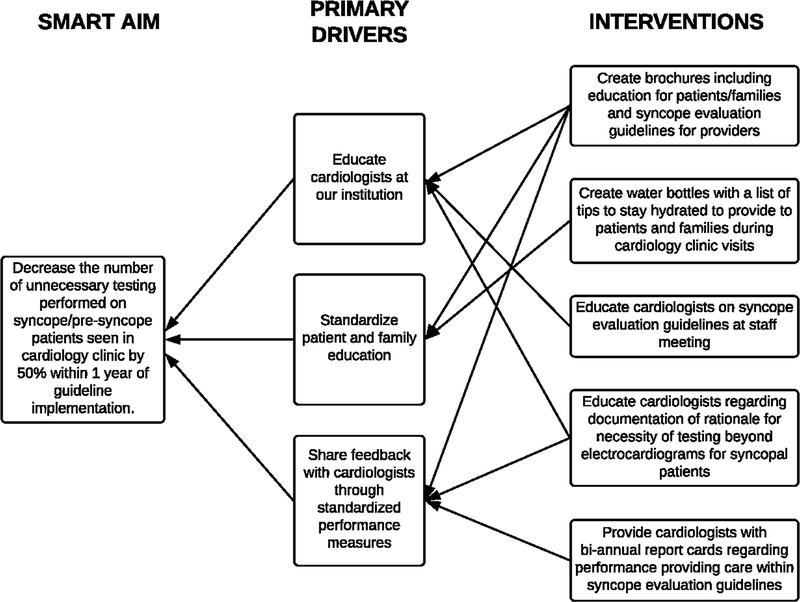
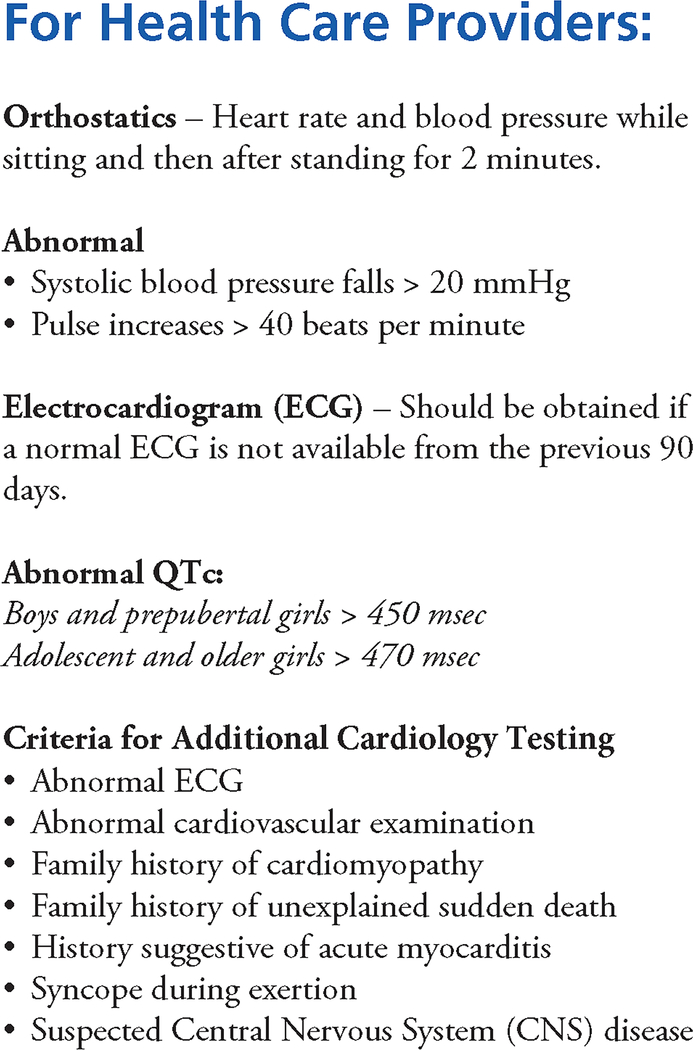
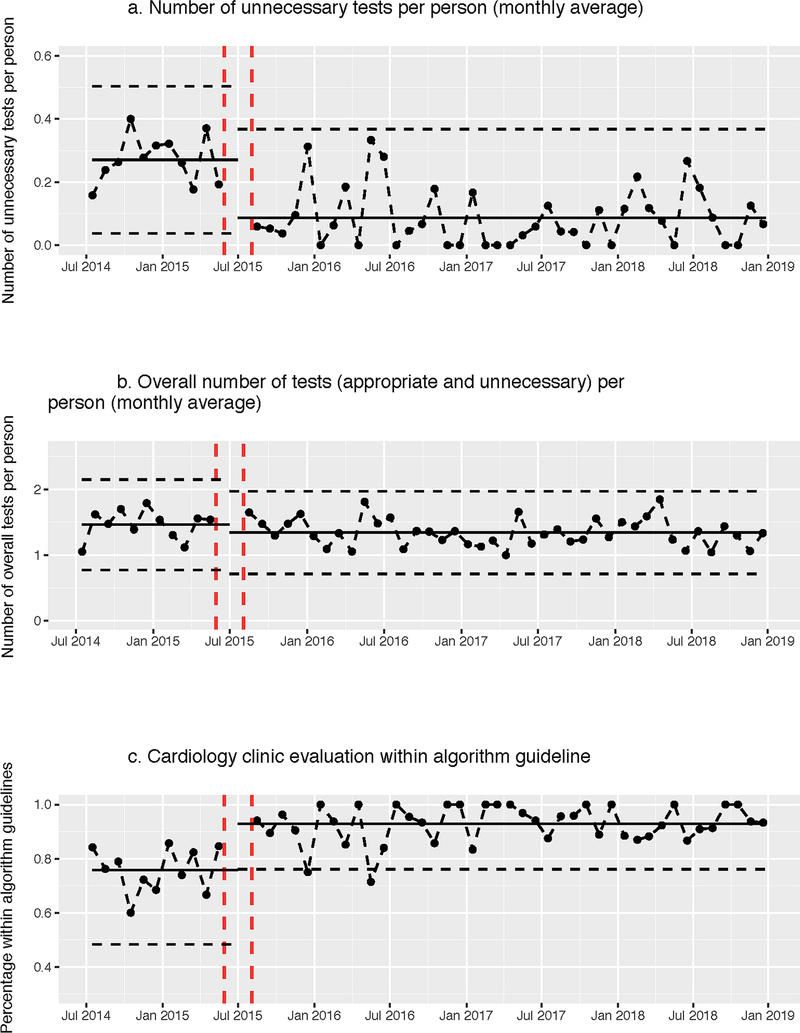
Our aim was to reduce the frequency of unnecessary testing used by pediatric cardiologists in the evaluation of pediatric patients with syncope or pre-syncopal symptoms without negatively affecting patient outcomes. Guidelines for cardiac testing in pediatric patients with syncope were developed and disseminated to members of our pediatric cardiology division. Educational brochures and water bottles labeled with tips on preventing syncope were made available to families and providers in our clinics. Compliance to the guidelines was tracked and shared with providers. Segmented regression analysis was used to model cardiac testing utilization and guideline compliance by provider over time before and after the implementation of the guidelines. A pre-intervention cohort of 237 patients (June 2014-May 2015) was compared to 880 post-intervention patients (August 2015-June 2019). There was a significant decrease in the utilization of unnecessary tests [odds ratio (OR) 0.3; 95% confidence interval (CI) 0.14, 0.65; p = 0.002] after the intervention. Charges associated with patient evaluation were significantly lower in the post-intervention cohort (interquartile range $0, $1378 vs $0, $213; p = 0.005). Post-intervention visits to emergency departments within our system were significantly decreased, with no change in the incidence of cardiac arrest, hospitalization for syncope, or referral to pediatric electrophysiologists. We demonstrated a significant reduction in the use of unnecessary testing and associated charges by developing guidelines related to the evaluation of pediatric patients with syncope or pre-syncopal symptoms. There was no demonstrable negative impact on patient outcomes.
Keywords: Cardiac disease; Diagnostic test; Pediatric; Quality improvement; Syncope.
Conflict of interest statement
Figures
References
-
- Lewis DA, Dhala A (1999) Syncope in the pediatric patient. The cardiologist’s perspective. Pediatr Clin N Am 46:205–219 - PubMed
-
- Sapin SO (2004) Autonomic syncope in pediatrics: a practice-oriented approach to classification, pathophysiology, diagnosis, and management. Clin Pediatr 43:17–23 - PubMed
-
- Zhang Q, Du J, Wang C et al. (2009) The diagnostic protocol in children and adolescents with syncope: a multi-centre prospective study. Acta Paediatr 98:879–884 - PubMed
-
- Phelps H, Sachdeva R, Mahle W et al. (2016) Syncope best practices: a syncope clinical practice guideline to improve quality. Congenit Heart Dis 11:230–238 - PubMed
-
- Johnson ER, Etheridge SP, Minich LL et al. (2014) Practice variation and resource use in the evaluation of pediatric vasovagal syncope: are pediatric cardiologists over-testing? Pediatr Cardiol 35:753–758 - PubMed
MeSH terms
Grants and funding
LinkOut - more resources
Full Text Sources
Other Literature Sources
Medical
