


Development and evaluation of an interactive web-based decision-making programme on relapse management for people with multiple sclerosis (POWER@MS2)-study protocol for a randomised controlled trial
- PMID: 33583424
- PMCID: PMC7882468
- DOI: 10.1186/s13063-021-05059-1
Development and evaluation of an interactive web-based decision-making programme on relapse management for people with multiple sclerosis (POWER@MS2)-study protocol for a randomised controlled trial
Erratum in
-
Correction to: Development and evaluation of an interactive web-based decision-making programme on relapse management for people with multiple sclerosis (POWER@MS2)-study protocol for a randomised controlled trial.Trials. 2021 Mar 8;22(1):196. doi: 10.1186/s13063-021-05152-5. Trials. 2021. PMID: 33685464 Free PMC article. No abstract available.
Abstract
Introduction: Multiple sclerosis is a chronic inflammatory, degenerative disease of the central nervous system manifesting at first with relapses in about 85% of cases. In Germany, intravenous therapy with high-dose corticosteroids is the treatment standard of acute relapses. The treatment leads to a faster reduction of symptoms in about 25 of 100 treated patients but has no proven long-term benefits over placebo treatment. Intravenous treatment is not superior to oral treatment. Therefore, informed decisions on relapse management are required. An earlier randomised controlled trial showed that evidence-based patient information and education on relapse management leads to more informed decisions and more relapses not treated or treated with oral corticosteroids. This study aims to evaluate whether a web-based relapse management programme will positively change relapse management and strengthen autonomy in people with multiple sclerosis.
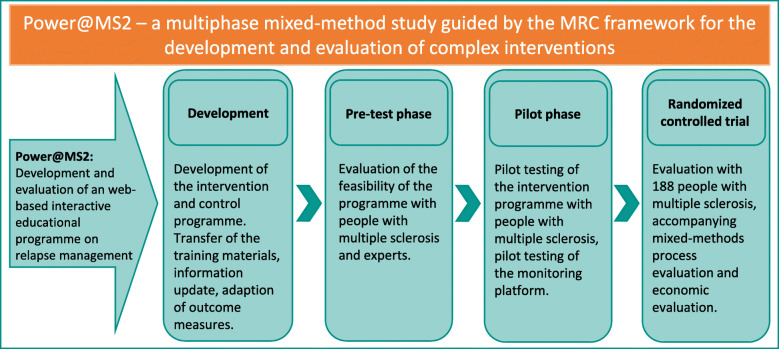
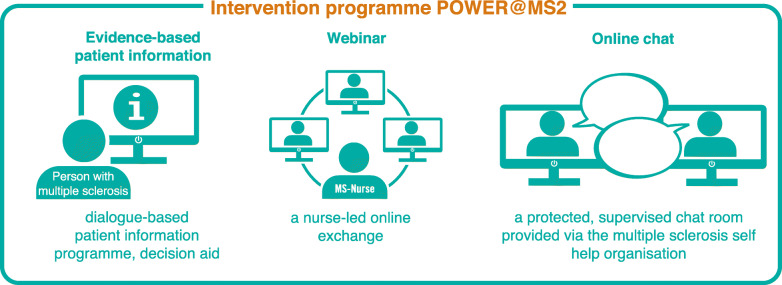
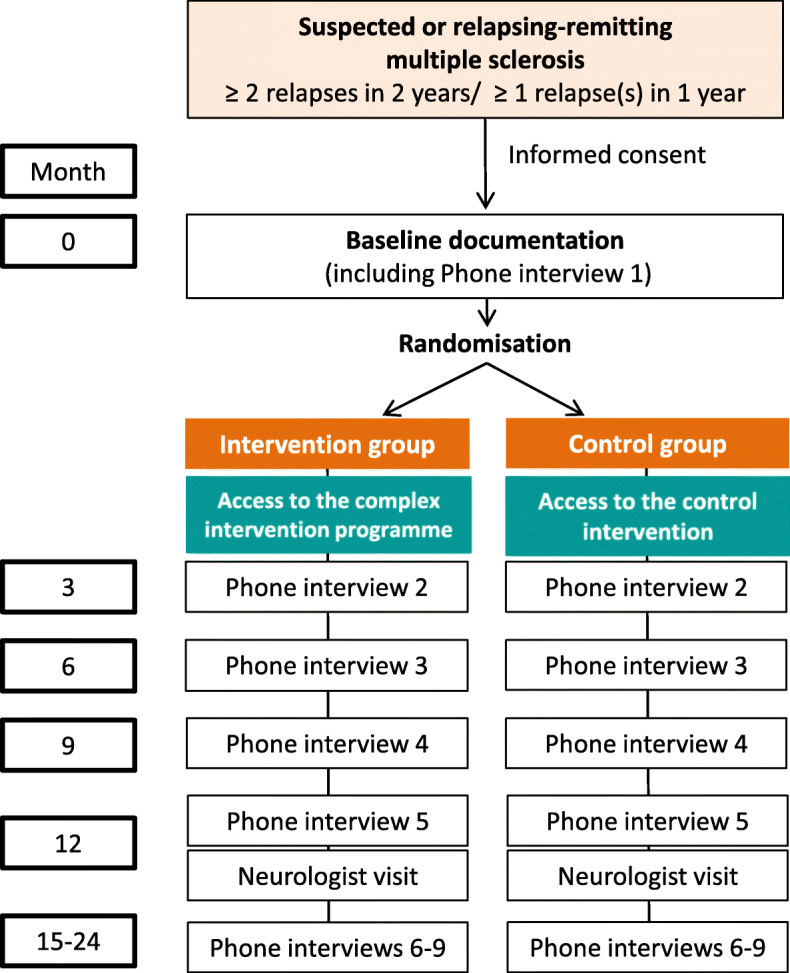
Methods: The pragmatic double-blind randomised controlled trial is accompanied by a mixed-methods process evaluation and a health economic evaluation and follows the UK Medical Research Council guidance on developing and evaluating complex interventions. A total of 188 people with possible or relapsing-remitting multiple sclerosis with ≥ 1 relapse within the last year and/or ≥ 2 relapses within the last 2 years will be recruited and randomised using blocks. The intervention group receives a web- and dialogue-based decision aid on relapse management, a nurse-led webinar and access to a monitored chat forum. The control group receives standard information, which will be made available via the same online platform as the intervention. The primary endpoint is the proportion of relapses not treated or treated with oral corticosteroids. Key secondary endpoints are the annualised relapse rate, decision-making, empowerment, quality of life and cost-effectiveness. Facilitators and barriers will be assessed by mixed-methods process evaluation measures. The study ends when 81 relapses have been documented or after 24 months of observation per individual patient. Analyses will follow the intention-to-treat principle.
Discussion: We hypothesise that the intervention will enhance patient empowerment and have a positive impact on patients' relapse management.
Trial registration: ClinicalTrials.gov NCT04233970 . Registered on 18 January 2020.
Keywords: Decision aid; Decision-making; Multiple sclerosis; Patient empowerment; Randomized controlled trial; Relapse.
Figures
References
-
- D21 I. D21-Digital-Index 2015: Die Gesellschaft in der digitalen transformation: initiative D21 e.V. und TNS Infratest; [updated 2016. Available from: http://www.initiatived21.de/wp-content/uploads/2015/11/D21_Digital-Index....
-
- WHO. Atlas multiple sclerosis resources in the world 2008 2008 [Available from: http://www.who.int/mental_health/neurology/Atlas_MS_WEB.pdf.
-
- Holstiege J, Steffen A, Goffrier B, Bätzing J. Epidemiologie der Multiplen Sklerose–eine populationsbasierte deutschlandweite Studie. 2017. Report No.: 17/09.
Publication types
MeSH terms
Associated data
Grants and funding
LinkOut - more resources
Full Text Sources
Other Literature Sources
Medical
