


Prevalence of Coxiella burnetii seropositivity and shedding in farm, pet and feral cats and associated risk factors in farm cats in Quebec, Canada
- PMID: 33583452
- PMCID: PMC8060820
- DOI: 10.1017/S0950268821000364
Prevalence of Coxiella burnetii seropositivity and shedding in farm, pet and feral cats and associated risk factors in farm cats in Quebec, Canada
Abstract
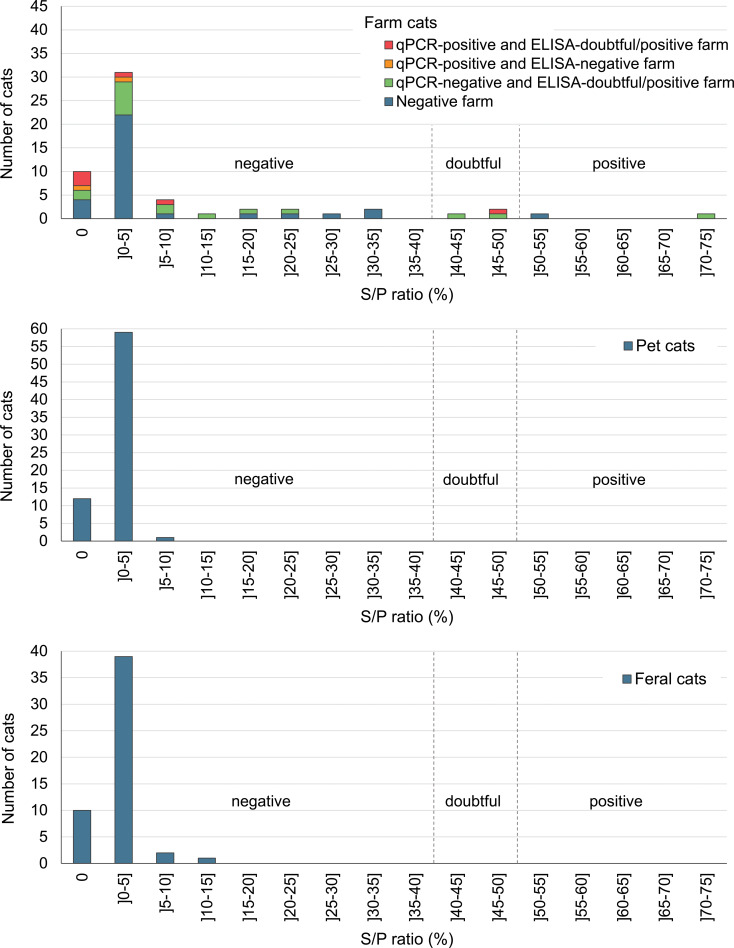
Cats represent a potential source of Coxiella burnetii, the aetiological agent of Q fever in humans. The prevalence and risk factors of C. burnetii infection in farm, pet and feral cats were studied in Quebec, Canada, using a cross-sectional study. Serum samples were tested using a specific enzyme-linked immunosorbent assay (ELISA) for the presence of antibodies against C. burnetii, whereas rectal swabs were assayed using real-time quantitative polymerase chain reaction (qPCR) for the molecular detection of the bacteria. Potential risk factors for farm cats were investigated using clinical examinations, questionnaires and results from a concurrent study on C. burnetii farm status. A total of 184 cats were tested: 59 from ruminant farms, 73 pets and 52 feral cats. Among farm cats, 2/59 (3.4%) were ELISA-positive, 3/59 (5.1%) were ELISA-doubtful and 1/59 (1.7%) was qPCR-positive. All pets and feral cats were negative to C. burnetii ELISA and qPCR. Farm cat positivity was associated with a positive C. burnetii status on the ruminant farm (prevalence ratio = 7.6, P = 0.03). Our results suggest that although pet and feral cats do not seem to pose a great C. burnetii risk to public health, more active care should be taken when in contact with cats from ruminant farms.
Keywords: Coxiella burnetii; cats; prevalence; risk factors.
Conflict of interest statement
The authors declare that they have no competing interests.
Figures
References
-
- Woldehiwet Z (2004) Q fever (coxiellosis): epidemiology and pathogenesis. Research in Veterinary Science 77, 93–100. - PubMed
-
- McQuiston JH and Childs JE (2002) Q fever in humans and animals in the United States. Vector Borne and Zoonotic Diseases 2, 179–191. - PubMed
-
- Jones RM et al. (2006) The infectious dose of Coxiella burnetii (Q fever). Applied Biosafety 11, 32–41.
Publication types
MeSH terms
LinkOut - more resources
Full Text Sources
Other Literature Sources
Miscellaneous
