


Effects of Isometric Handgrip Training on Home Blood Pressure Measurements in Hypertensive Patients: A Randomized Crossover Study
- PMID: 33583887
- PMCID: PMC8355381
- DOI: 10.2169/internalmedicine.5865-20
Effects of Isometric Handgrip Training on Home Blood Pressure Measurements in Hypertensive Patients: A Randomized Crossover Study
Abstract
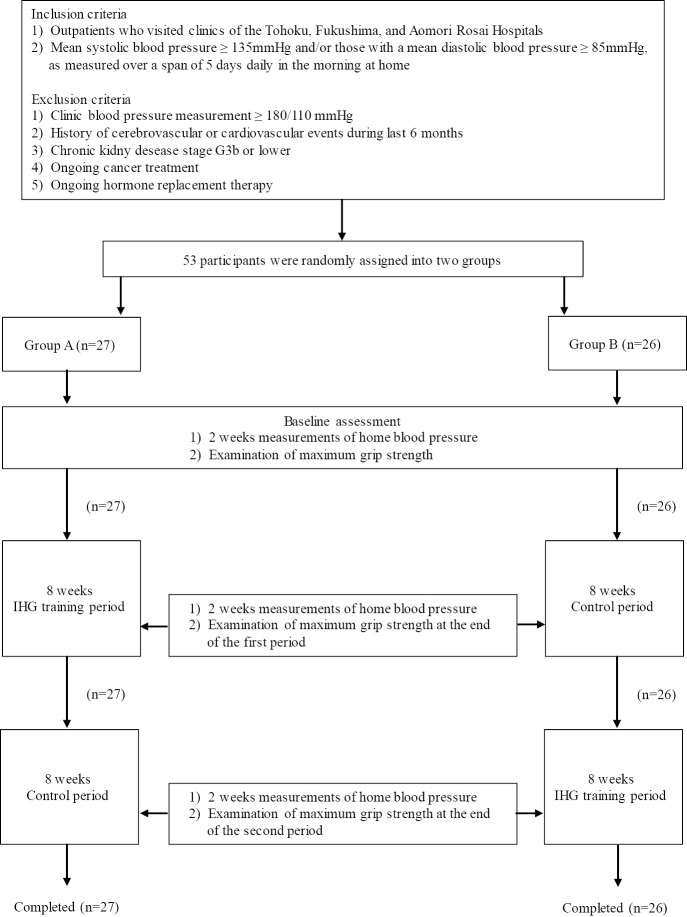
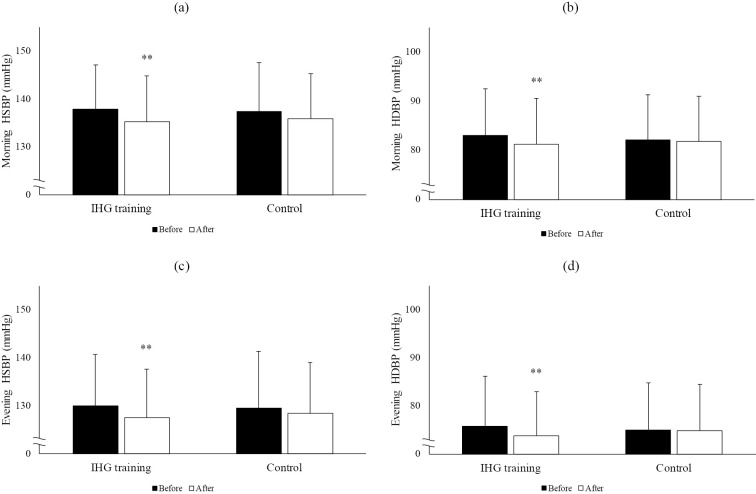
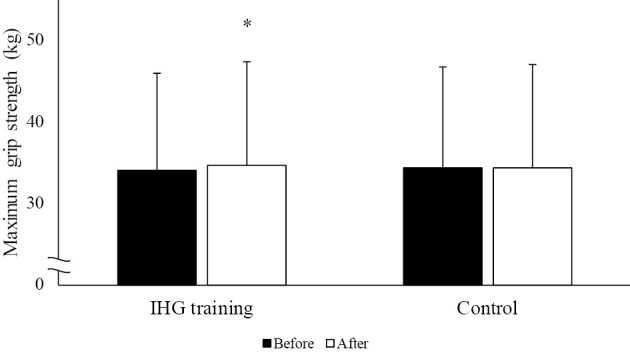
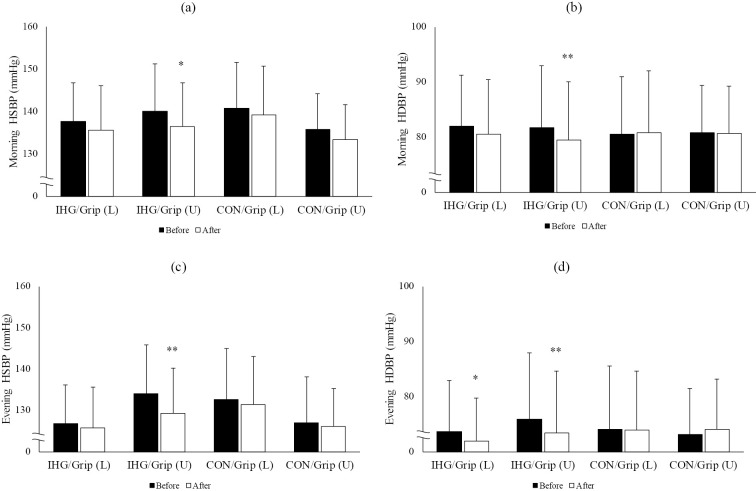
Objective We aimed to examine the effects of isometric handgrip (IHG) training on home blood pressure (BP) levels in hypertensive Japanese patients undergoing treatment. Methods Fifty-three hypertensive patients (mean age, 61.7 years; 56.6% men) with a home systolic BP ≥135 mmHg and/or a home diastolic BP ≥85 mmHg were randomly assigned to either group A or B. As per the crossover design, group A performed 8 weeks of IHG training, followed by an equivalent training-free, control period, while the reverse protocol was performed by group B. The baseline characteristics were similar between both groups. The individualized daily IHG training comprised four sets of 2-min isometric contractions at 30% of the individual's maximum voluntary contraction capacity, including 1 min of rest between sets, for ≥3 days/week. The outcome measure was morning and evening home BP readings taken over the last 2 weeks of the training and control periods. Results A combined data analysis for both groups showed that IHG training was significantly associated with the lowering of both systolic and diastolic BP in the morning (137.9±9.3 vs. 135.3±9.5 mmHg, p=0.007 and 83.0±9.5 vs. 81.2±9.3 mmHg, p<0.001, respectively) and evening (130.0±10.7 vs. 127.6±10.1 mmHg, p=0.003 and 75.8±10.4 vs. 73.8±9.2 mmHg, p<0.001, respectively), while no significant change was observed after the control period. A larger increase in the maximum grip strength due to IHG training was associated with greater BP reductions. Conclusion An 8-week period of IHG training significantly lowered both the morning and evening home BP in hypertensive Japanese patients undergoing treatment.
Keywords: grip strength; home blood pressure; hypertension; isometric handgrip training; non-pharmacological treatment.
Conflict of interest statement
Figures
References
-
- Noda H, Iso H, Saito I, et al. The impact of the metabolic syndrome and its components on the incidence of ischemic heart disease and stroke: the Japan public health center-based study. Hypertens Res 32: 289-298, 2009. - PubMed
-
- Ikeda N, Saito E, Kondo N, et al. What has made the population of Japan healthy? Lancet 378: 1094-1105, 2011. - PubMed
-
- Lee LL, Watson MC, Mulvaney CA, Tsai CC, Lo SF. The effect of walking intervention on blood pressure control: a systematic review. Int J Nurs Stud 47: 1545-1561, 2010. - PubMed
-
- Murphy MH, Nevill AM, Murtagh EM, Holder RL. The effect of walking on fitness, fatness and resting blood pressure: a meta-analysis of randomized trials. Prev Med 44: 377-385, 2007. - PubMed
-
- Kelley GA, Kelly KS, Tran ZV. Walking resting blood pressure in adults: a meta-analysis. Prev Med 33: 120-127, 2001. - PubMed
Publication types
MeSH terms
LinkOut - more resources
Full Text Sources
Other Literature Sources
Medical
Research Materials
