


Is Salivary Sialic Acid a Reliable Biomarker in the Detection of Oral Potentially Malignant Disorder and Oral Squamous Cell Carcinoma
- PMID: 33584047
- PMCID: PMC7855196
- DOI: 10.1007/s12663-019-01309-7
Is Salivary Sialic Acid a Reliable Biomarker in the Detection of Oral Potentially Malignant Disorder and Oral Squamous Cell Carcinoma
Abstract
Purpose: Glycoprotein is an important constituent of saliva, and the observed increase in salivary glycoproteins such as sialic acid in oral potentially malignant disorder (OPMDs) and OSCC has stimulated the interest of researchers to explore it as a possible biomarker.
Methods: The study used 60 subjects, who were divided into three groups: Group I-20 subjects who were clinically and histopathologically diagnosed with OSCC; Group II-20 subjects who were clinically and histopathologically diagnosed with OPMDs; and Group III-20 healthy subjects with good oral hygiene and with no systemic disorders detected. Two millilitres of unstimulated salivary samples was collected in a pre-sterilized container to analyse total salivary sialic acid (TSA) levels using a sialic acid kit and UV spectrophotometer.
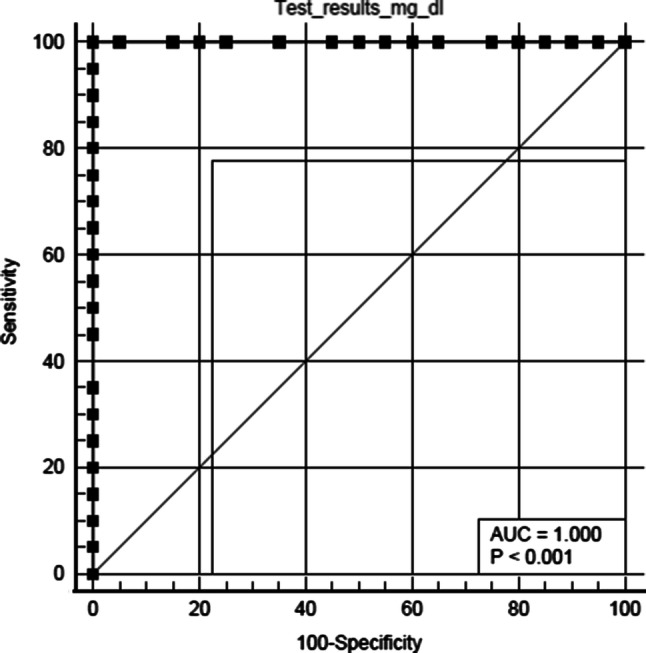
Results: The TSA levels in OSCC (545.45 ± 100.04) were much higher when compared to the level in OPMDs (169.80 ± 66.43) and in healthy subjects (25.45 ± 16.07). Statically significant correlation was observed between different grades of OSCC. Moreover, sialic acid showed 100% sensitivity and specificity between all the three groups. Statistical analysis was done with Kruskal-Wallis, followed by Mann-Whitney post hoc test at P < 0.05. The results suggested the utility of sialic acid as an efficient biomarker.
Keywords: Biomarkers; Oral potentially malignant disorder (OPMDs); Oral squamous cell carcinoma (OSCC); Saliva; Total sialic acid level (TSA).
© The Association of Oral and Maxillofacial Surgeons of India 2019.
Conflict of interest statement
Conflict of interestThe authors declare that we have no conflict of interest.
Figures

References
-
- Chan DW, Schwartz MK. Tumor markers. In: Diamandis EP, Fritsche HA, Lilja H, Chan DW, Schwartz MK, editors. Physiology, pathobiology, technology, and clinical applications. Tumor markers: introduction and general principles. Washington: AACC Press; 2002. pp. 9–17.
LinkOut - more resources
Full Text Sources
Research Materials