


Liver injury in the era of COVID-19
- PMID: 33584070
- PMCID: PMC7856845
- DOI: 10.3748/wjg.v27.i5.377
Liver injury in the era of COVID-19
Abstract
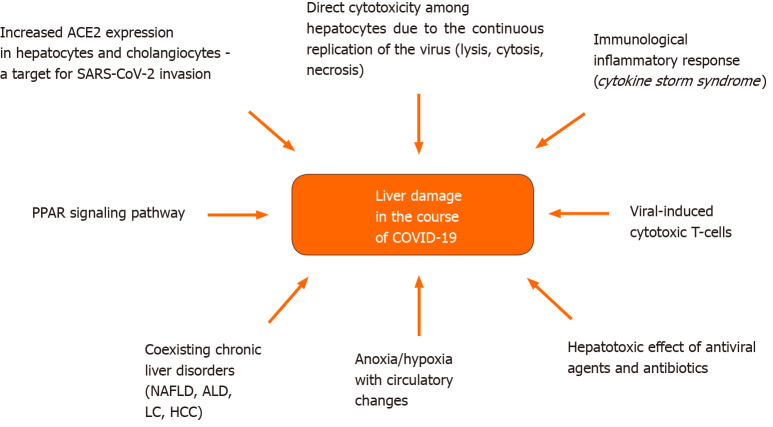
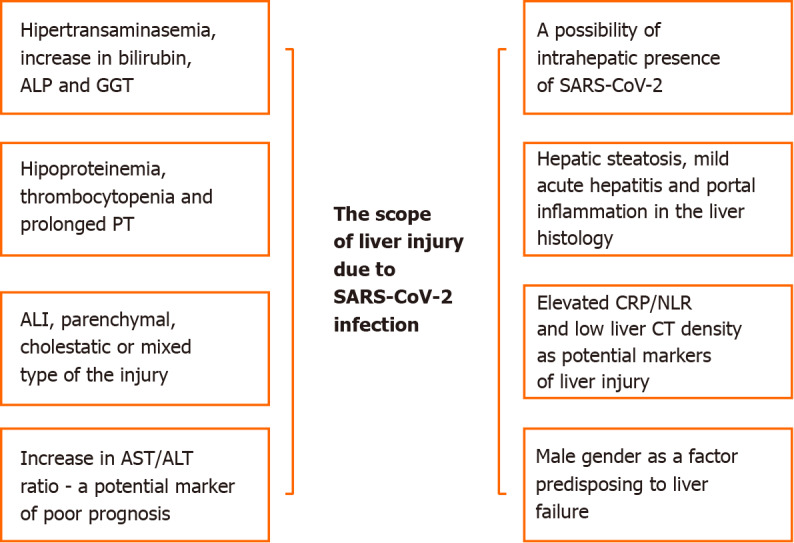
Severe acute respiratory syndrome coronavirus-2 (SARS-CoV-2) has undoubtedly revolutionized the whole globe and given a new point of view on respiratory tract infections. Nevertheless, coronavirus disease 2019 (COVID-19) cannot be perceived as a disease limited only to pneumonia with diverse severity. More and more reports have demonstrated a wide range of possible systemic symptoms, including hepatic complications. Liver injury has been observed in a significant proportion of patients, especially in those with a severe or critical illness. COVID-19 might provoke a deterioration of liver function in patients with already diagnosed chronic liver diseases and without pre-existing liver disorders. The deterioration of liver function worsens the prognosis, increases the risk of a severe course of SARS-CoV-2 infection and prolongs the hospital stay. In general, patients who develop liver dysfunction in COVID-19 are mainly males, elderly people, and those with higher body mass index. The underlying mechanisms for hepatic failure in patients infected with SARS-CoV-2 are still unclear, nevertheless liver damage appears to be directly connected with virus-induced cytopathic effects. A liver injury observed during hospitalization might be simultaneously caused by the use of potentially hepatotoxic drugs, mainly antiviral agents. This minireview focuses on a possible relationship between COVID-19 and the liver, potential molecular mechanisms of liver damage, the characteristics of liver injury and suggested factors predisposing to hepatic manifestations in COVID-19 patients.
Keywords: Acute liver failure; COVID-19; Chronic liver diseases; Inflammation; SARS-CoV-2 infection.
©The Author(s) 2021. Published by Baishideng Publishing Group Inc. All rights reserved.
Conflict of interest statement
Conflict-of-interest statement: Authors declare no conflict of interests for this article.
Figures
References
Publication types
MeSH terms
Substances
LinkOut - more resources
Full Text Sources
Other Literature Sources
Medical
Miscellaneous
