


How to Help Young Children Ask Better Questions?
- PMID: 33584420
- PMCID: PMC7874179
- DOI: 10.3389/fpsyg.2020.586819
How to Help Young Children Ask Better Questions?
Abstract
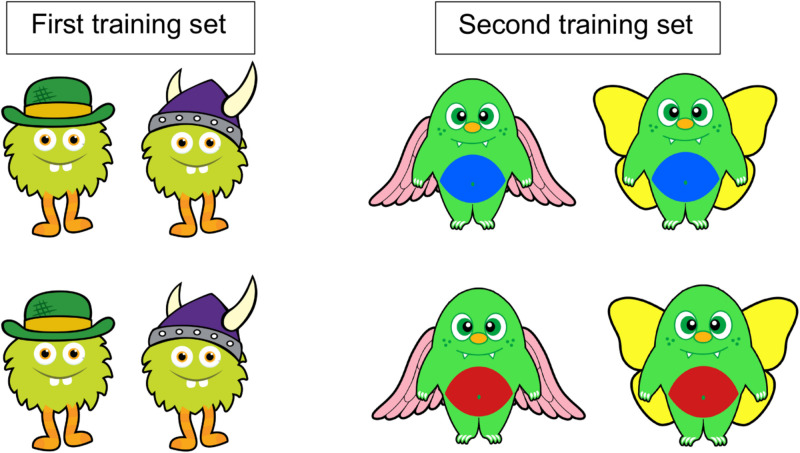
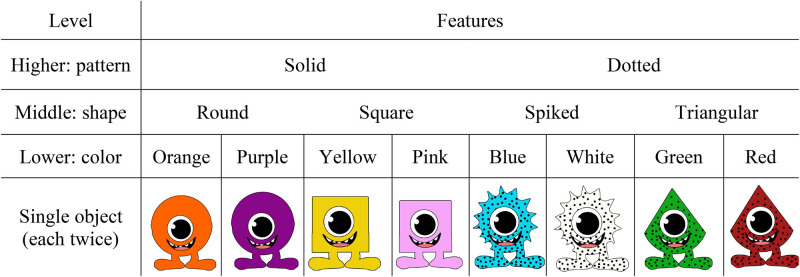
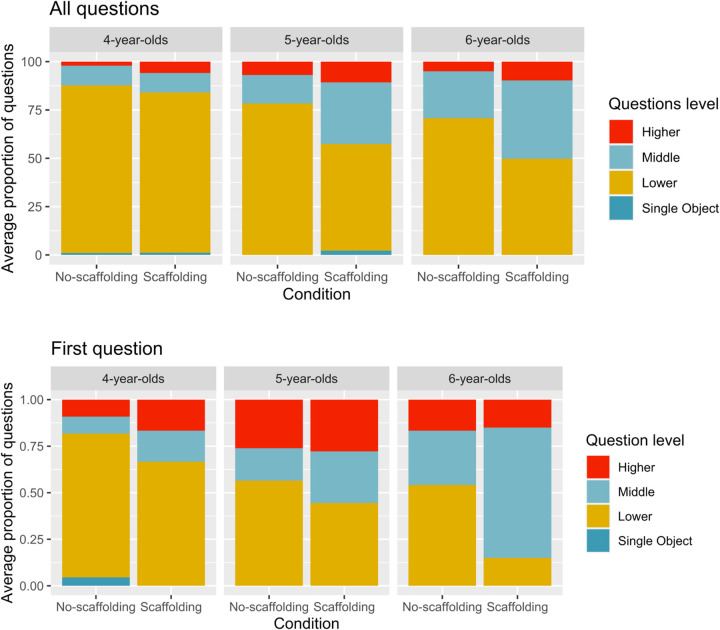
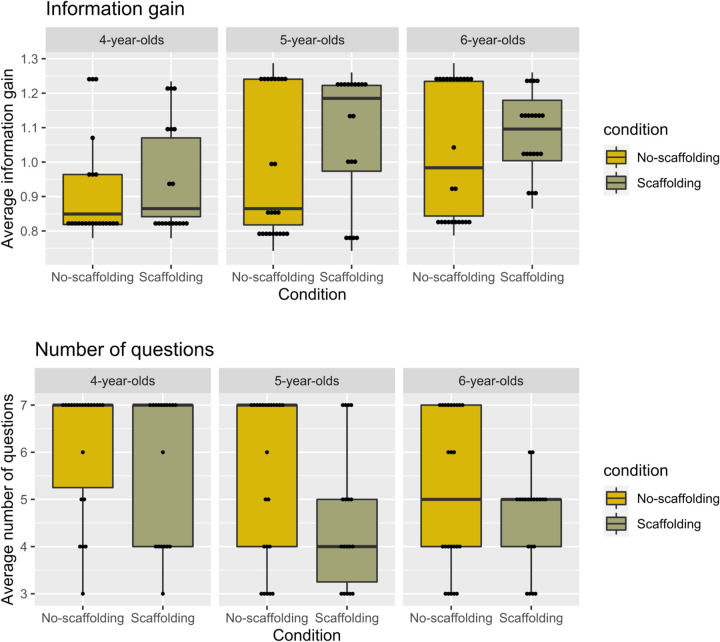
In this paper, we investigate the informativeness of 4- to 6-year-old (N = 125) children's questions using a combined qualitative and quantitative approach. Children were presented with a hierarchical version of the 20-questions game, in which they were given an array of objects that could be organized into three category levels based on shared features. We then tested whether it is possible to scaffold children's question-asking abilities without extensive training. In particular, we supported children's categorization performance by providing the object-related features needed to ask effective constraint-seeking questions. We found that with both age and scaffolding children asked more effective questions, targeting higher category levels and therefore reaching the solution with fewer questions. We discuss the practical and theoretical implications of these results.
Keywords: information gain; information search; preschoolers; question asking; scaffolding; vocabulary.
Copyright © 2021 Ruggeri, Walker, Lombrozo and Gopnik.
Conflict of interest statement
The authors declare that the research was conducted in the absence of any commercial or financial relationships that could be construed as a potential conflict of interest.
Figures
References
-
- Callanan M. A., Oakes L. M. (1992). Preschoolers’ questions and parents’ explanations: causal thinking in everyday activity. Cogn. Dev. 7 213–233. 10.1016/0885-2014(92)90012-G - DOI
-
- Denney D. (1972). Modeling and eliciting effects upon conceptual strategies. Child Dev. 43 810–823. 10.2307/1127633 - DOI
-
- Denney D. R. (1975). The effects of exemplary and cognitive models and self-rehearsal on children’s interrogative strategies. J. Exp. Child Psychol. 19 476–488. 10.1016/0022-0965(75)90077-6 - DOI
LinkOut - more resources
Full Text Sources
Other Literature Sources
