


Endoscopic retrograde cholangiopancreatography and liver biopsy in the evaluation of elevated liver function tests after liver transplantation
- PMID: 33584992
- PMCID: PMC7856863
- DOI: 10.4254/wjh.v13.i1.132
Endoscopic retrograde cholangiopancreatography and liver biopsy in the evaluation of elevated liver function tests after liver transplantation
Abstract
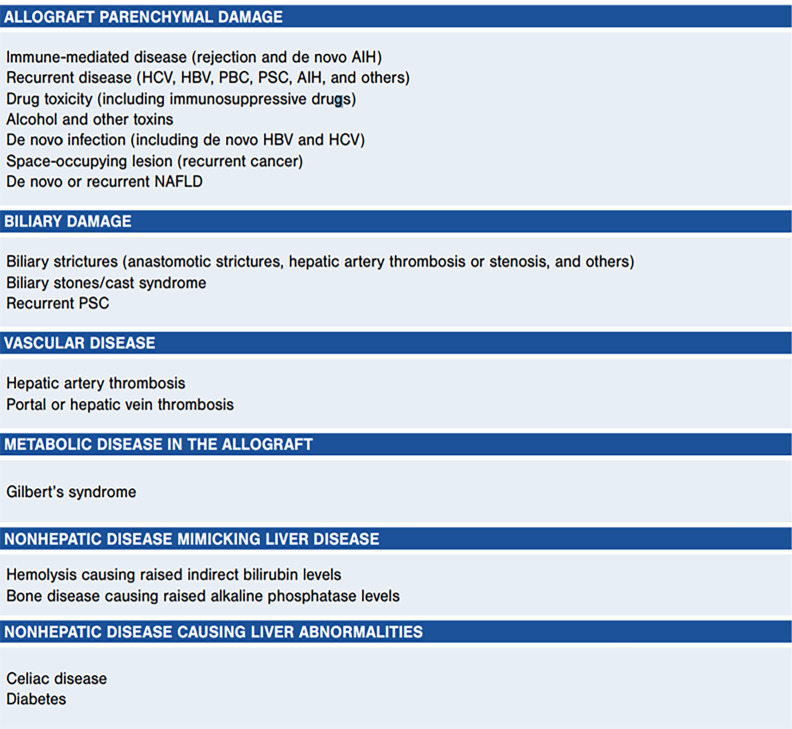
Background: Abnormal liver function tests (LFTs) in post-liver transplant (LT) patients pose a challenge in the timing and selection of diagnostic modalities. There are little data regarding the accuracy of endoscopic retrograde cholangiopancreatography (ERCP) and liver biopsy (LB) in diagnosing post-transplant complications.
Aim: To evaluate the diagnostic performance of ERCP and LB in patients with non-vascular post-LT complications.
Methods: This single-center retrospective study evaluated patients undergoing both ERCP and LB for evaluation of elevated LFTs within 6 mo of LT from 2000 to 2017. Diagnostic operating characteristics including accuracy, sensitivity and specificity for various diagnoses were calculated for ERCP and LB. The R factor (ratio of alkaline phosphatase to alanine aminotransferase) was also calculated for each patient.
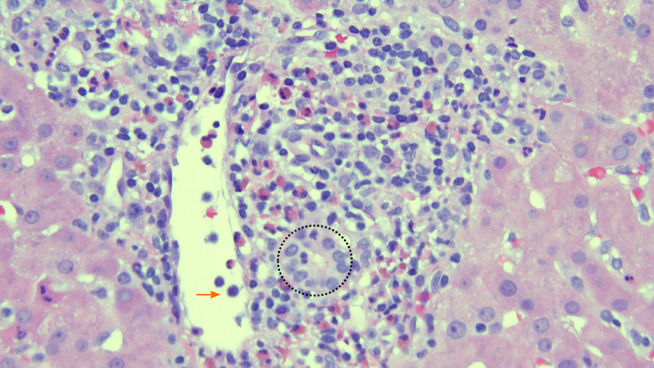
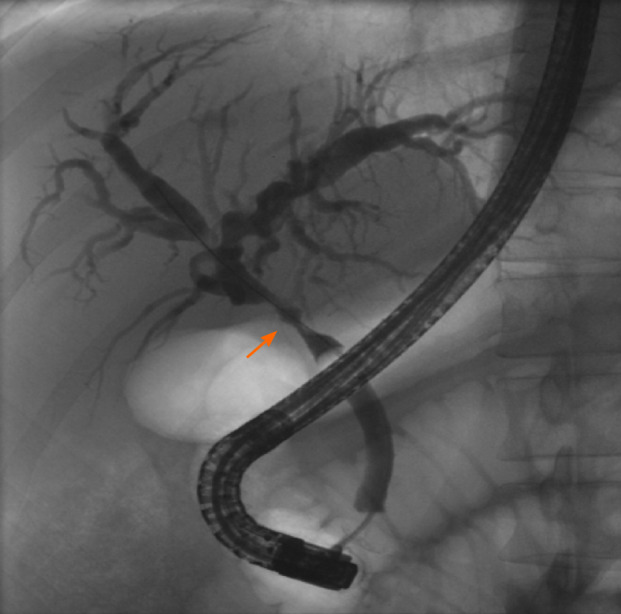
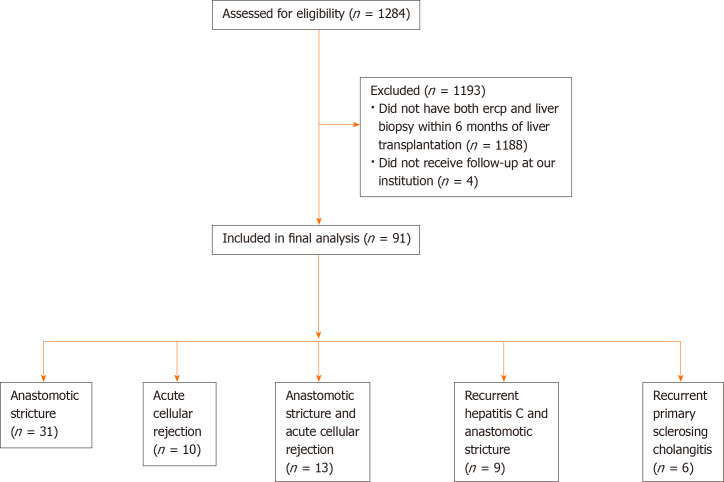
Results: Of the 1284 patients who underwent LT, 91 patients (74.7% males, mean age of 51) were analyzed. Anastomotic strictures (AS, 24.2%), acute cellular rejection (ACR, 11%) and concurrent AS/ACR (14.3%) were the most common diagnoses. ERCP carried an accuracy of 79.1% (95%CI: 69.3-86.9), LB had an accuracy of 93.4% (95%CI: 86.2-97.5), and the combination of the two had an accuracy of 100% (95%CI: 96-100). There was no difference between patients with AS and ACR in mean R factor (AS: 1.9 vs ACR: 1.1, P = 0.24). Adverse events did not differ between the two tests (ERCP: 3.1% vs LB: 1.1%, P = 0.31).
Conclusion: In patients with abnormal LFTs after LT without vascular complications, the combination of LB and ERCP carries low risk and improves diagnostic accuracy over either test alone.
Keywords: Abnormal liver tests; Acute cellular rejection; Anastomotic biliary stricture; Endoscopic retrograde cholangiopancreatography; Liver biopsy; Liver transplantation.
©The Author(s) 2020. Published by Baishideng Publishing Group Inc. All rights reserved.
Conflict of interest statement
Conflict-of-interest statement: We have no financial relationships to disclose.
Figures
References
-
- Services USDoHH. Transplants by Donor Type, Organ Procurement and Transplantation Network (OPTN). 2019. Available from: https://optn.transplant.hrsa.gov/
-
- Lucey MR, Terrault N, Ojo L, Hay JE, Neuberger J, Blumberg E, Teperman LW. Long-term management of the successful adult liver transplant: 2012 practice guideline by the American Association for the Study of Liver Diseases and the American Society of Transplantation. Liver Transpl. 2013;19:3–26. - PubMed
-
- European Association for the Study of the Liver. EASL Clinical Practice Guidelines: Liver transplantation. J Hepatol. 2016;64:433–485. - PubMed
-
- Rockey DC, Caldwell SH, Goodman ZD, Nelson RC, Smith AD American Association for the Study of Liver Diseases. Liver biopsy. Hepatology. 2009;49:1017–1044. - PubMed
-
- Banff schema for grading liver allograft rejection: an international consensus document. Hepatology. 1997;25:658–663. - PubMed
LinkOut - more resources
Full Text Sources
Other Literature Sources
Research Materials
