


Predominance of PVL-negative community-associated methicillin-resistant Staphylococcus aureus sequence type 8 in newly diagnosed HIV-infected adults, Tanzania
- PMID: 33586013
- PMCID: PMC8206053
- DOI: 10.1007/s10096-021-04160-2
Predominance of PVL-negative community-associated methicillin-resistant Staphylococcus aureus sequence type 8 in newly diagnosed HIV-infected adults, Tanzania
Abstract
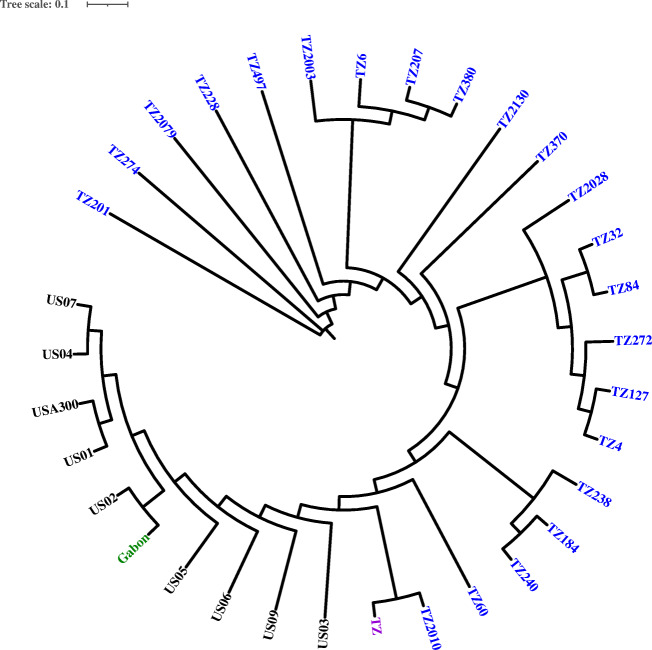
Difficult-to-treat infections caused by methicillin-resistant Staphylococcus aureus (MRSA) are of concern in people living with HIV infection as they are more vulnerable to infection. We aimed to identify molecular characteristics of MRSA colonizing newly diagnosed HIV-infected adults in Tanzania. Individuals newly diagnosed with HIV infection were recruited in Dar es Salaam, Tanzania, from April 2017 to May 2018, as part of the randomized clinical trial CoTrimResist ( ClinicalTrials.gov identifier: NCT03087890). Nasal/nasopharyngeal isolates of Staphylococcus aureus were susceptibility tested by disk diffusion method, and cefoxitin-resistant isolates were characterized by short-reads whole genome sequencing. Four percent (22/537) of patients carried MRSA in the nose/nasopharynx. MRSA isolates were frequently resistant towards gentamicin (95%), ciprofloxacin (91%), and erythromycin (82%) but less often towards trimethoprim-sulfamethoxazole (9%). Seventy-three percent had inducible clindamycin resistance. Erythromycin-resistant isolates harbored ermC (15/18) and LmrS (3/18) resistance genes. Ciprofloxacin resistance was mediated by mutations of the quinolone resistance-determining region (QRDR) sequence in the gyrA (S84L) and parC (S80Y) genes. All isolates belonged to the CC8 and ST8-SCCmecIV MRSA clone. Ninety-five percent of the MRSA isolates were spa-type t1476, and one exhibited spa-type t064. All isolates were negative for Panton-Valentine leucocidin (PVL) and arginine catabolic mobile element (ACME) type 1. All ST8-SCCmecIV-spa-t1476 MRSA clones from Tanzania were unrelated to the globally successful USA300 clone. Carriage of ST8 MRSA (non-USA300) was common among newly diagnosed HIV-infected adults in Tanzania. Frequent co-resistance to non-beta lactam antibiotics limits therapeutic options when infection occurs.
Keywords: Community; Human immunodficiency virus; Methicillin-resistant Staphylococcus aureus (MRSA); Panton-Valentine leukocidin-negative; Sequence type 8 (ST8); Tanzania.
Conflict of interest statement
The authors declare that they have no competing interests.
Figures
References
-
- Szumowski JD, Wener KM, Gold HS, Wong M, Venkataraman L, Runde CA, Cohen DE, Mayer KH, Wright SB. Methicillin-resistant Staphylococcus aureus colonization, behavioral risk factors, and skin and soft-tissue infection at an ambulatory clinic serving a large population of HIV-infected men who have sex with men. Clin Infect Dis. 2009;49(1):118–121. doi: 10.1086/599608. - DOI - PubMed
-
- Madhi SA, Petersen K, Madhi A, Khoosal M, Klugman KP. Increased disease burden and antibiotic resistance of bacteria causing severe community-acquired lower respiratory tract infections in human immunodeficiency virus type 1-infected children. Clin Infect Dis. 2000;31(1):170–176. doi: 10.1086/313925. - DOI - PubMed
-
- Naimi TS, LeDell KH, Boxrud DJ, Groom AV, Steward CD, Johnson SK, Besser JM, O'Boyle C, Danila RN, Cheek JE, Osterholm MT, Moore KA, Smith KE. Epidemiology and clonality of community-acquired methicillin-resistant Staphylococcus aureus in Minnesota, 1996-1998. Clin Infect Dis. 2001;33(7):990–996. doi: 10.1086/322693. - DOI - PubMed
MeSH terms
Substances
Associated data
Grants and funding
LinkOut - more resources
Full Text Sources
Other Literature Sources
Medical
Miscellaneous
