


Synthesis of silver nanoparticles using white-rot fungus Anamorphous Bjerkandera sp. R1: influence of silver nitrate concentration and fungus growth time
- PMID: 33589657
- PMCID: PMC7884706
- DOI: 10.1038/s41598-021-82514-8
Synthesis of silver nanoparticles using white-rot fungus Anamorphous Bjerkandera sp. R1: influence of silver nitrate concentration and fungus growth time
Abstract
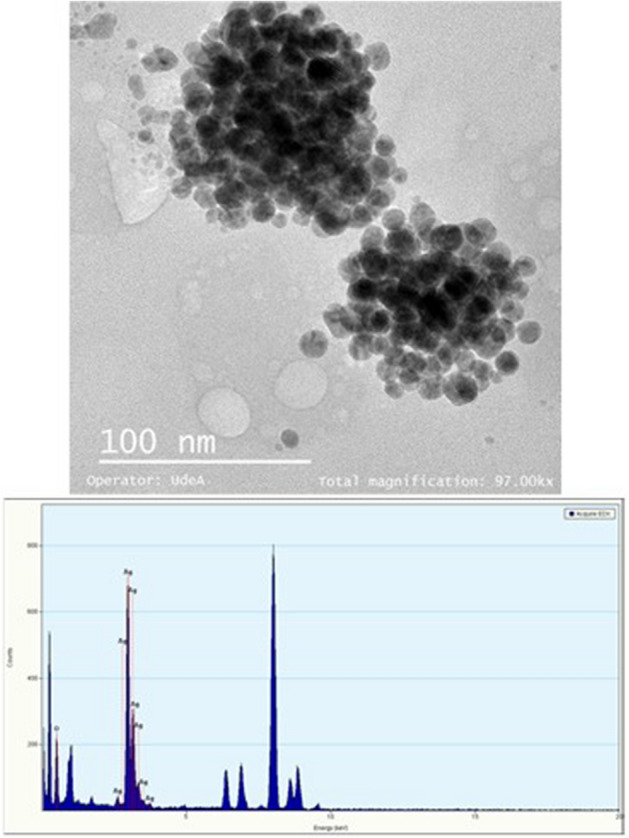
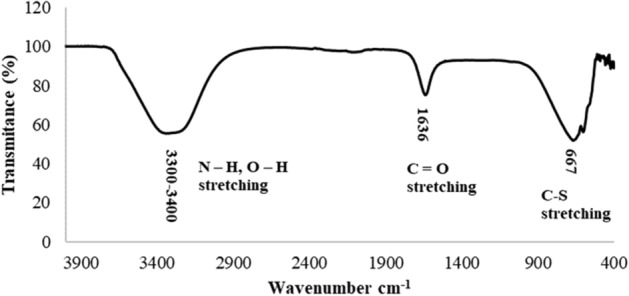
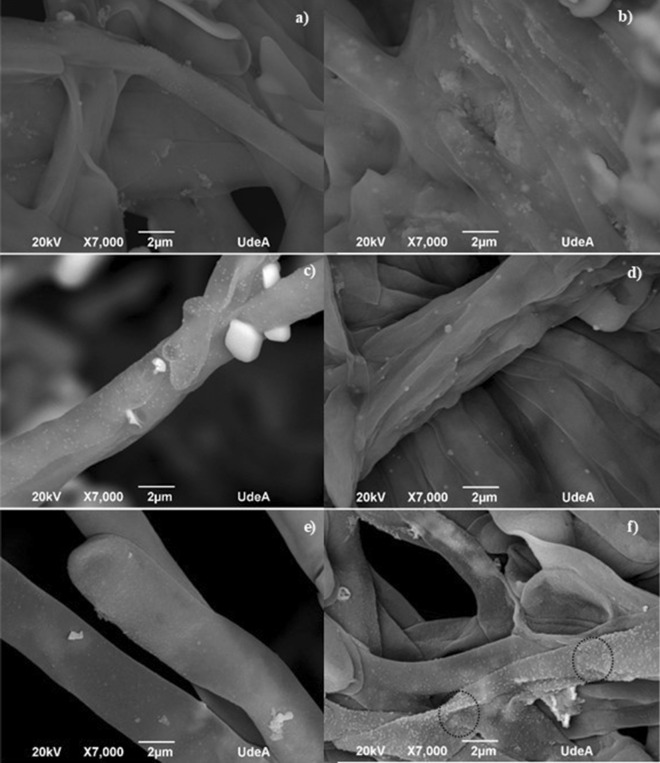
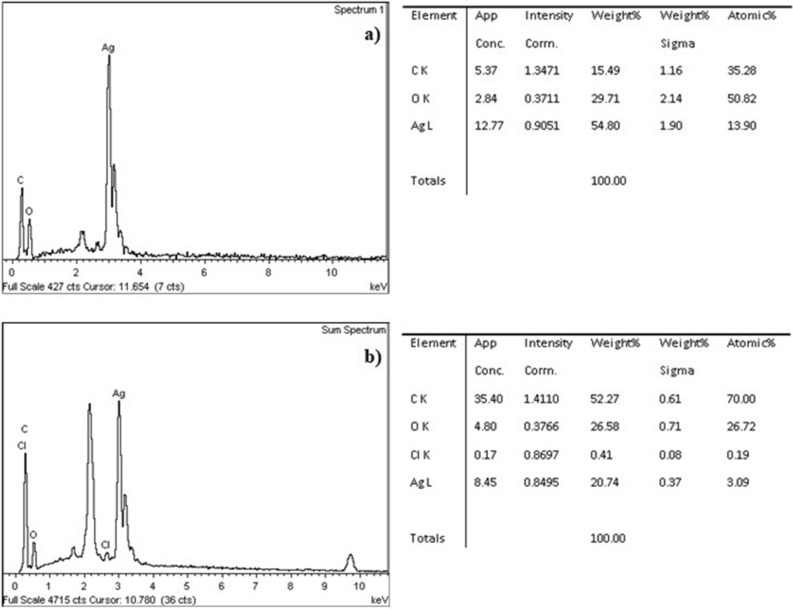
Currently, silver nanoparticles (AgNPs) constitute an interesting field of study in medicine, catalysis, optics, among others. For this reason, it has been necessary to develop new methodologies that allow a more efficient production of AgNPs with better antimicrobial and biological properties. In this research growth time effects Anamorphous Bjerkandera sp. R1 and the silver nitrate (AgNO3) concentration over AgNPs synthesis were studied. Through the protocol used in this work, it was found that the action of the capping proteins on the surface of the mycelium played a determining role in the reduction of the Ag+ ion to Ag0 nanoparticles producing a particle size that oscillated between 10 and 100 nm. The progress of the reaction was monitored using visible UV-Vis spectroscopy and the synthesized AgNPs were characterized by scanning electron microscopy (SEM), transmission electron microscopy (TEM) and Fourier transform infrared radiation (FTIR) spectroscopy. The best synthetic properties were found at 1 mM of AgNO3 concentration, growth time of 8 days, and reaction time of 144 h. Nanometals obtention from microorganisms could be considered as a new method of synthesis, due to reducing abilities of metal ions through its enzymatic system and represents low-cost synthesis that reduces the generation of harmful toxic wastes.
Conflict of interest statement
The authors declare no competing interests.
Figures
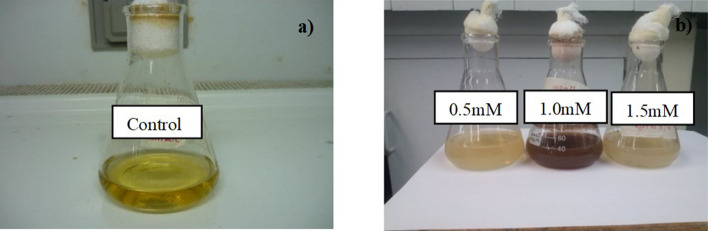
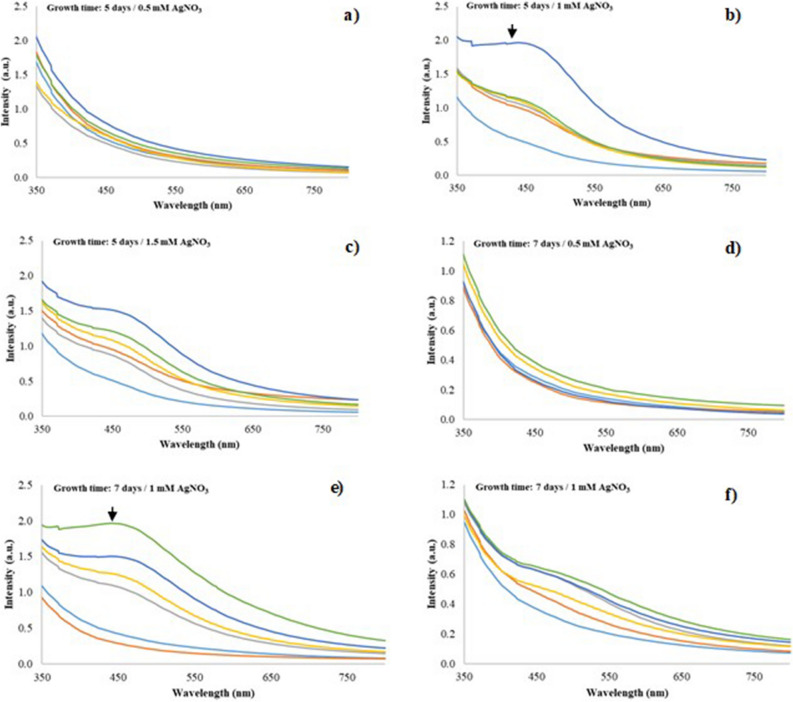
 , 48 h
  , 72 h
  , 96 h
  , 120 h
  , 144 h
  .
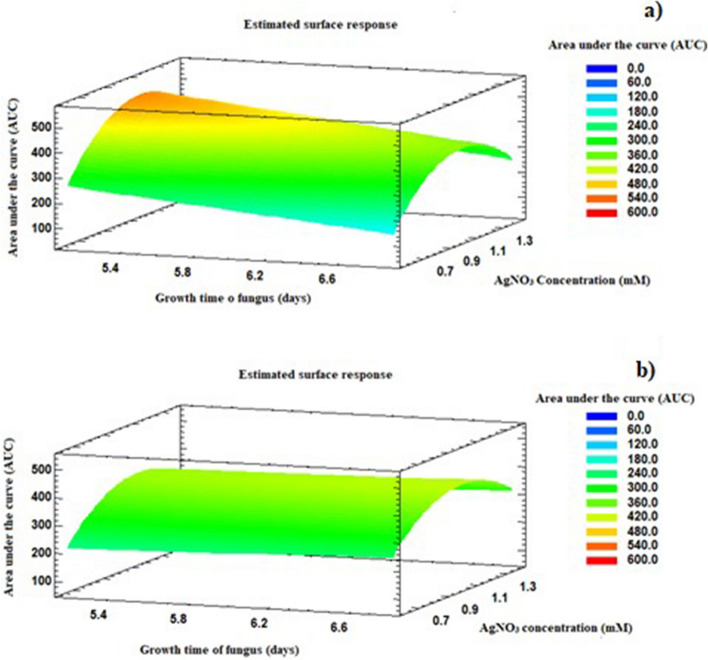
.
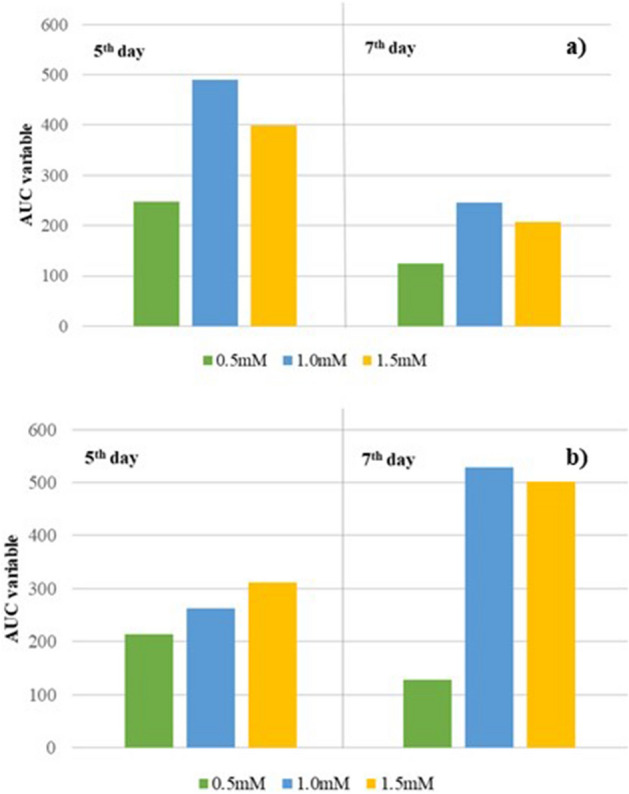
 , 48 h
, 72 h
, 96 h
, 120 h
, 144 h
.
, 48 h
, 72 h
, 96 h
, 120 h
, 144 h
.
References
-
- Rhim J-W, Wang L-F. Preparation and characterization of carrageenan-based nanocomposite films reinforced with clay mineral and silver nanoparticles. Appl. Clay Sci. 2014;97–98:174–181. doi: 10.1016/j.clay.2014.05.025. - DOI
-
- Rajendran NK, Kumar SSD, Houreld NN, Abrahamse H. A review on nanoparticle based treatment for wound healing. J. Drug Deliv. Sci. Technol. 2018;44:421–430. doi: 10.1016/j.jddst.2018.01.009. - DOI
-
- Prabhu S, Poulose EK. Silver nanoparticles: mechanism of antimicrobial action, synthesis, medical applications, and toxicity effects. Int. Nano Lett. 2012;2:32. doi: 10.1186/2228-5326-2-32. - DOI
-
- Patil S, George T, Mahadik K. Green synthesized nanosilver loaded silk fibroin gel for enhanced wound healing. J. Drug Deliv. Sci. Technol. 2015;30:30–36. doi: 10.1016/j.jddst.2015.09.001. - DOI
Publication types
MeSH terms
Substances
LinkOut - more resources
Full Text Sources
Other Literature Sources
