


Hematological reference intervals for adult population of Dire Dawa town, East Ethiopia
- PMID: 33591978
- PMCID: PMC7886208
- DOI: 10.1371/journal.pone.0244314
Hematological reference intervals for adult population of Dire Dawa town, East Ethiopia
Abstract
Background: Reference interval (RI) for hematological parameters is used to interpret laboratory test results in the diagnosis, management and monitoring of hematologic disorders. Several factors including sex, age, dietary patterns, pregnancy status, ethnicity and geographic location affect hematological RIs. However, manufacturers derived reference value is currently in use in most developing countries including Ethiopia. This study aimed to establish hematological RIs for adult population living in Dire Dawa town, East Ethiopia.
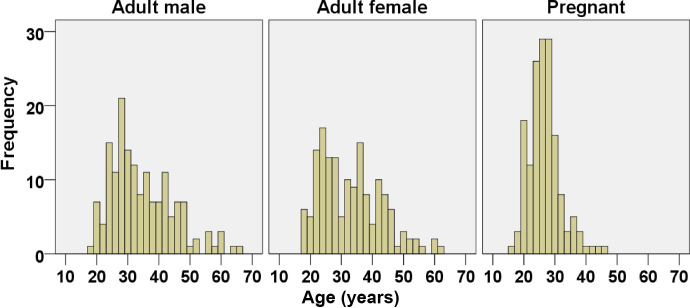
Methods: In this cross-sectional study, 513 apparently healthy adults of Dire Dawa town were enrolled from January to March 2019. From these, 342 (171 males and 171 non-pregnant females) were aged 18-65 years while 171 were pregnant women aged 15-49 years. After obtaining written informed consent, 5ml fresh whole blood was collected of which 2ml was used for hematologic analysis using Mindray BC-3000plus hematology analyzer and 3ml for serological tests. The 2.5th and 97.5th RI was computed by non-parametric test employing SPSS version 24. P-value <0.05 was considered statistically significant.
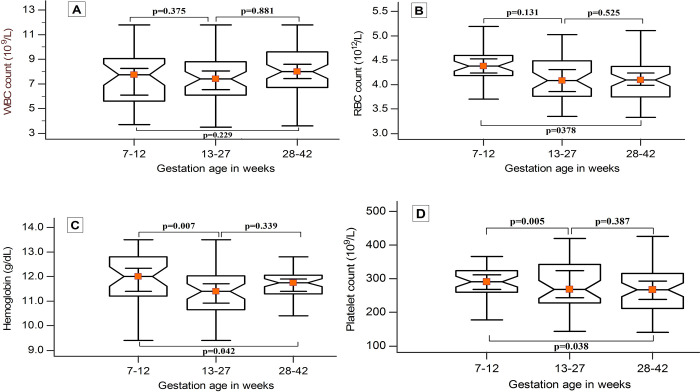
Result: Males had significantly higher reference value for most of red cell parameters (Hgb, RBC, HCT, MCH and MCHC) than females (p <0.05), while most of the WBC parameters were significantly higher in females than males. Moreover, non-pregnant women had higher values for most of red cell parameters than pregnant women. Pregnant women had higher WBC parameters than their non-pregnant counterparts.
Conclusion: The hematologic RIs obtained in this study shows variation between genders, between pregnant and non-pregnant women, from the clinical practice currently utilised in Dire Dawa town and from studies conducted in Ethiopia, African countries as well as the Western population. It underscores the need for utilising gender and pregnancy specific, locally derived hematologic RI for better management, diagnosis and monitoring of hematologic disorders for adults of both genders and pregnant women.
Conflict of interest statement
The authors have declared that no competing interests exist.
Figures
References
-
- Higgins C. An introduction to reference intervals (1)—some theoretical considerations. 2009. Available: http://www.acutecaretesting.org.
-
- Jacob EA. Complete Blood Cell Count and Peripheral Blood Film, Its Significant in Laboratory Medicine: A Review Study. Am J Lab Med. 2016;1(3):34–57.
-
- Zeh CE, Odhiambo CO, Mills LA. Laboratory Reference Intervals in Africa. 2012: http://cdn.intechopen.com/pdfs/39110/.
-
- Al-Jafar HA. Provisional Study of Kuwait Adult Hematology Reference. J Hematol Thromb. 2016;2(1):4–7.
MeSH terms
Substances
LinkOut - more resources
Full Text Sources
Other Literature Sources
