Case Reports
. 2021 Feb 16;15(2):e0008913.
doi: 10.1371/journal.pntd.0008913. eCollection 2021 Feb.

Genomic and RT-qPCR analysis of trimethoprim-sulfamethoxazole and meropenem resistance in Burkholderia pseudomallei clinical isolates

Affiliations
Case Reports

Genomic and RT-qPCR analysis of trimethoprim-sulfamethoxazole and meropenem resistance in Burkholderia pseudomallei clinical isolates

Marine Schnetterle et al. PLoS Negl Trop Dis. .

Abstract

Background: Melioidosis is an endemic disease in southeast Asia and northern Australia caused by the saprophytic bacteria Burkholderia pseudomallei, with a high mortality rate. The clinical presentation is multifaceted, with symptoms ranging from acute septicemia to multiple chronic abscesses. Here, we report a chronic case of melioidosis in a patient who lived in Malaysia in the 70s and was suspected of contracting tuberculosis. Approximately 40 years later, in 2014, he was diagnosed with pauci-symptomatic melioidosis during a routine examination. Four strains were isolated from a single sample. They showed divergent morphotypes and divergent antibiotic susceptibility, with some strains showing resistance to trimethoprim-sulfamethoxazole and fluoroquinolones. In 2016, clinical samples were still positive for B. pseudomallei, and only one type of strain, showing atypical resistance to meropenem, was isolated.

Principal findings: We performed whole genome sequencing and RT-qPCR analysis on the strains isolated during this study to gain further insights into their differences. We thus identified two types of resistance mechanisms in these clinical strains. The first one was an adaptive and transient mechanism that disappeared during the course of laboratory sub-cultures; the second was a mutation in the efflux pump regulator amrR, associated with the overexpression of the related transporter.

Conclusion: The development of such mechanisms may have a clinical impact on antibiotic treatment. Indeed, their transient nature could lead to an undiagnosed resistance. Efflux overexpression due to mutation leads to an important multiple resistance, reducing the effectiveness of antibiotics during treatment.


Conflict of interest statement

The authors have declared that no competing interests exist.

Figures
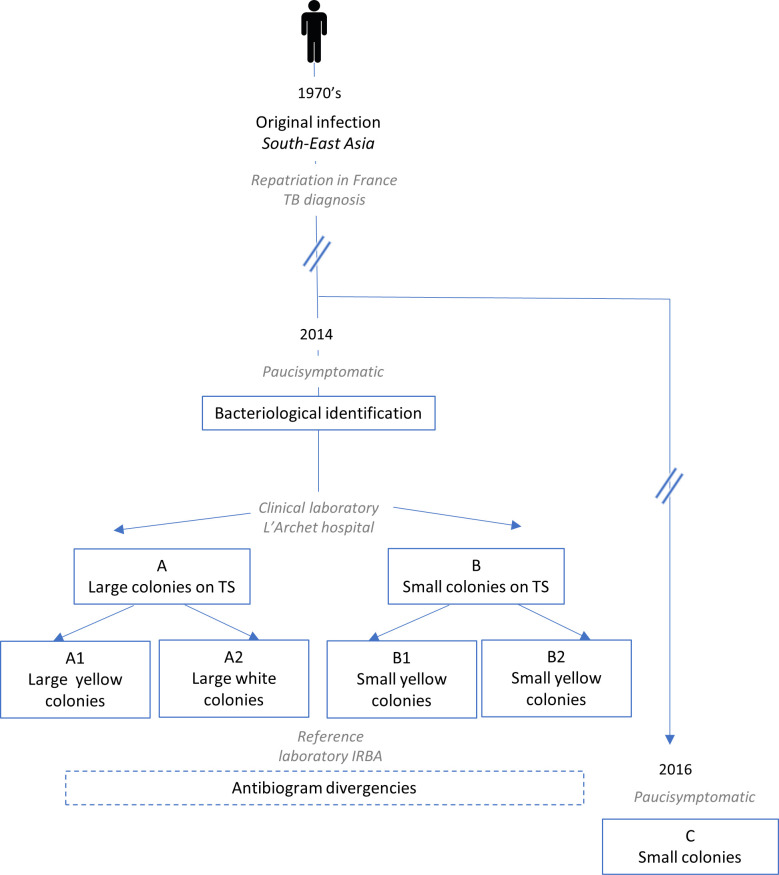
Fig 1
Fig 1. Schematic representation of the clinical cases and studied strains.
In 2014, in a single sample, four strains of Burkholderia pseudomallei were isolated from a paucisympotomatic old man, and differenced by their morphology and pigmentation (A1, A2, B1, B2). In 2016, a new strain was isolated (C).
Fig 2
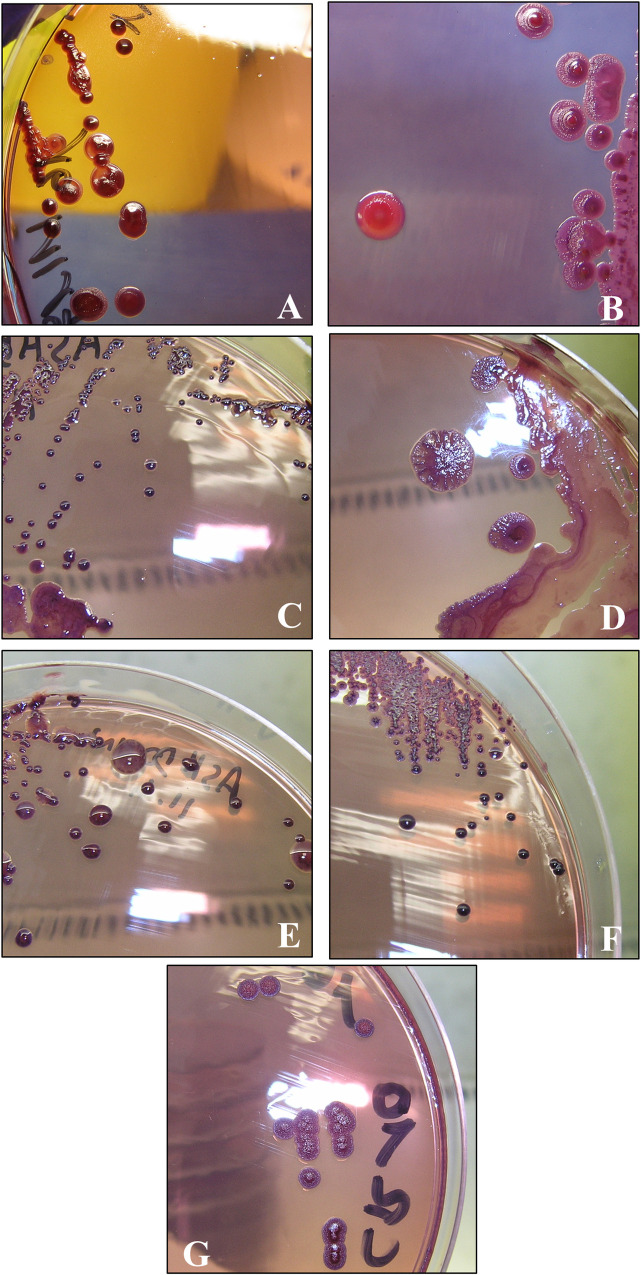
Fig 2. Morphotype of B. pseudomallei clinical strains after five days of culture on Ashdown’s agar medium at 37°C.
A: A1 strain; B: A2 strain; C: B1 strain; D: B1 strain sub-cultured five times (B1R5); E: B2 strain; F: C strain; G: C strain sub-cultured 10 times (CR10).
Fig 3
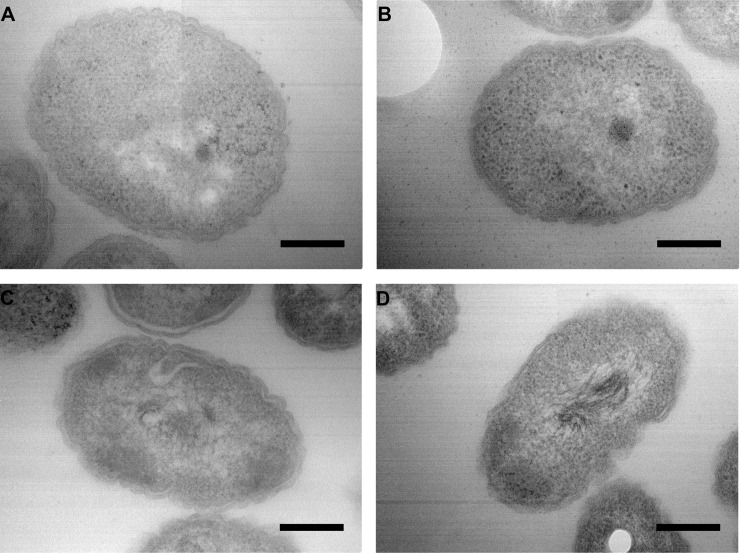
Fig 3. Microscopic observations by TEM (transmission electron microscopy).
Observation of the three strains isolated in 2014 and 2016 (A: strain A2; B: strain B1; C: strain C), and reference strain (D: strain K96243). The scale bar represents 250 nm. The observations presented here are without trimethoprim induction, the same pictures were obtained with trimethoprim induction.
Fig 4
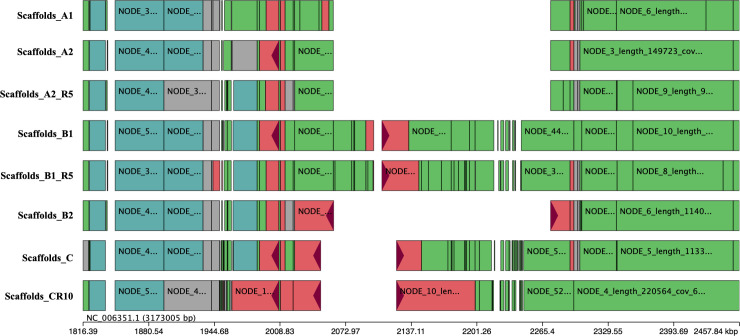
Fig 4. Representation of the deleted region in clinical strains.
The strains scaffolds were aligned against the K96243 reference genome. There is a focus of the deletion region, K926243 chromosome 2 is represented by a black line and notated NC_006351.1.
Fig 5
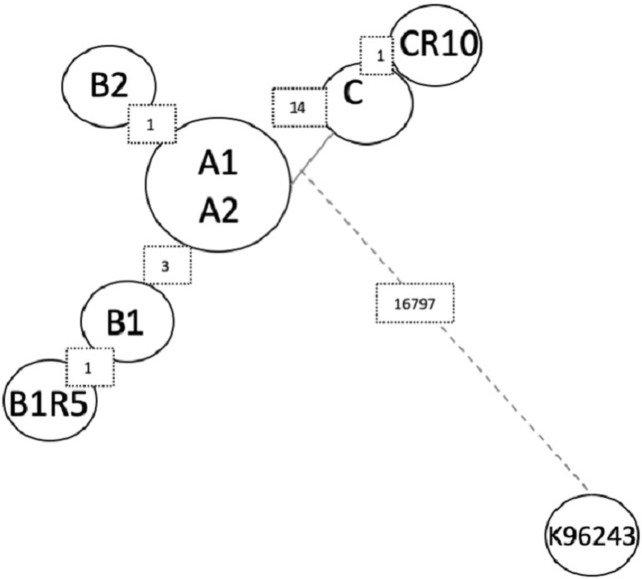
Fig 5. Dendrogram representation of SNPs found in all clinical isolates of this study and compared to the K96243 reference strain, obtained using Bionumerics software.
The numbers on the squares indicate the number of SNPs between each isolate and strain.
Fig 6
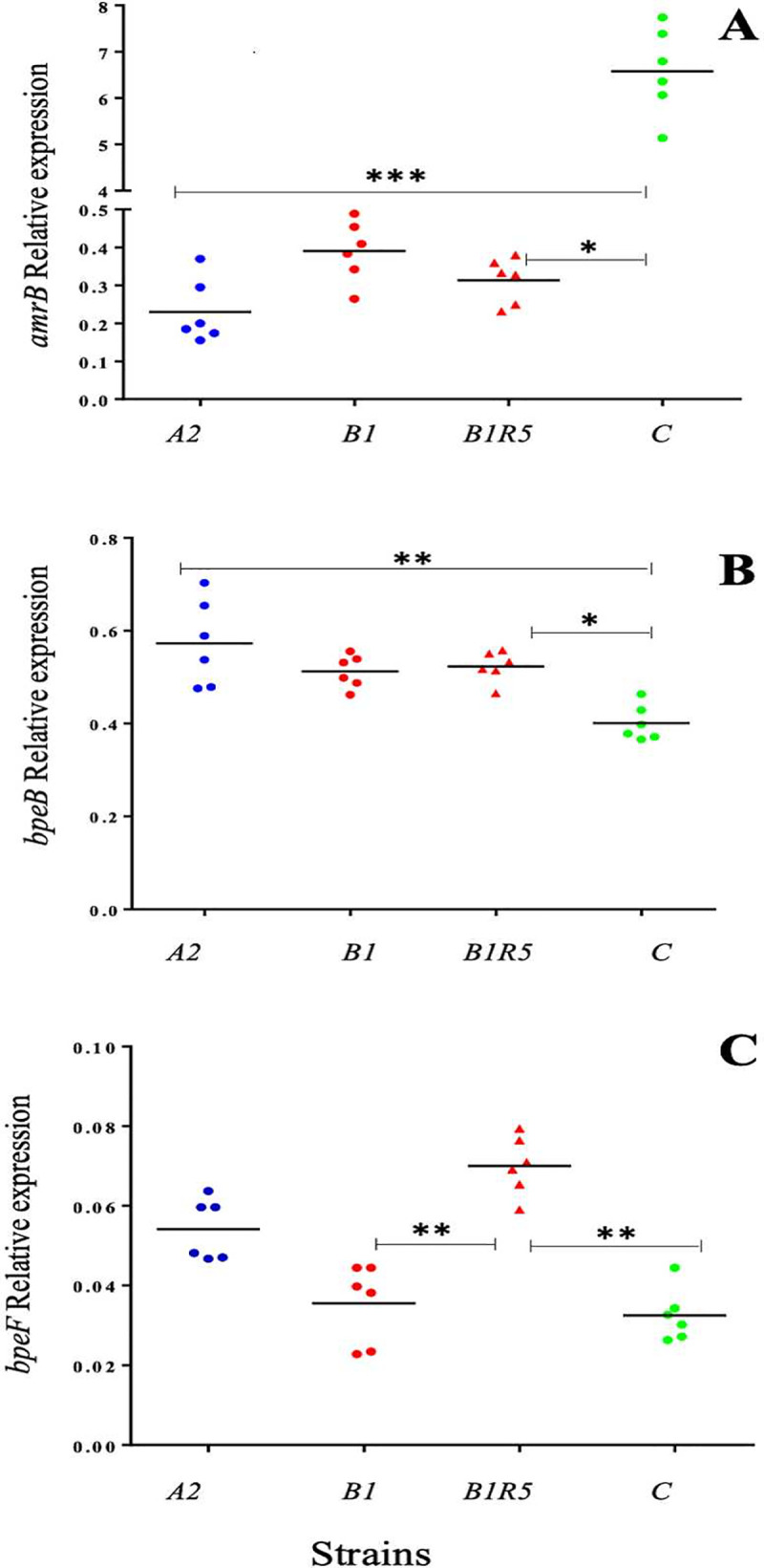
Fig 6. Relative expression of RND efflux-pump transporters in B. pseudomallei clinical strains.
Relative expression of amrB (A) bpeB (B), bpeF (C). Bars represent the median. Statistical analysis was performed using the Kruskal Wallis test for multiple comparisons. Statistical two-group comparisons were performed using Dunn’s test and are represented on the graphs with bars and *.

References

    1. Limmathurotsakul D, Golding N, Dance DA, Messina JP, Pigott DM, Moyes CL, et al.. Predicted global distribution of Burkholderia pseudomallei and burden of melioidosis. Nat Microbiol. 2016;1(1). 10.1038/nmicrobiol.2015.8 - DOI - PubMed
    1. Wiersinga WJ, Virk HS, Torres AG, Currie BJ, Peacock SJ, Dance DAB, et al.. Melioidosis. Nat Rev Dis Primers. 2018;4:17107. 10.1038/nrdp.2017.107 - DOI - PMC - PubMed
    1. Schweizer HP. Mechanisms of antibiotic resistance in Burkholderia pseudomallei: implications for treatment of melioidosis. Future Microbiol. 2012;7(12):1389–99. 10.2217/fmb.12.116 - DOI - PMC - PubMed
    1. Treatment Dance D. and prophylaxis of melioidosis. Int J Antimicrob Agents. 2014;43(4):310–8. 10.1016/j.ijantimicag.2014.01.005 - DOI - PMC - PubMed
    1. Saiprom N, Amornchai P, Wuthiekanun V, Day NP, Limmathurotsakul D, Peacock SJ, et al.. Trimethoprim/sulfamethoxazole resistance in clinical isolates of Burkholderia pseudomallei from Thailand. Int J Antimicrob Agents. 2015;45(5):557–9. 10.1016/j.ijantimicag.2015.01.006 - DOI - PMC - PubMed

Publication types

MeSH terms

Substances

LinkOut - more resources