


Malaria in migrant agricultural workers in western Ethiopia: entomological assessment of malaria transmission risk
- PMID: 33593385
- PMCID: PMC7885338
- DOI: 10.1186/s12936-021-03633-1
Malaria in migrant agricultural workers in western Ethiopia: entomological assessment of malaria transmission risk
Abstract
Background: Ethiopia has made great strides in malaria control over the last two decades. However, this progress has not been uniform and one concern has been reported high rates of malaria transmission in large agricultural development areas in western Ethiopia. Improved vector control is one way this transmission might be addressed, but little is known about malaria vectors in this part of the country.
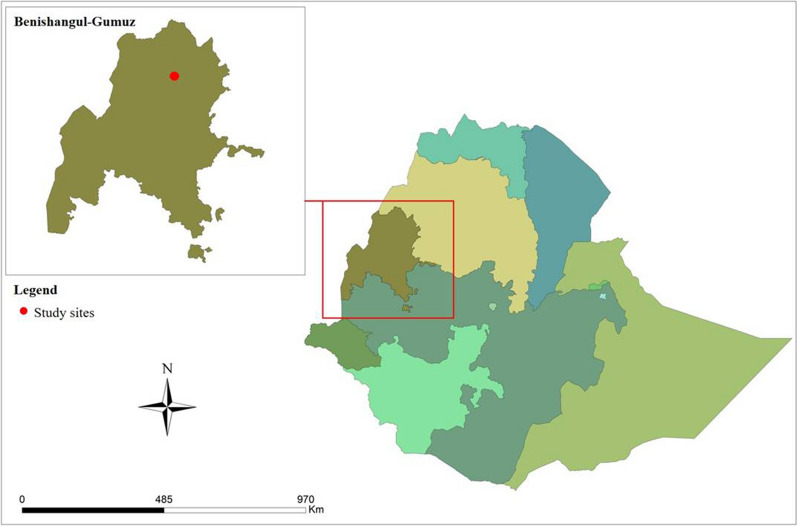
Methods: To better understand the vector species involved in malaria transmission and their behaviour, human landing collections were conducted in Dangur woreda, Benishangul-Gumuz, between July and December 2017. This period encompasses the months with the highest rain and the peak mosquito population. Mosquitoes were identified to species and tested for the presence of Plasmodium sporozoites.
Results: The predominant species of the Anopheles collected was Anopheles arabiensis (1,733; i.e. 61.3 % of the entire Anopheles), which was also the only species identified with sporozoites (Plasmodium falciparum and Plasmodium vivax). Anopheles arabiensis was collected as early in the evening as 18:00 h-19:00 h, and host-seeking continued until 5:00 h-6:00 h. Nearly equal numbers were collected indoors and outdoors. The calculated entomological inoculation rate for An. arabiensis for the study period was 1.41 infectious bites per month. More An. arabiensis were collected inside and outside worker's shelters than in fields where workers were working at night.
Conclusions: Anopheles arabiensis is likely to be the primary vector of malaria in the agricultural development areas studied. High rates of human biting took place inside and outdoor near workers' residential housing. Improved and targeted vector control in this area might considerably reduce malaria transmission.
Keywords: Agricultural development; Anopheles arabiensis; Ethiopia; Malaria; Migrant workers.
Conflict of interest statement
The authors declare that they have no competing interests.
Figures


References
-
- World Malaria Report. 2020.Geneva: World Health Organization; 2020.
-
- WHO, UNICEF. Achieving the malaria Millennium Development Goal target: reversing the incidence of malaria 2000–2015. Geneva, World Health Organization; 2015. http://apps.who.int/iris/bitstream/10665/184521/1/9789241509442_eng.pdf. Accessed 30 Jan 2021.
-
- Federal Democratic Republic of Ethiopia Ministry of Health. National Malaria Elimination Roadmap. Addis Ababa, 2016.
MeSH terms
Grants and funding
LinkOut - more resources
Full Text Sources
Other Literature Sources
Molecular Biology Databases
