


Beat the stress: breeding for climate resilience in maize for the tropical rainfed environments
- PMID: 33594449
- PMCID: PMC7885763
- DOI: 10.1007/s00122-021-03773-7
Beat the stress: breeding for climate resilience in maize for the tropical rainfed environments
Abstract
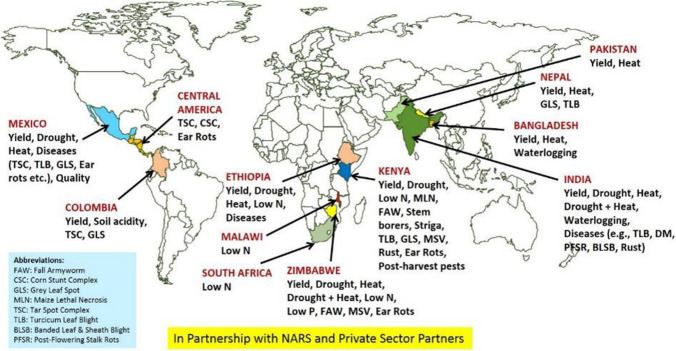
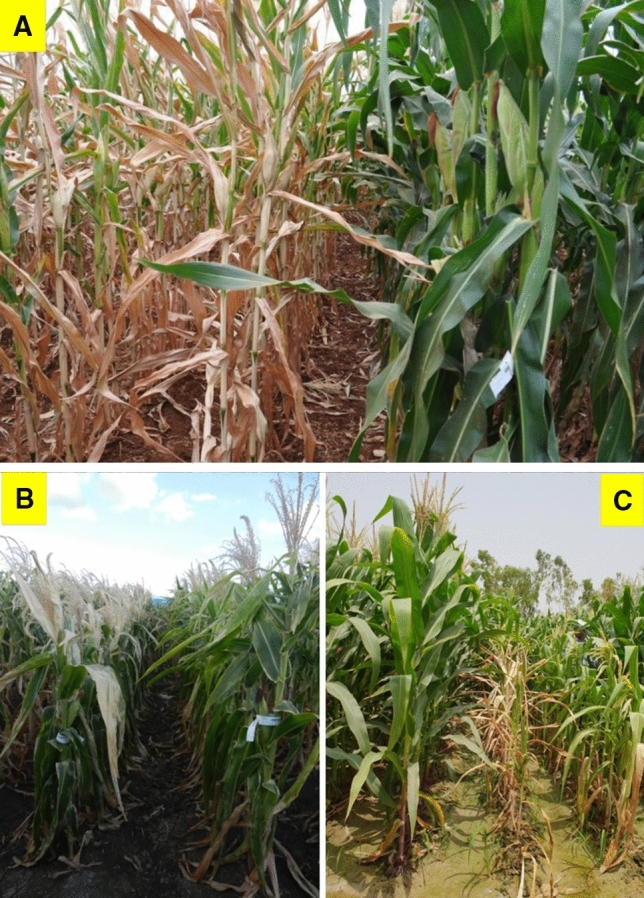
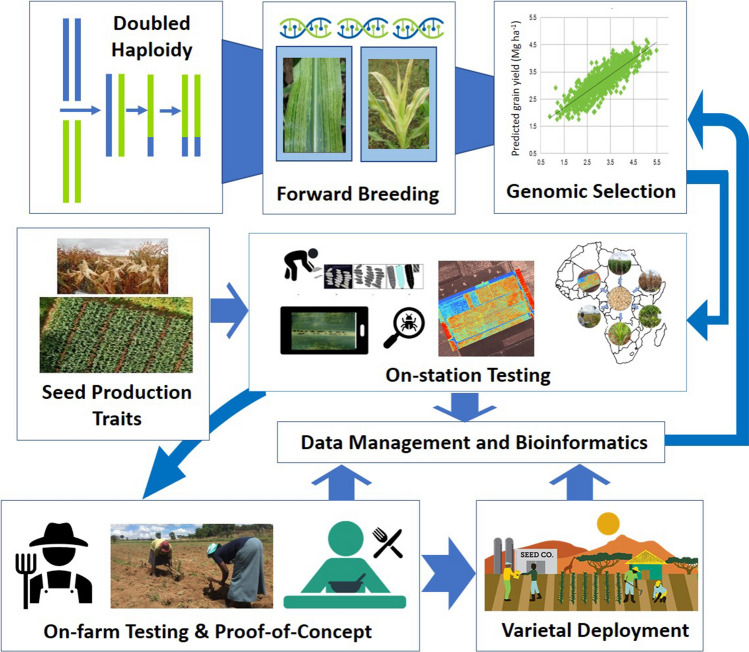
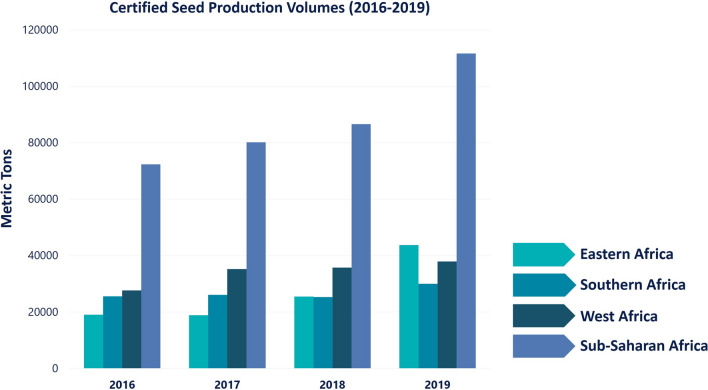
Intensive public sector breeding efforts and public-private partnerships have led to the increase in genetic gains, and deployment of elite climate-resilient maize cultivars for the stress-prone environments in the tropics. Maize (Zea mays L.) plays a critical role in ensuring food and nutritional security, and livelihoods of millions of resource-constrained smallholders. However, maize yields in the tropical rainfed environments are now increasingly vulnerable to various climate-induced stresses, especially drought, heat, waterlogging, salinity, cold, diseases, and insect pests, which often come in combinations to severely impact maize crops. The International Maize and Wheat Improvement Center (CIMMYT), in partnership with several public and private sector institutions, has been intensively engaged over the last four decades in breeding elite tropical maize germplasm with tolerance to key abiotic and biotic stresses, using an extensive managed stress screening network and on-farm testing system. This has led to the successful development and deployment of an array of elite stress-tolerant maize cultivars across sub-Saharan Africa, Asia, and Latin America. Further increasing genetic gains in the tropical maize breeding programs demands judicious integration of doubled haploidy, high-throughput and precise phenotyping, genomics-assisted breeding, breeding data management, and more effective decision support tools. Multi-institutional efforts, especially public-private alliances, are key to ensure that the improved maize varieties effectively reach the climate-vulnerable farming communities in the tropics, including accelerated replacement of old/obsolete varieties.
Conflict of interest statement
The authors declare that they have no conflict of interest.
Figures
References
-
- Abdullah Z, Khan MA, Flowers TJ. Causes of sterility in seed set of rice under salinity stress. J Agron Crop Sci. 2001;187:25–32. doi: 10.1046/j.1439-037X.2001.00500.x. - DOI
-
- Alam MA, Seetharam K, Zaidi PH, Dinesh A, Vinayan MT, Nath UK. Dissecting heat stress tolerance in tropical maize (Zea mays L.) Field Crop Res. 2017;204:110–119. doi: 10.1016/j.fcr.2017.01.006. - DOI
Publication types
MeSH terms
Grants and funding
LinkOut - more resources
Full Text Sources
Other Literature Sources
Medical
