


Rate and predictive parameters of novel Coronavirus 2019 (Sars-CoV-2) infections in a German General Practice
- PMID: 33594623
- PMCID: PMC7886303
- DOI: 10.1007/s11845-021-02555-w
Rate and predictive parameters of novel Coronavirus 2019 (Sars-CoV-2) infections in a German General Practice
Abstract
Key points: In our clinical cross-sectional study, we identified 107 of 347 patients who were tested positive for antibodies of novel Coronavirus 2019 (SARS-CoV-2). Main symptoms were exhaustion and cough, exposition to other COVID-19-patients appeared frequently.
Background: There is urgent need for information on predictive parameters on immunity and infectivity in Coronavirus disease-2019 (COVID-19) pandemic. Our aim was to investigate distribution of novel Coronavirus 2019 (SARS-CoV-2) infections in a German General Practice and to learn about possible predictive parameters regarding infection and pathways of transmission.
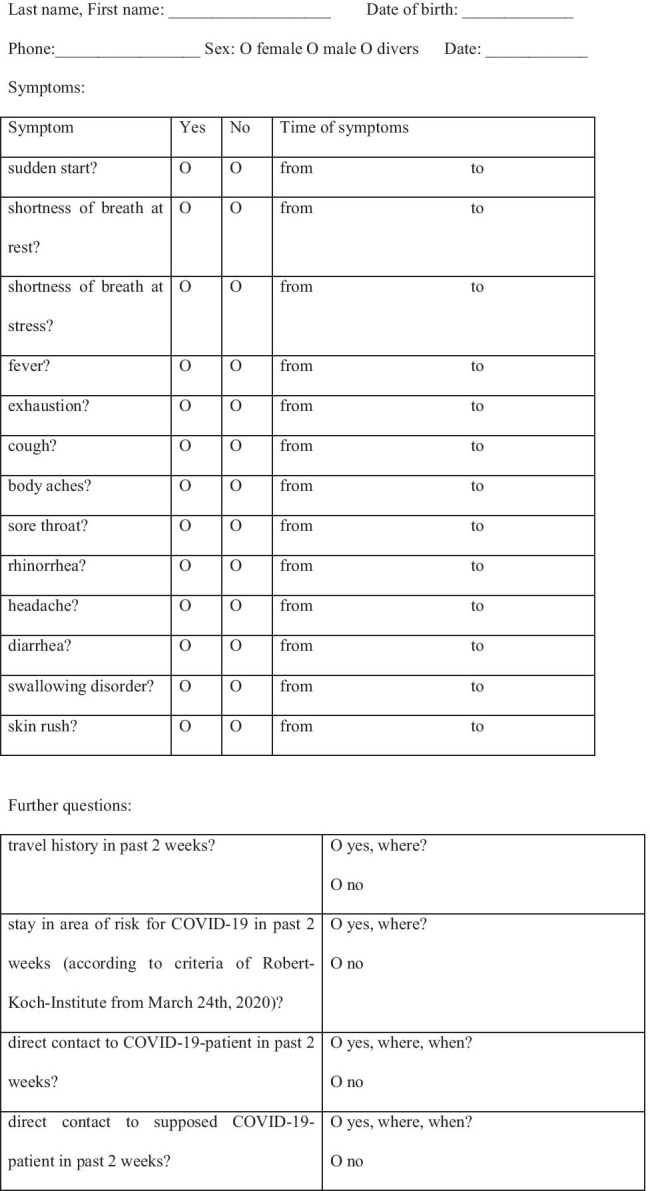
Methods: In our cross-sectional study, we tested 347 patients of our General Practice using 2019-nCoV-2-IgG/IgM antibody test [2019-nCoV2 IgG/IgM Rapid Test Cassette (Ref.: INCP-402/INCP-402B; ACRO, BIOTECH, INC.)]. We asked for 13 specific symptoms and 4 questions to investigate patients' surroundings.
Results: A total of 107 of 347 patients were tested positive for antibodies (Immunoglobulin M-positive and/or Immunoglobulin G-positive). In antibody-positive group, body aches and rhinorrhea were seen more often and there were significantly less asymptomatic patients. Stay in area of risk was significantly more frequent in antibody-positive group as well as contact to infected persons. Distribution of other symptoms was not significantly different between both groups. Most adults or children with SARS-CoV-2 infection presented with mild flu-like symptoms.
Conclusion: A total of 30% of patients had antibodies. It was not possible to identify one solid predictive symptom. Serological testing may be helpful for the diagnosis of suspected patients with negative RT-PCR results and for the identification of asymptomatic infections.
Keywords: Antibodies; COVID-19; Exhaustion; Pandemic; SARS-CoV-2.
© 2021. Royal Academy of Medicine in Ireland.
Conflict of interest statement
The authors declare that patients voluntary contacted our general practice, received reconnaissance, signed consent of participation, and paid 60 Euro for implementation and evaluation of antibody testing as well as explanation of results. There are no further conflicts of interest to declare.
References
-
- Gorbalenya A, Baker S, Baricet R et al (2020) Severe acute respiratory syndrome-related coronavirus: the species and its viruses – a statement of the Coronavirus Study Group. Preprint at https://www.biorxiv.org/content/10.1101/2020.02.07.937862v1
MeSH terms
Substances
LinkOut - more resources
Full Text Sources
Other Literature Sources
Medical
Miscellaneous
