


Exposure to DDT and HCH congeners and associated potential health risks through khat (Catha edulis) consumption among adults in South Wollo, Ethiopia
- PMID: 33594639
- PMCID: PMC7886647
- DOI: 10.1007/s10653-021-00846-w
Exposure to DDT and HCH congeners and associated potential health risks through khat (Catha edulis) consumption among adults in South Wollo, Ethiopia
Abstract
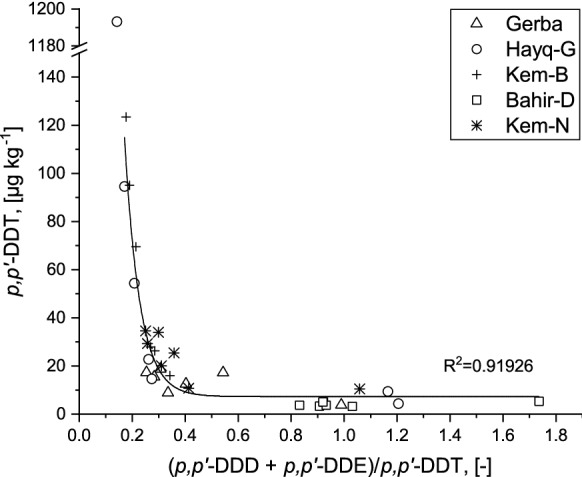
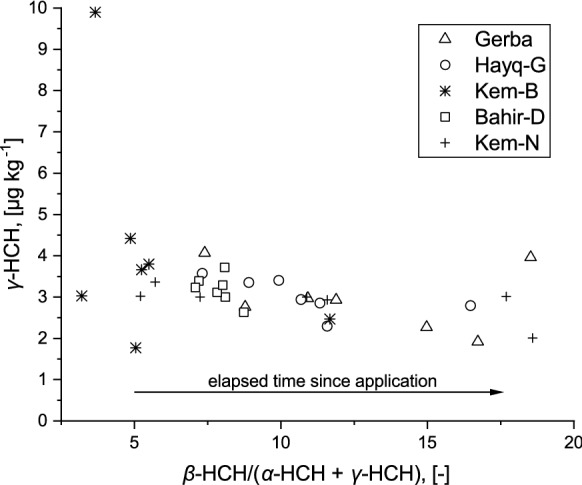
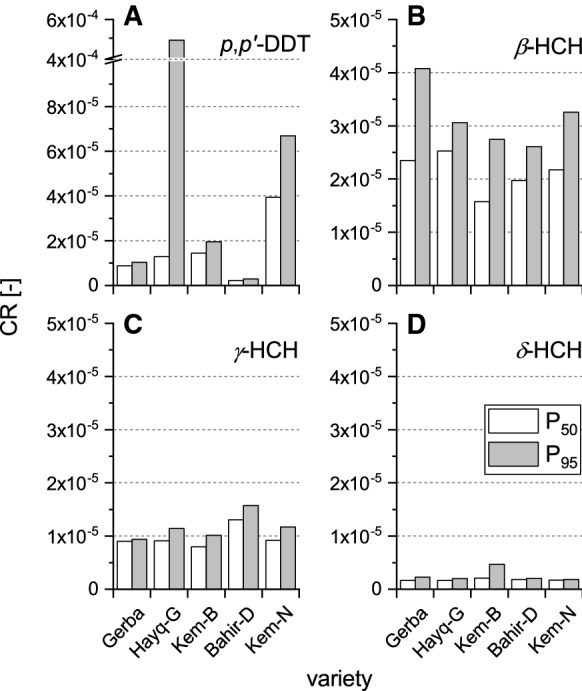
Khat (Catha edulis) chewing is widespread in the region of East Africa. Even low levels of organochlorine pesticides (OCPs) in khat could induce public health concern. In a market-based study, from five popular khat varieties, a total of 35 composite khat samples were analyzed for dichlorodiphenyltrichloroethane (DDT) and its main transformation products, and four hexachlorocyclohexane (HCH) isomers. Extraction was carried out by quick, easy, cheap, effective, rugged and safe method (QuEChERS). OCP concentrations were determined by head space solid phase microextraction coupled to gas chromatography-mass spectrometry (HS-SPME-GC-MS). Every sample contained β-HCH above the maximum residue limit set by the European Commission. For total DDT, this was the case for 25.7% of the samples. The ratios of (p,p'-DDD + p,p'-DDE) to p,p'-DDT were less than one for 85% of khat samples, demonstrating recent use of DDT in khat farmlands. Conversely, the ratio of β-HCH to total HCH varied from 0.56 to 0.96, implying historical input of technical HCH. Assuming a daily chewable portion of 100 g, dietary intakes of p,p'-DDT, total DDT and total HCH by adults ranged from 3.12 to 57.9, 6.49 to 80.2 and 39.2 to 51.9 ng (kg body weight)-1 day-1, respectively. These levels are below acceptable levels suggested by international organizations. Chewing khat showed lower non-cancer health risk, but showed relatively higher cancer risk in terms of OCPs. Because khat is chewed without being subjected to any treatment, uncertainties associated with estimated intakes and health risks should be low. Therefore, this practice is of great concern.
Keywords: Dichlorodiphenyltrichloroethane; Ethiopia; Gas chromatography–mass spectrometry; Hexachlorocyclohexane; Khat; Organochlorine pesticides; Solid phase microextraction.
© 2021. The Author(s).
Conflict of interest statement
The authors declare no competing interest.
Figures
References
-
- Abbasi-Jorjandi M, Asadikaram G, Abolhassani M, Fallah H, Abdollahdokht D, Salimi F, Faramarz S, Pournamdari M. Pesticide exposure and related health problems among family members of farmworkers in southeast Iran. A case-control study. Environment Pollution. 2020;267:115424. doi: 10.1016/j.envpol.2020.115424. - DOI - PubMed
MeSH terms
Substances
LinkOut - more resources
Full Text Sources
Other Literature Sources
Medical
Research Materials
Miscellaneous
