


Caught in the Crossroad: An Intersectional Examination of African American Women Intimate Partner Violence Survivors' Help Seeking
- PMID: 33596772
- PMCID: PMC8371068
- DOI: 10.1177/1524838021991303
Caught in the Crossroad: An Intersectional Examination of African American Women Intimate Partner Violence Survivors' Help Seeking
Abstract
Objectives: African American women are disproportionately impacted by intimate partner violence (IPV)-related homicide. They reflect the second highest prevalence rates and experience the highest rates of murder resulting from IPV victimization. Although most survivors note that they have experienced rejection and anticipatory stigma as barriers to their help seeking, African American women additionally experience racism and racial discrimination as obstacles that may further preclude their help seeking. This systematic review highlights African American women's experiences of rejection from providers and the effects that it may have upon their ability to secure urgent aid.
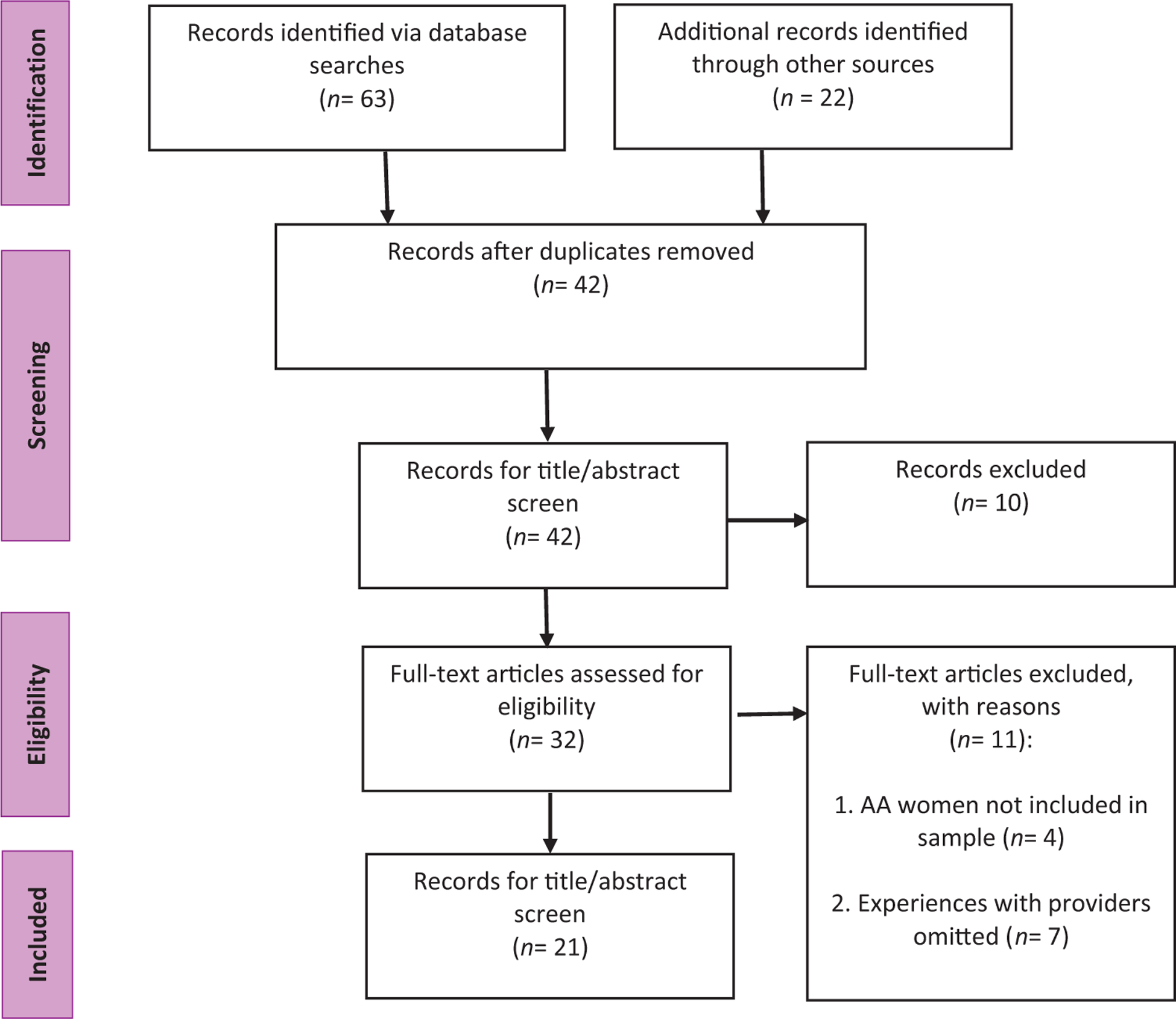
Method: A dearth of literature examines the subtle ways that African American women survivors experience rejection resulting from the interlocking nature of race, class, and gender oppression. Fundamental to developing more culturally salient interventions is more fully understanding their help-seeking experiences. A systematic review was conducted to provide a critical examination of the literature to understand the intersections of IPV and help-seeking behavior among African American women. A total of 85 empirical studies were identified and 21 were included in the systematic review. The review illuminates both the formal and semiformal help-seeking pathways.
Results: We recommend integrating anti-Blackness racist praxis, incorporating African American women's ways of knowing and centralizing their needs in an effort to improve the health and well-being of this population.
Conclusions: Eliminating barriers to more immediately accessing the domestic violence service provision system is key to enhance social work practice, policy, and research with African American female survivors of IPV.
Keywords: African American women; domestic violence; help seeking; intersectionality; intimate partner violence.
Conflict of interest statement
Declaration of Conflicting Interests
The author(s) declared no potential conflicts of interest with respect to the research, authorship, and/or publication of this article.
Figures
References
-
- Abramovitz M (1996). Regulating the lives of women: Social welfare policy from colonial times to the present. South End Press.
-
- Abrams JA, Maxwell M, Pope M, & Belgrave FZ (2014). Carrying the world with the grace of a lady and the grit of a warrior: Deepening our understanding of the “‘Strong Black Woman’” schema. Psychology of Women Quarterly, 38, 503–518.
-
- Aguilar DD (2012, April 12). Tracing the roots of intersectionality. MR Online https://mronline.org/2012/04/12/aguilar120412-html/
-
- Alexander M (2012). The New Jim Crow: Mass incarceration in the age of colorblindness. The New Press.
-
- Anyikwa VA (2015). The intersections of race and gender in help-seeking strategies among a battered sample of low-income African American women. Journal of Human Behavior in the Social Environment, 25(8), 948–959.
Publication types
MeSH terms
Grants and funding
LinkOut - more resources
Full Text Sources
Other Literature Sources
Medical
