


Innate cell profiles during the acute and convalescent phase of SARS-CoV-2 infection in children
- PMID: 33597531
- PMCID: PMC7889848
- DOI: 10.1038/s41467-021-21414-x
Innate cell profiles during the acute and convalescent phase of SARS-CoV-2 infection in children
Abstract
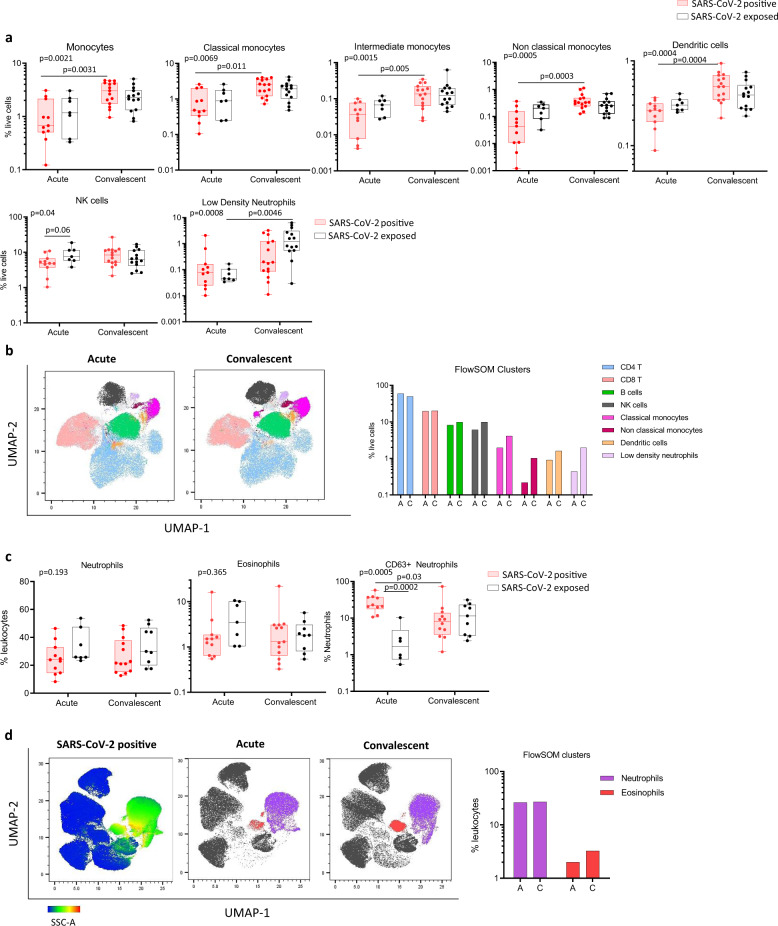
Children have mild severe acute respiratory syndrome coronavirus 2 (SARS-CoV-2) confirmed disease (COVID-19) compared to adults and the immunological mechanisms underlying this difference remain unclear. Here, we report acute and convalescent innate immune responses in 48 children and 70 adults infected with, or exposed to, SARS-CoV-2. We find clinically mild SARS-CoV-2 infection in children is characterised by reduced circulating subsets of monocytes (classical, intermediate, non-classical), dendritic cells and natural killer cells during the acute phase. In contrast, SARS-CoV-2-infected adults show reduced proportions of non-classical monocytes only. We also observe increased proportions of CD63+ activated neutrophils during the acute phase to SARS-CoV-2 in infected children. Children and adults exposed to SARS-CoV-2 but negative on PCR testing display increased proportions of low-density neutrophils that we observe up to 7 weeks post exposure. This study characterises the innate immune response during SARS-CoV-2 infection and household exposure in children.
Conflict of interest statement
The authors declare no competing interests.
Figures
References
-
- Zhu, Y., et al. Children are unlikely to have been the primary source of household SARS-CoV-2 infections. medRxiv: the preprint server for health sciences, 2020.2003.2026.20044826 (2020).
-
- Zimmermann, P., Curtis N. Why is COVID-19 less severe in children? A review of the proposed mechanisms underlying the age-related difference in severity of SARS-CoV-2 infections. archdischild-2020-320338 (2020). - PubMed
Publication types
MeSH terms
Substances
LinkOut - more resources
Full Text Sources
Other Literature Sources
Medical
Miscellaneous
