


Monitoring daytime differences in moderate intensity exercise capacity using treadmill test and muscle dissection
- PMID: 33598660
- PMCID: PMC7868630
- DOI: 10.1016/j.xpro.2021.100331
Monitoring daytime differences in moderate intensity exercise capacity using treadmill test and muscle dissection
Abstract
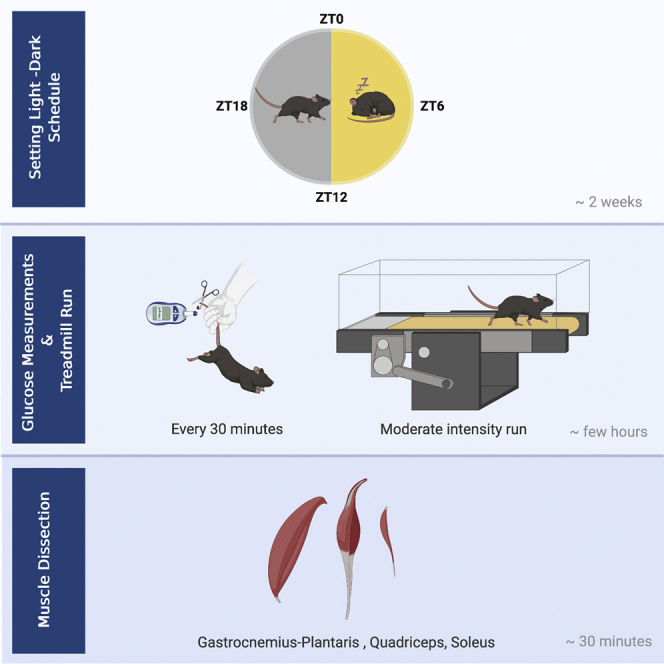
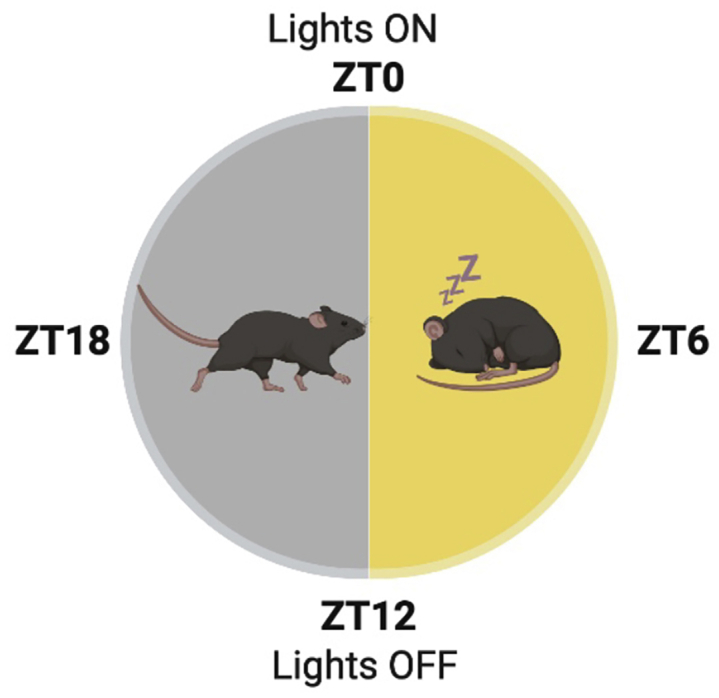
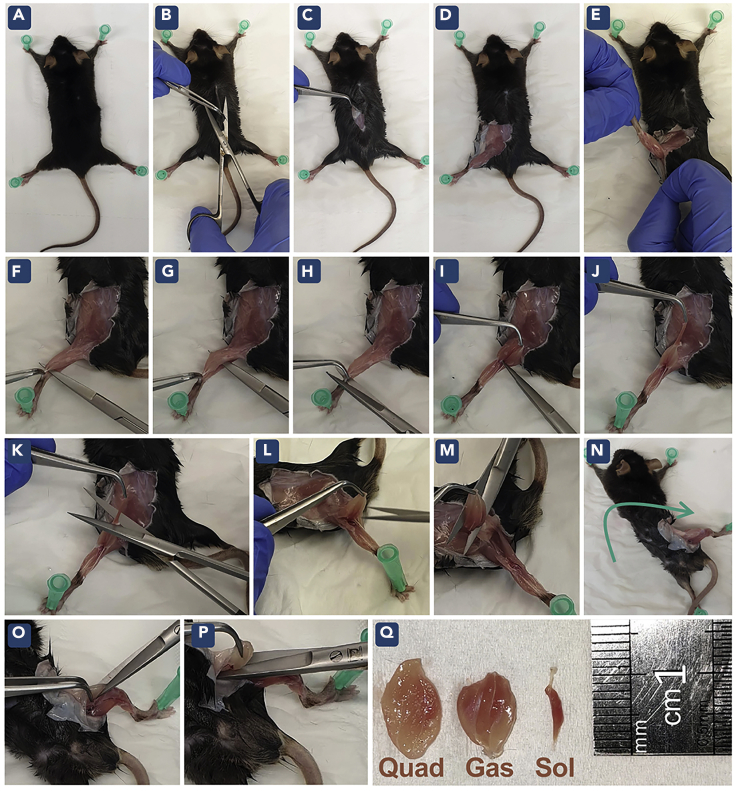
There is growing interest in medicine and sports in uncovering exercise modifiers that enhance or limit exercise capacity. Here, we detail a protocol for testing the daytime effect on running capacity in mice using a moderate intensity treadmill effort test. Instructions for dissecting soleus, gastrocnemius plantaris, and quadriceps muscles for further analysis are provided as well. This experimental setup is optimized for addressing questions regarding the involvement of daytime and circadian clocks in regulating exercise capacity. For complete details on the use and execution of this protocol, please refer to Ezagouri et al. (2019).
Keywords: Metabolism; Model organisms.
© 2021 The Author(s).
Conflict of interest statement
The authors declare no competing interests.
Figures
References
-
- Adamovich Y., Ladeuix B., Sobel J., Manella G., Neufeld-Cohen A., Assadi M.H., Golik M., Kuperman Y., Tarasiuk A., Koeners M.P. Oxygen and carbon dioxide rhythms are circadian clock controlled and differentially directed by behavioral signals. Cell Metab. 2019;29:1092–1103.e3. - PubMed
-
- Bailey J. Does the stress of laboratory life and experimentation on animals adversely affect research data? A critical review. Altern. Lab. Anim. 2018;46:291–305. - PubMed
-
- Billat V.L., Mouisel E., Roblot N., Melki J. Inter- and intrastrain variation in mouse critical running speed. J. Appl. Physiol. (1985) 2005;98:1258–1263. - PubMed
-
- Bouganim S., Bergdahl A. Constructing an inexpensive and versatile homemade rodent treadmill. Lab. Anim. (NY) 2017;46:67–69. - PubMed
Publication types
MeSH terms
LinkOut - more resources
Full Text Sources
Other Literature Sources
Molecular Biology Databases
