


Advanced imaging techniques for neuro-oncologic tumor diagnosis, with an emphasis on PET-MRI imaging of malignant brain tumors
- PMID: 33599882
- PMCID: PMC7892735
- DOI: 10.1007/s11912-021-01020-2
Advanced imaging techniques for neuro-oncologic tumor diagnosis, with an emphasis on PET-MRI imaging of malignant brain tumors
Abstract
Purpose of review: This review will explore the latest in advanced imaging techniques, with a focus on the complementary nature of multiparametric, multimodality imaging using magnetic resonance imaging (MRI) and positron emission tomography (PET).
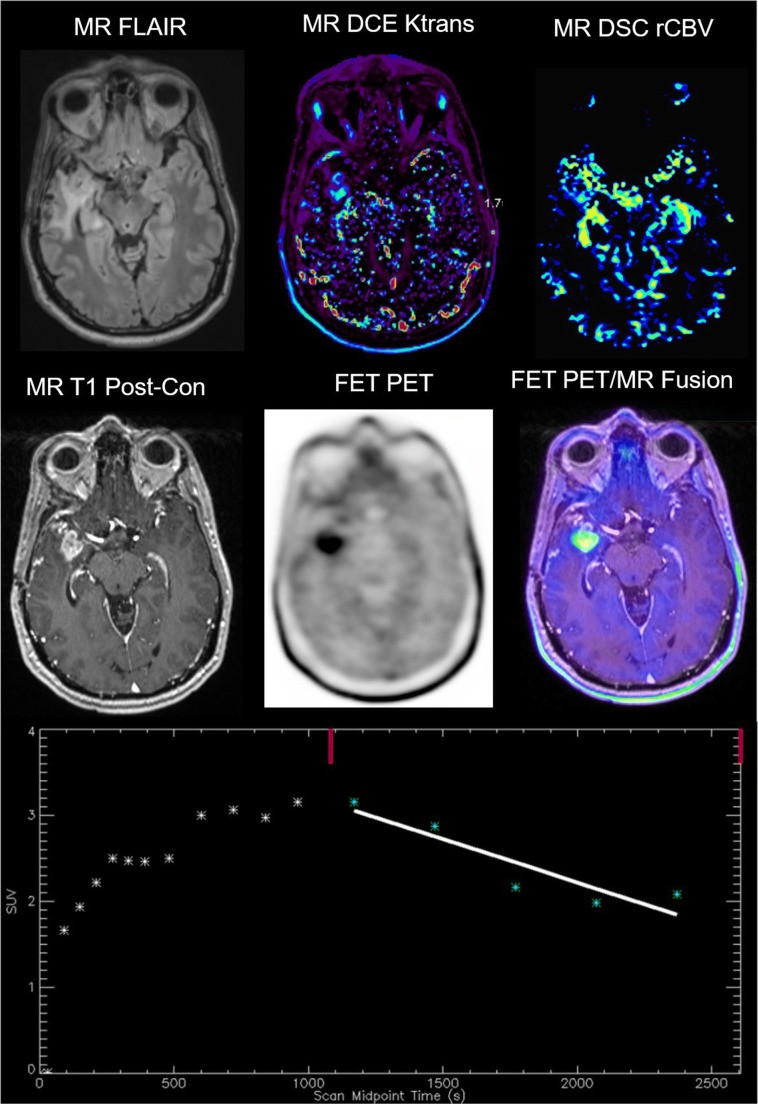
Recent findings: Advanced MRI techniques including perfusion-weighted imaging (PWI), MR spectroscopy (MRS), diffusion-weighted imaging (DWI), and MR chemical exchange saturation transfer (CEST) offer significant advantages over conventional MR imaging when evaluating tumor extent, predicting grade, and assessing treatment response. PET performed in addition to advanced MRI provides complementary information regarding tumor metabolic properties, particularly when performed simultaneously. 18F-fluoroethyltyrosine (FET) PET improves the specificity of tumor diagnosis and evaluation of post-treatment changes. Incorporation of radiogenomics and machine learning methods further improve advanced imaging. The complementary nature of combining advanced imaging techniques across modalities for brain tumor imaging and incorporating technologies such as radiogenomics has the potential to reshape the landscape in neuro-oncology.
Keywords: Advanced MRI; Amino acid PET; Brain tumor; Chemical exchange saturation transfer; Diffusion-weighted imaging; FET; Glioblastoma; Glioma; High-grade malignancy; Hybrid PET/MRI; MR spectroscopy; Metastasis; Perfusion-weighted imaging; Progression; Pseudoprogression; Pseudoresponse; Radiation necrosis; Radiogenomics; Radiomics; Treatment-related change; Tumor grading.
Conflict of interest statement
None of the authors has any potential conflicts of interest to disclose.
Figures
References
-
- Wirsching HG, Galanis E, Weller M. Glioblastoma. Handb Clin Neurol. 2016;134:381–397. - PubMed
-
- Delattre JY. Improving diagnosis and management of primary brain tumors. Curr Opin Neurol. 2017;30(6):639–642. - PubMed
-
- McFaline-Figueroa JR, Lee EQ. Brain Tumors. Am J Med. 2018;131(8):874–882. - PubMed
-
- Stupp R, Taillibert S, Kanner AA, Kesari S, Steinberg DM, Toms SA, et al. maintenance therapy with tumor-treating fields plus temozolomide vs temozolomide alone for glioblastoma: a randomized clinical trial. Jama. 2015;314(23):2535–2543. - PubMed
Publication types
MeSH terms
LinkOut - more resources
Full Text Sources
Other Literature Sources
Medical
