


Smell and taste disorders in COVID-19: From pathogenesis to clinical features and outcomes
- PMID: 33600902
- PMCID: PMC7883672
- DOI: 10.1016/j.neulet.2021.135694
Smell and taste disorders in COVID-19: From pathogenesis to clinical features and outcomes
Abstract
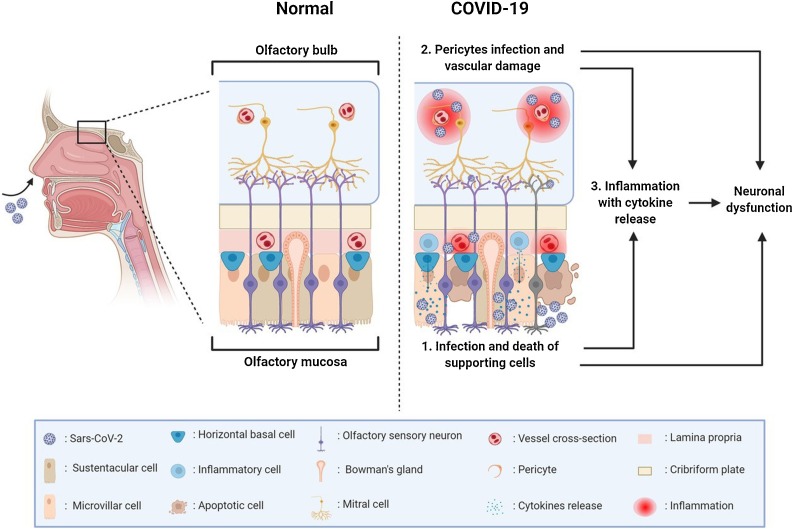
Patients with COVID-19 often complain of smell and taste disorders (STD). STD emerge early in the course of the disease, seem to be more common in SARS-CoV-2 infection than in other upper respiratory tract infections, and could in some cases persist for long after resolution of respiratory symptoms. Current evidence suggests that STD probably result from a loss of function of olfactory sensory neurons and taste buds, mainly caused by infection, inflammation, and subsequent dysfunction of supporting non-neuronal cells in the mucosa. However, the possible occurrence of other mechanisms leading to chemosensory dysfunction has also been hypothesized, and contrasting data have been reported regarding the direct infection of sensory neurons by SARS-CoV-2. In this mini-review, we summarize the currently available literature on pathogenesis, clinical manifestations, diagnosis, and outcomes of STD in COVID-19 and discuss possible future directions of research on this topic.
Keywords: Ageusia; Anosmia; COVID-19.
Copyright © 2021 Elsevier B.V. All rights reserved.
Figures
References
-
- Hornuss D., Lange B., Schröter N., Rieg S., Kern W.V., Wagner D. Anosmia in COVID-19 patients. Clin. Microbiol. Infect. 2020 Available at: https://www.ncbi.nlm.nih.gov/pmc/articles/PMC7242197/. Accessed 13 September 2020. - PMC - PubMed
Publication types
MeSH terms
LinkOut - more resources
Full Text Sources
Other Literature Sources
Medical
Research Materials
Miscellaneous
