


Spatial clustering of livestock Anthrax events associated with agro-ecological zones in Kenya, 1957-2017
- PMID: 33602160
- PMCID: PMC7890876
- DOI: 10.1186/s12879-021-05871-9
Spatial clustering of livestock Anthrax events associated with agro-ecological zones in Kenya, 1957-2017
Abstract
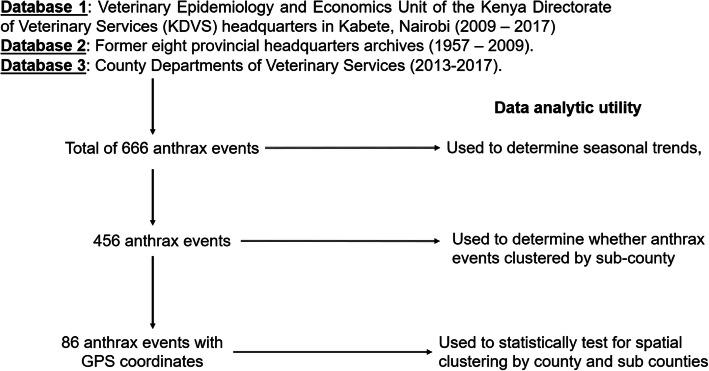
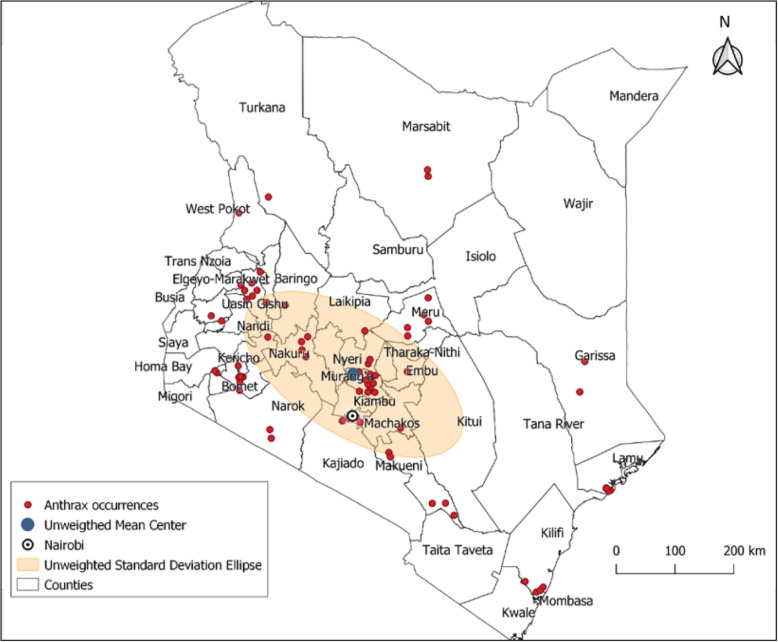
Background: Developing disease risk maps for priority endemic and episodic diseases is becoming increasingly important for more effective disease management, particularly in resource limited countries. For endemic and easily diagnosed diseases such as anthrax, using historical data to identify hotspots and start to define ecological risk factors of its occurrence is a plausible approach. Using 666 livestock anthrax events reported in Kenya over 60 years (1957-2017), we determined the temporal and spatial patterns of the disease as a step towards identifying and characterizing anthrax hotspots in the region.
Methods: Data were initially aggregated by administrative unit and later analyzed by agro-ecological zones (AEZ) to reveal anthrax spatio-temporal trends and patterns. Variations in the occurrence of anthrax events were estimated by fitting Poisson generalized linear mixed-effects models to the data with AEZs and calendar months as fixed effects and sub-counties as random effects.
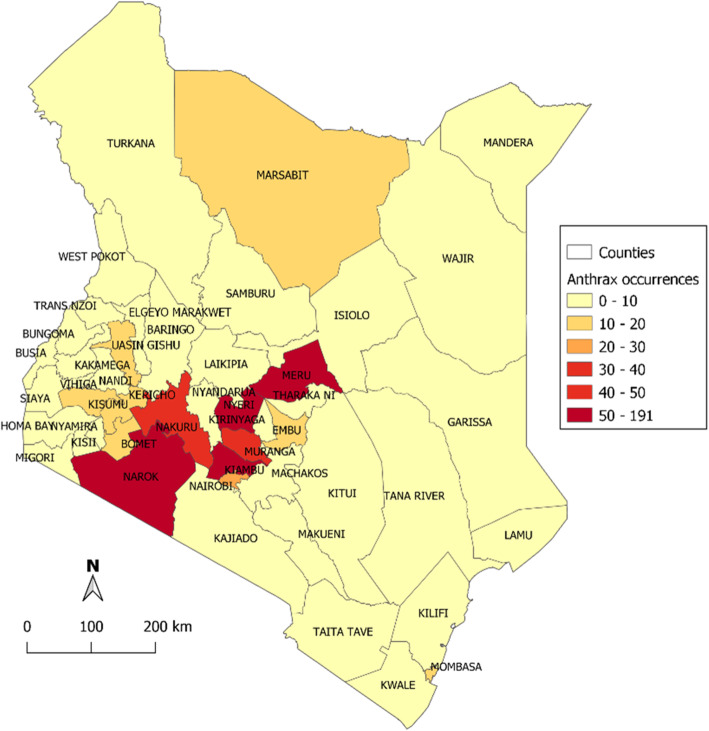
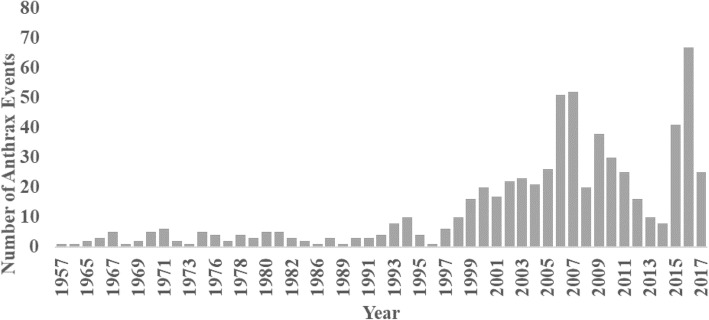
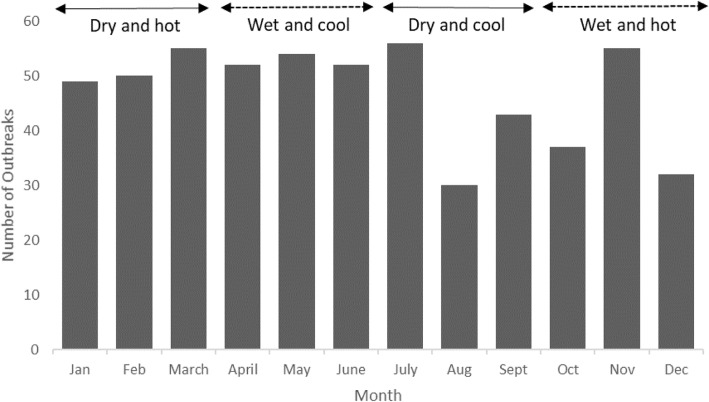
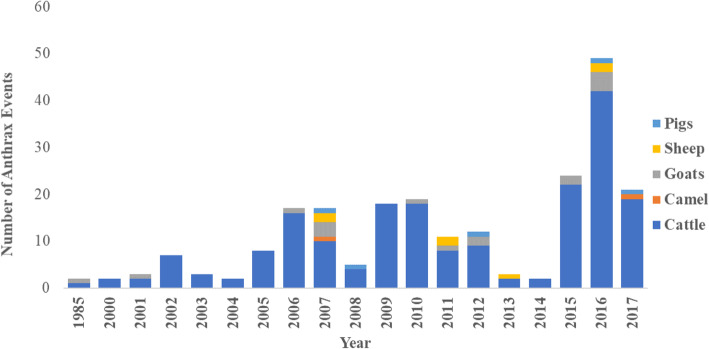
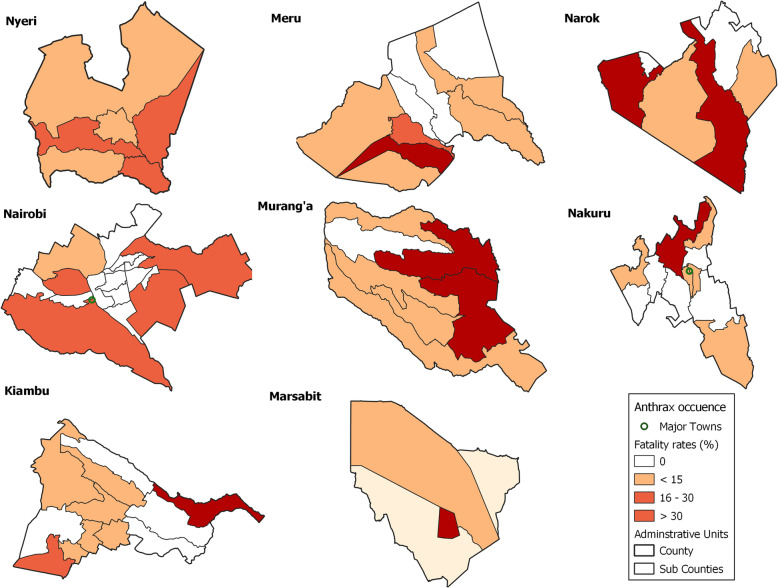
Results: The country reported approximately 10 anthrax events annually, with the number increasing to as many as 50 annually by the year 2005. Spatial classification of the events in eight counties that reported the highest numbers revealed spatial clustering in certain administrative sub-counties, with 12% of the sub-counties responsible for over 30% of anthrax events, whereas 36% did not report any anthrax disease over the 60-year period. When segregated by AEZs, there was significantly greater risk of anthrax disease occurring in agro-alpine, high, and medium potential AEZs when compared to the agriculturally low potential arid and semi-arid AEZs of the country (p < 0.05). Interestingly, cattle were > 10 times more likely to be infected by B. anthracis than sheep, goats, or camels. There was lower risk of anthrax events in August (P = 0.034) and December (P = 0.061), months that follow long and short rain periods, respectively.
Conclusion: Taken together, these findings suggest existence of certain geographic, ecological, and demographic risk factors that promote B. anthracis persistence and trasmission in the disease hotspots.
Keywords: Agro-ecological zones; Anthrax; Clustering; Kenya; Livestock.
Conflict of interest statement
All authors except JG declare no competing interests. JG is a member of the editorial board for the BMC Infectious Diseases journal.
Figures
References
MeSH terms
Grants and funding
LinkOut - more resources
Full Text Sources
Other Literature Sources
Medical
