


Prognostic and Therapeutic Roles of the Insulin Growth Factor System in Glioblastoma
- PMID: 33604294
- PMCID: PMC7885861
- DOI: 10.3389/fonc.2020.612385
Prognostic and Therapeutic Roles of the Insulin Growth Factor System in Glioblastoma
Abstract
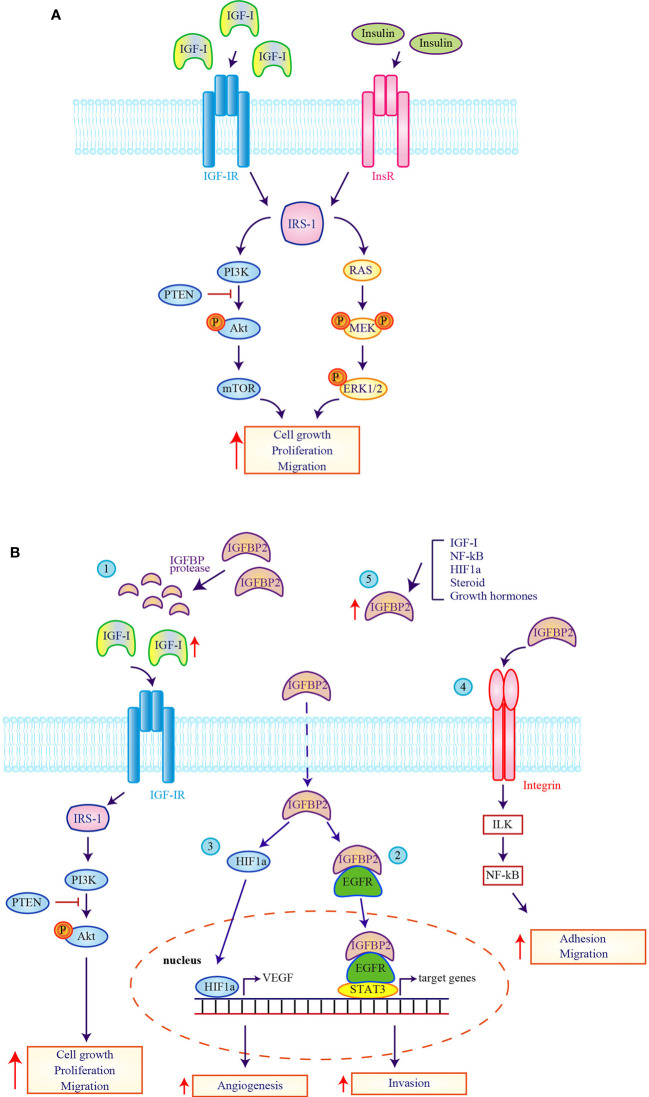
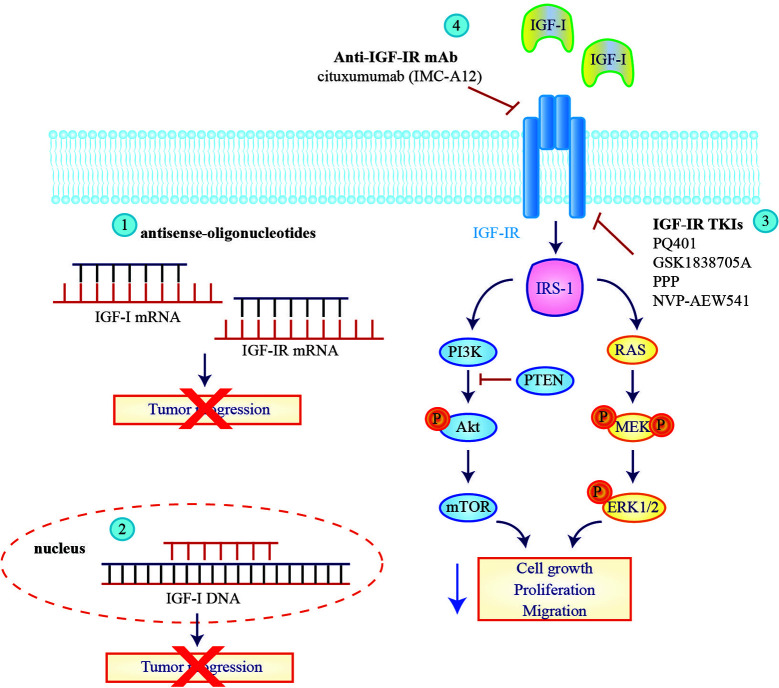
Glioblastoma multiforme (GBM) is the most common primary brain malignancy and is often resistant to conventional treatments due to its extensive cellular heterogeneity. Thus, the overall survival of GBM patients remains extremely poor. Insulin-like growth factor (IGF) signaling entails a complex system that is a key regulator of cell transformation, growth and cell-cycle progression. Hence, its deregulation is frequently involved in the development of several cancers, including brain malignancies. In GBM, differential expression of several IGF system components and alterations of this signaling axis are linked to significantly worse prognosis and reduced responsiveness to temozolomide, the most commonly used pharmacological agent for the treatment of the disease. In the present review we summarize the biological role of the IGF system in the pathogenesis of GBM and comprehensively discuss its clinical significance and contribution to the development of resistance to standard chemotherapy and experimental treatments.
Keywords: IGF-binding protein; drug resistance; glioblastoma; insulin-like growth factor signaling pathway; insulin/insulin-like growth factor system.
Copyright © 2021 Tirrò, Massimino, Romano, Martorana, Pennisi, Stella, Pavone, Di Gregorio, Puma, Tomarchio, Vitale, Manzella and Vigneri.
Conflict of interest statement
The authors declare that the research was conducted in the absence of any commercial or financial relationships that could be construed as a potential conflict of interest.
Figures
References
Publication types
LinkOut - more resources
Full Text Sources
Other Literature Sources
