


Milk modulates macrophage polarization in vitro
- PMID: 33604549
- PMCID: PMC7885867
- DOI: 10.1016/j.cytox.2019.100009
Milk modulates macrophage polarization in vitro
Abstract
Objective: Milk holds an anti-inflammatory response that is particularly important to protecting infants against necrotizing enterocolitis. Milk might also exert anti-inflammatory effects in adulthood, including the oral cavity where macrophages of the oral mucosal control innate immunity defense. It remains unknown, however, whether milk can modulate the local inflammatory response by affecting the polarization of macrophages.
Material and methods: To determine whether pasteurized human milk and pasteurized cow milk can provoke macrophage polarization, murine bone marrow macrophages and RAW264.7 cells were exposed to human saliva or the inflammatory cytokines IL1β and TNFα. Activation of pro-(M1) inflammatory response is indicated by the expression of IL1 and IL8. To determine polarization towards a M2 phenotype, the expression of arginase 1 (ARG1) and chitinase-like 3 (Chil3) was determined by reverse transcriptase PCR and immunoassay. Western blot was done on phosphorylated p38 and JNK.
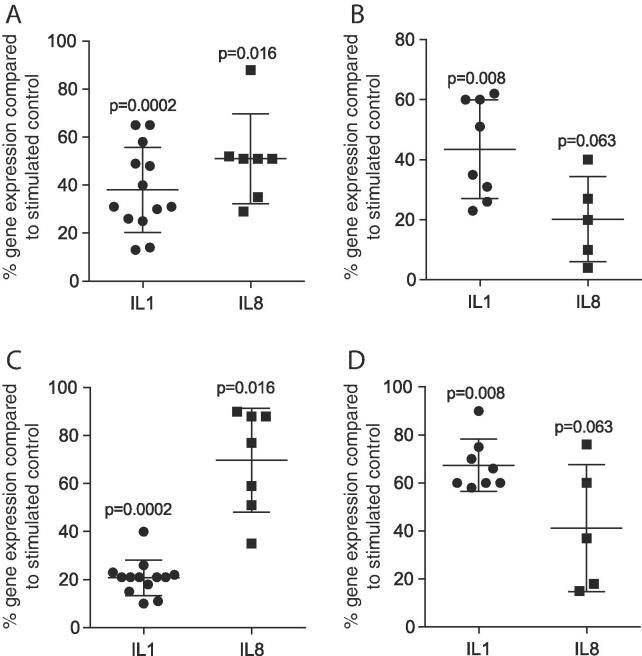
Results: Aqueous fractions of human milk and cow milk from different donors, respectively, significantly decreased the inflammatory response of primary macrophages and RAW264.7 cells when exposed to saliva or IL1 and TNFα. Similar to IL4, human milk and cow milk caused a robust expression of ARG1 and Chil3 in primary macrophages. The polarization of macrophages by pasteurized milk occurred independent of the phosphorylation of p38 and JNK.
Conclusion: These data suggest that pasteurized milk, independent of the origin, can cause the polarization of macrophages from a pro-inflammatory M1 towards a pro-resolving M2 phenotype. Thus, milk might have a protective role for the oral cavity by modulation of the macrophage-based innate immune system.
Keywords: Inflammation; Macrophages; Milk; Mucositis; Oral; Polarisation.
© 2019 The Author(s).
Figures


References
-
- Delima A.J., Van Dyke T.E. Origin and function of the cellular components in gingival crevice fluid. Periodontology. 2003;2000(31):55–76. - PubMed
-
- Darveau R.P. Periodontitis: a polymicrobial disruption of host homeostasis. Nat. Rev. Microbiol. 2010;8(7):481–490. - PubMed
-
- Berglundh T., Zitzmann N.U., Donati M. Are peri-implantitis lesions different from periodontitis lesions? J. Clin. Periodontol. 2011;38(Suppl 11):188–202. - PubMed
LinkOut - more resources
Full Text Sources
Research Materials
Miscellaneous
