


Benchmarking outcomes on multiple contextual levels in lean healthcare: a systematic review, development of a conceptual framework, and a research agenda
- PMID: 33607988
- PMCID: PMC7893761
- DOI: 10.1186/s12913-021-06160-6
Benchmarking outcomes on multiple contextual levels in lean healthcare: a systematic review, development of a conceptual framework, and a research agenda
Abstract
Background: Reliable benchmarking in Lean healthcare requires widely relevant and applicable domains for outcome metrics and careful attention to contextual levels. These levels have been poorly defined and no framework to facilitate performance benchmarking exists.
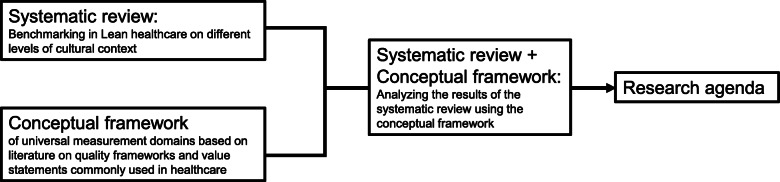
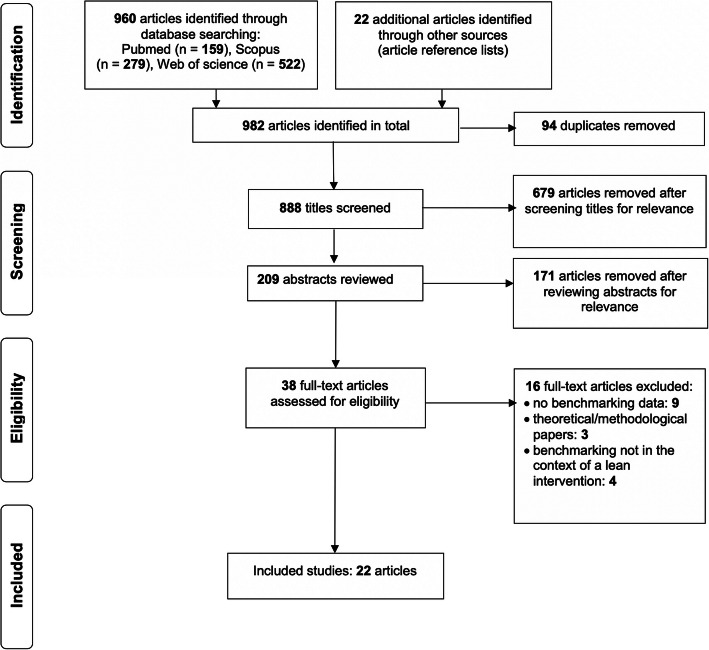
Methods: We systematically searched the Pubmed, Scopus, and Web of Science databases to identify original articles reporting benchmarking on different contextual levels in Lean healthcare and critically appraised the articles. Scarcity and heterogeneity of articles prevented quantitative meta-analyses. We developed a new, widely applicable conceptual framework for benchmarking drawing on the principles of ten commonly used healthcare quality frameworks and four value statements, and suggest an agenda for future research on benchmarking in Lean healthcare.
Results: We identified 22 articles on benchmarking in Lean healthcare on 4 contextual levels: intra-organizational (6 articles), regional (4), national (10), and international (2). We further categorized the articles by the domains in the proposed conceptual framework: patients (6), employed and affiliated staff (2), costs (2), and service provision (16). After critical appraisal, only one fifth of the articles were categorized as high quality.
Conclusions: When making evidence-informed decisions based on current scarce literature on benchmarking in healthcare, leaders and managers should carefully consider the influence of context. The proposed conceptual framework may facilitate performance benchmarking and spreading best practices in Lean healthcare. Future research on benchmarking in Lean healthcare should include international benchmarking, defining essential factors influencing Lean initiatives on different levels of context; patient-centered benchmarking; and system-level benchmarking with a balanced set of outcomes and quality measures.
Keywords: Benchmarking; Context; Lean healthcare; Lean management; Outcomes.
Conflict of interest statement
The authors declare that they have no competing interests.
Figures
References
Publication types
MeSH terms
LinkOut - more resources
Full Text Sources
Other Literature Sources
Medical
