


New combination approaches to combat methicillin-resistant Staphylococcus aureus (MRSA)
- PMID: 33608582
- PMCID: PMC7896049
- DOI: 10.1038/s41598-021-82550-4
New combination approaches to combat methicillin-resistant Staphylococcus aureus (MRSA)
Abstract
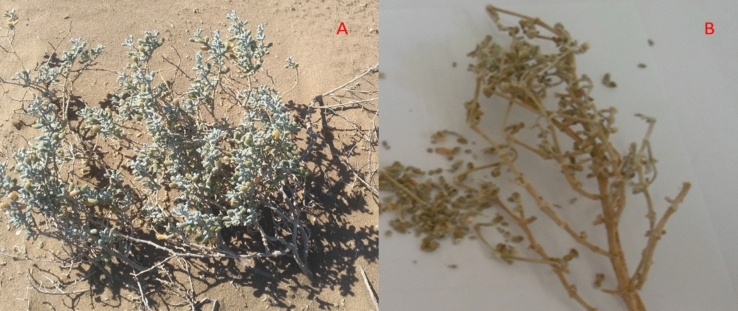
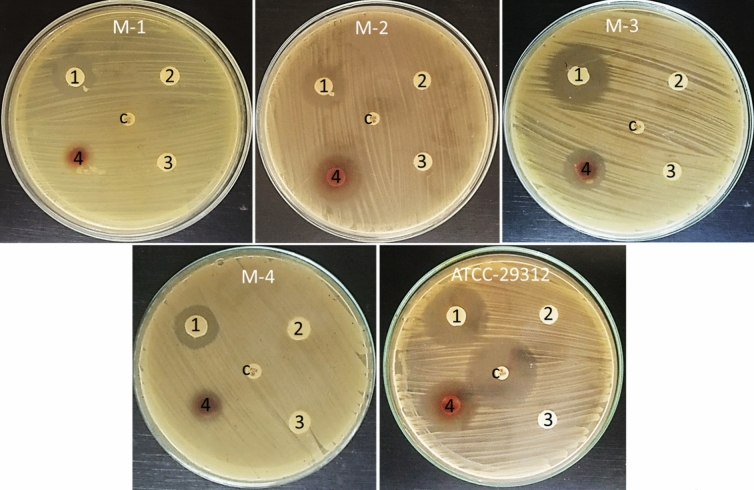
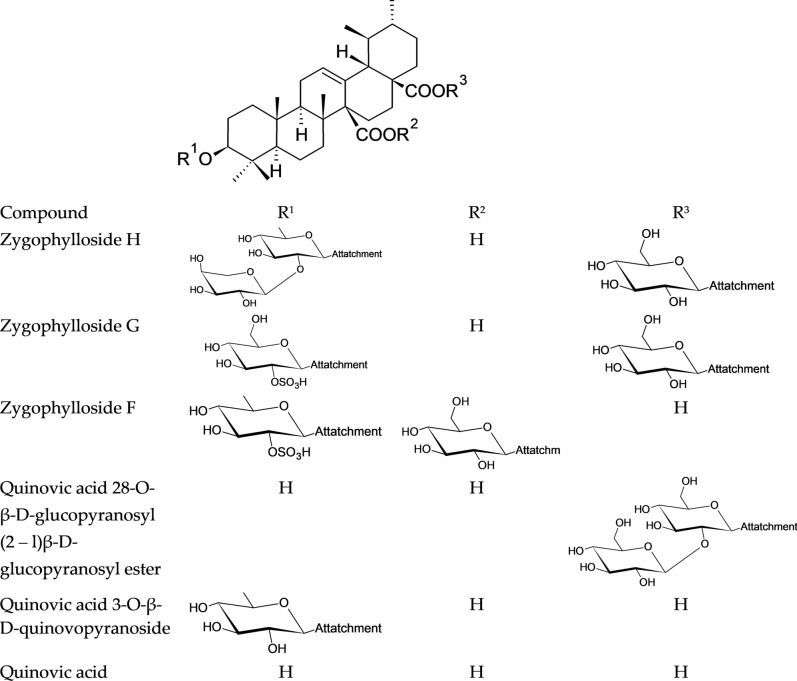
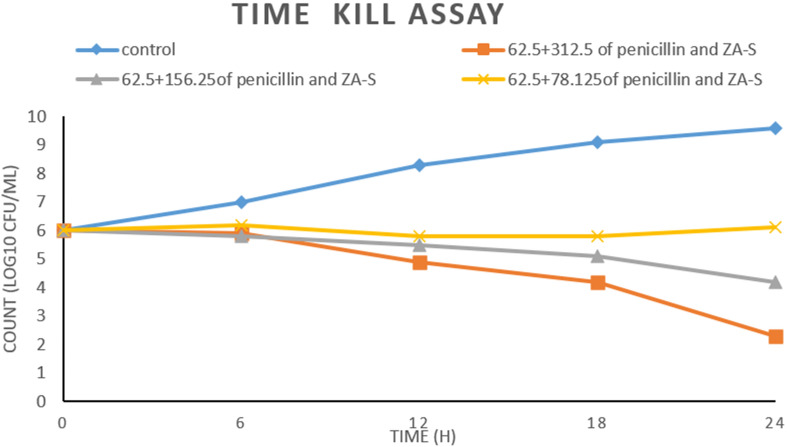
The herbal products proved to be more promising antimicrobials even though their antimicrobial activity is milder than commercially available antibiotics. Moreover, herbal drugs may act synergistically with antibiotics to kill microbes. In this study, we aimed to enhance the activity of penicillin against MRSA through combination with the active saponin fraction isolated from the Zygophyllum album plant. Three different types of metabolites (saponins, sterols, and phenolics) have been extracted from Zygophyllum album with ethanol and purified using different chromatographic techniques. The antibacterial activity of crude extract and the separated metabolites were checked against MRSA isolates, Saponin fraction (ZA-S) was only the active one followed by the crude extract. Therefore, the compounds in this fraction were identified using ultra-high-performance liquid chromatography connected to quadrupole time-of-flight mass spectrometry (UHPLC/QTOF-MS) operated in positive and negative ionization modes. UHPLC/QTOF-MS revealed the presence of major six ursane-type tritepenoidal saponins (Quinovic acid, Quinovic acid 3β-O-β-D-quinovopyranoside, Zygophylloside C, Zygophylloside G, Zygophylloside K and Ursolic acid), in addition to Oleanolic acid. Interaction studies between saponin fraction and penicillin against MRSA were performed through the checkerboard method and time-kill assay. According to checkerboard results, only three combinations showed a fractional inhibitory concentration index less than 0.5 at concentrations of (62.5 + 312.5, 62.5 + 156.25, and 62.5 + 78.125 of penicillin and ZA-S, respectively). Time kill assay results showed that the highest reduction in log10 colony-forming unit (CFU)/ml of initial inoculum of MRSA after 24 h occurred by 3.7 at concentrations of 62.5 + 312.5 (µg/µg)/ml of penicillin and ZA-S, respectively. Thus, the combination between saponin fraction of Zygophyllum album and penicillin with these concentrations could be a potential agent against MRSA that can serve as possible model for new antibacterial drug.
Conflict of interest statement
The authors declare no competing interests.
Figures
References
-
- Bueno J. Antimicrobial adjuvants drug discovery, the challenge of avoid the resistance and recover the susceptibility of multidrug-resistant strains. J. Microb. Biochem. Technol. 2016;8:169–176. doi: 10.4172/1948-5948.1000281. - DOI
-
- Abiramasundari P, Priya V, Jeyanthi G, Gayathri D. Evaluation of the antibacterial activity of cocculus hirsutus. J. Drugs Med. 2011;3:26–31.
MeSH terms
Substances
LinkOut - more resources
Full Text Sources
Other Literature Sources
Medical
