


Screening and evaluation of anti-SARS-CoV-2 components from Ephedra sinica by ACE2/CMC-HPLC-IT-TOF-MS approach
- PMID: 33608752
- PMCID: PMC7895511
- DOI: 10.1007/s00216-021-03233-7
Screening and evaluation of anti-SARS-CoV-2 components from Ephedra sinica by ACE2/CMC-HPLC-IT-TOF-MS approach
Abstract
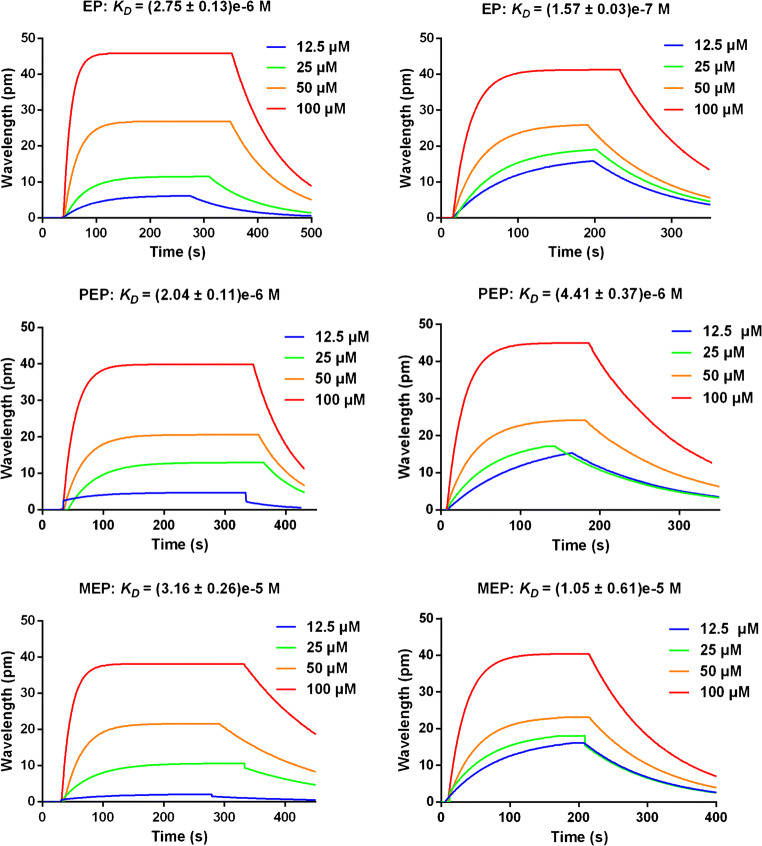
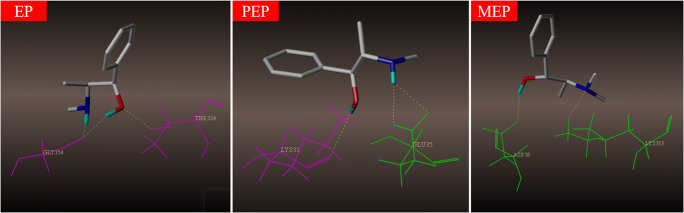
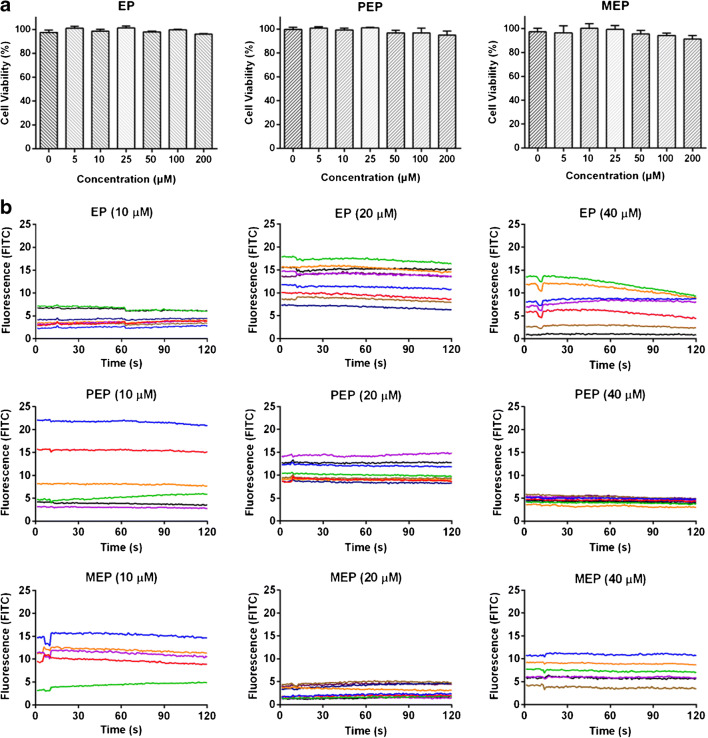
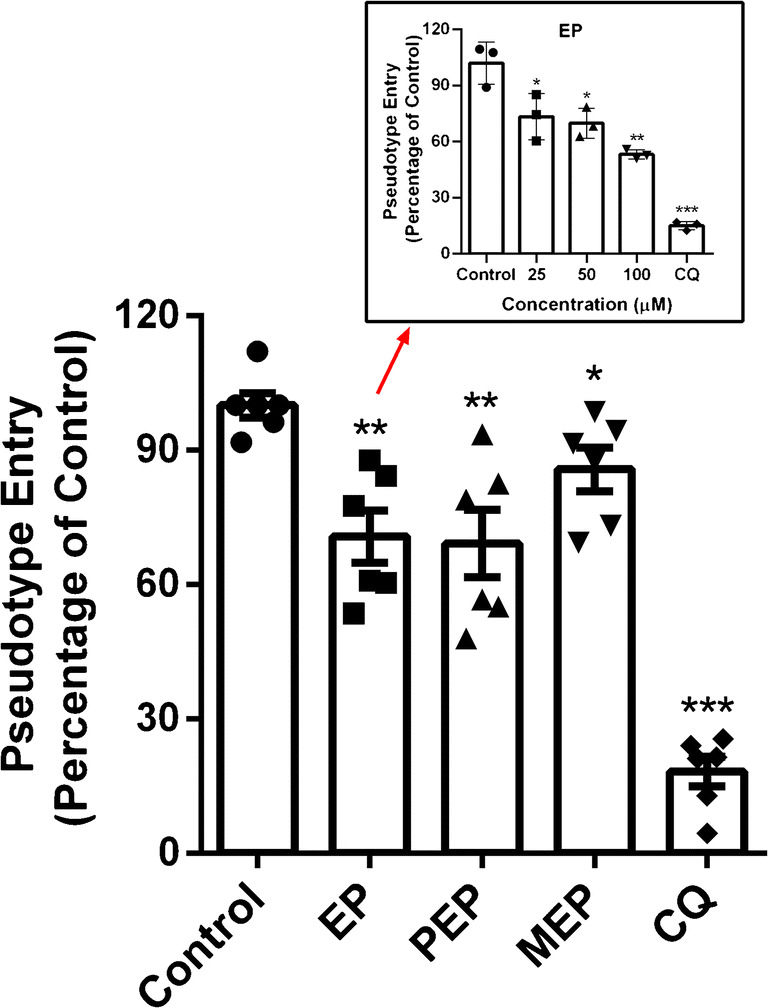
Traditional Chinese medicines played an important role in the treatment of COVID-19 in 2020. Ephedra sinica, one of the major constituent herbs of multi-component herbal formula, has been widely used to treat COVID-19 in China. However, its active components are still unclear. The objectives of this study are to screen and evaluate active components from the traditional Chinese medicine Ephedra sinica for the treatment of COVID-19. In our study, we established an ACE2/CMC bioaffinity chromatography model, and then developed an ACE2/CMC-HPLC-IT-TOF-MS system for the active compounds screening and identification from Ephedra sinica extract. We performed molecular docking and surface plasmon resonance (SPR) assays to assess the binding characteristics (binding mode and KD value). We used CCK-8 staining to assess the toxicity of screened compounds, and also used SARS-CoV-2 pseudovirus to observe the viropexis effect of screened compounds in ACE2h cells. In this current work, one fraction was fished out, separated and identified as ephedrine (EP), pseudoephedrine (PEP), and methylephedrine (MEP). Binding assays showed that the three compounds could bind with ACE2 in a special way to some amino acid residues, similar to the way SARS-CoV-2 bound with ACE2. Additionally, the three compounds, especially EP, can inhibit the entrance of SARS-CoV-2 spike pseudovirus into ACE2h cells because they can reduce the entrance ratio of pseudovirus in the pseudovirus model. Overall, the ACE2/CMC-HPLC-IT-TOF-MS system was established and verified to be suitable for ACE2-targeted bioactive compound screening. EP, PEP, and MEP with ACE2-binding features were screened out from Ephedra sinica, and acted as blockers inhibiting SARS-CoV-2 spike pseudovirus entering ACE2h cells.
Keywords: ACE2 receptor; COVID-19; Cell membrane chromatography; Ephedra sinica.
Conflict of interest statement
The authors declare that they have no conflict of interest. Ethical approval is not applicable. The presented research did not involve humans or animals. Informed consent is not applicable.
Figures
References
-
- Cui HT, Li YT, Guo LY, Liu XG, Wang LS, Jia JW, Liao JB, Miao J, Zhang ZY, Wang L, Wang HW, Wen WB. Traditional Chinese medicine for treatment of coronavirus disease 2019: a review. Traditional Med Res. 2020;5(2):65–73.
-
- Chen J, Wang YK, Gao Y, Hu LS, Yang JW, Wang JR, Sun WJ, Liang ZQ, Cao YM, Cao YB. Protection against COVID-19 injury by qingfei paidu decoction via antiviral, anti-inflammatory activity and metabolic programming. Biomed Pharmacother. 2020;129:110281. doi: 10.1016/j.biopha.2020.110281. - DOI - PMC - PubMed
-
- Xu DY, Xu YL, Wang ZW, Lu YL, Zhu HL, Song T. Mechanism of Qingfeipaidu decoction on COVID-19 based on network pharmacology. Pharmacology and Clinics of Chinese Materia Medica. 2020;36(1):26–32.
MeSH terms
Substances
Grants and funding
LinkOut - more resources
Full Text Sources
Other Literature Sources
Miscellaneous
