Dexamethasone use and mortality in hospitalized patients with coronavirus disease 2019: A multicentre retrospective observational study
- PMID: 33608891
- PMCID: PMC8013383
- DOI: 10.1111/bcp.14784
Dexamethasone use and mortality in hospitalized patients with coronavirus disease 2019: A multicentre retrospective observational study
Abstract
Aims: To examine the association between dexamethasone use and mortality among patients hospitalized for COVID-19.
Methods: We examined the association between dexamethasone use and mortality at AP-HP Greater Paris University hospitals. Study baseline was defined as the date of hospital admission. The primary endpoint was time to death. We compared this endpoint between patients who received dexamethasone and those who did not in time-to-event analyses adjusted for patient characteristics (such as age, sex and comorbidity) and clinical and biological markers of clinical severity of COVID-19, and stratified by the need for respiratory support, i.e. mechanical ventilation or oxygen. The primary analysis was a multivariable Cox regression model.
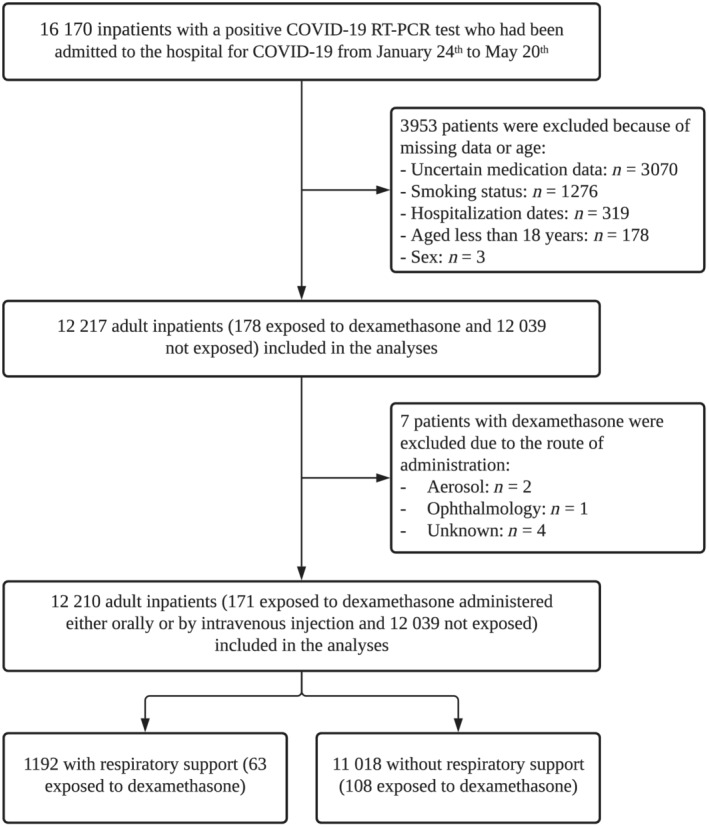
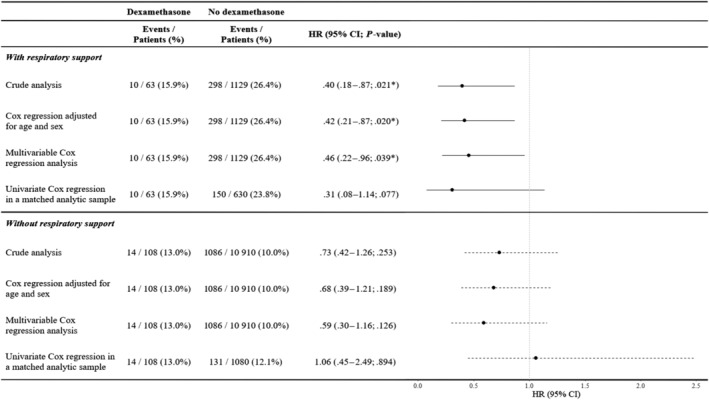
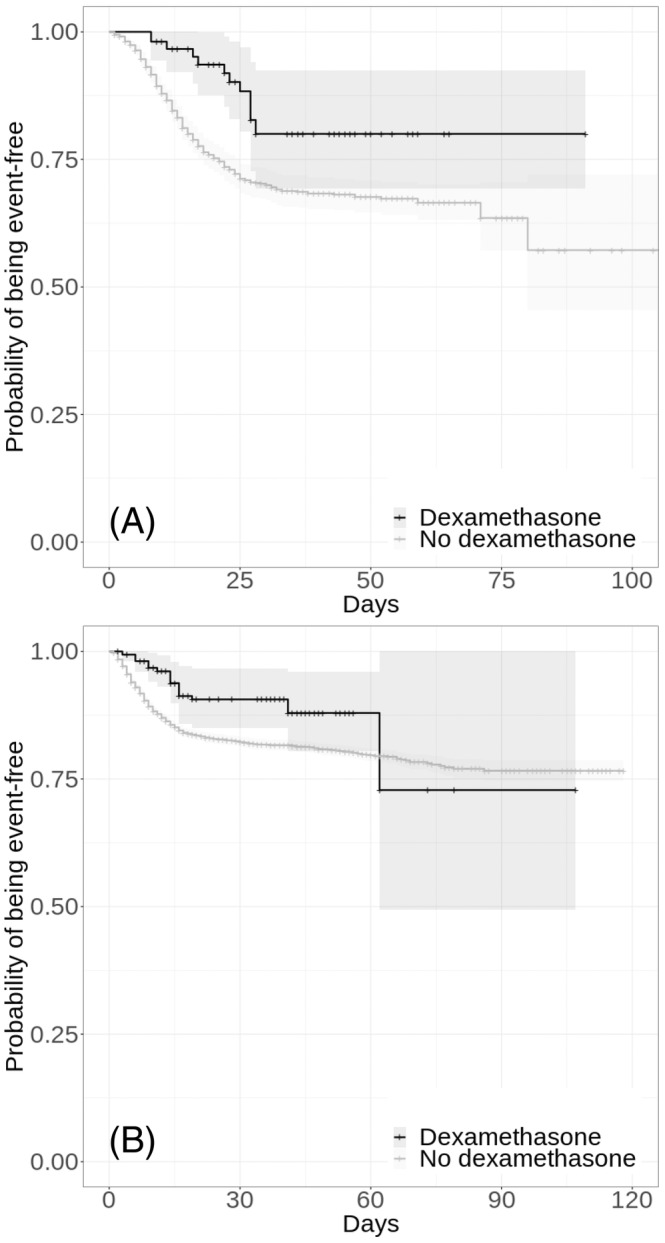
Results: Of 12 217 adult patients hospitalized with a positive COVID-19 reverse transcriptase-polymerase chain reaction test, 171 (1.4%) received dexamethasone orally or by intravenous perfusion during the visit. Among patients who required respiratory support, the end-point occurred in 10/63 (15.9%) patients who received dexamethasone and 298/1129 (26.4%) patients who did not. In this group, there was a significant association between dexamethasone use and reduced mortality in the primary analysis (hazard ratio, 0.46; 95% confidence interval 0.22-0.96, P = .039). Among patients who did not require respiratory support, there was no significant association between dexamethasone use and the endpoint.
Conclusions: In this multicentre observational study, dexamethasone use administered either orally or by intravenous injection at a cumulative dose between 60 mg and 150 mg was associated with reduced mortality among patients with COVID-19 requiring respiratory support.
Keywords: COVID-19; SARS-CoV-2; dexamethasone; efficacy; mortality; oxygen; treatment; ventilation.
© 2021 British Pharmacological Society.
Conflict of interest statement
Dr Hoertel has received personal fees and nonfinancial support from Lundbeck, outside the submitted work. Dr Limosin has received speaker and consulting fees from Janssen‐Cilag outside the submitted work. Other authors declare no competing interests.
Figures
References
-
- Hoertel N, Blachier M, Blanco C, et al. Facing the COVID‐19 epidemic in NYC: a stochastic agent‐based model of various intervention strategies. medRxiv. Published online. 2020. 10.1101/2020.04.23.20076885 - DOI
Publication types
MeSH terms
Substances
LinkOut - more resources
Full Text Sources
Other Literature Sources
Research Materials
Miscellaneous