Metabolic footprint of aging and obesity in red blood cells
- PMID: 33609087
- PMCID: PMC7950240
- DOI: 10.18632/aging.202693
Metabolic footprint of aging and obesity in red blood cells
Abstract
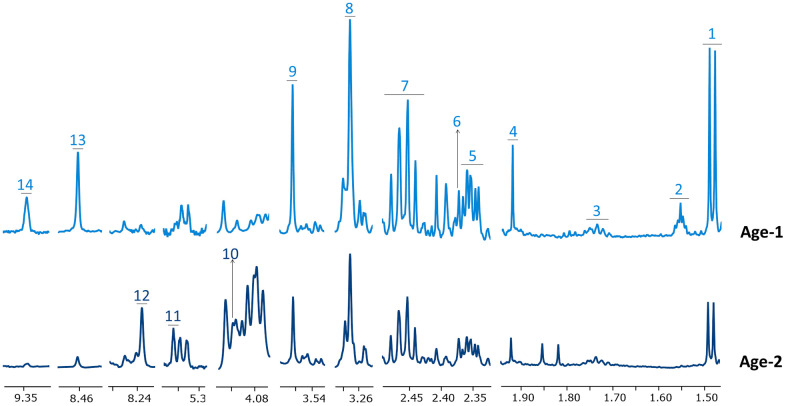
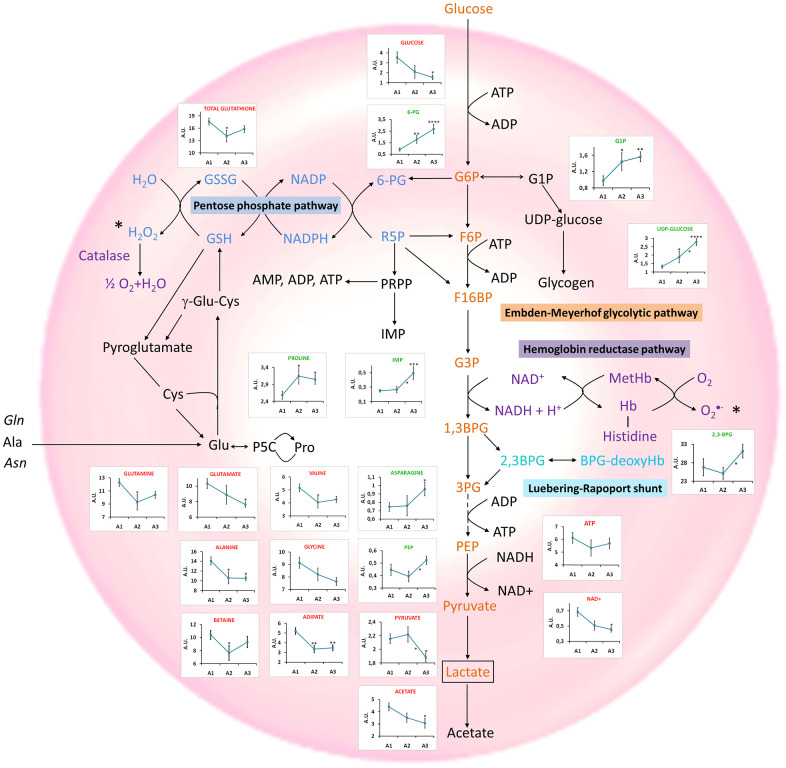
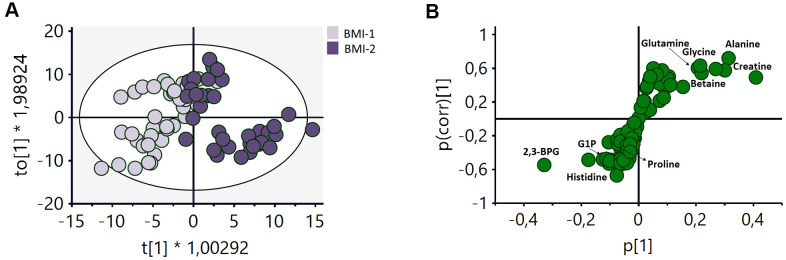
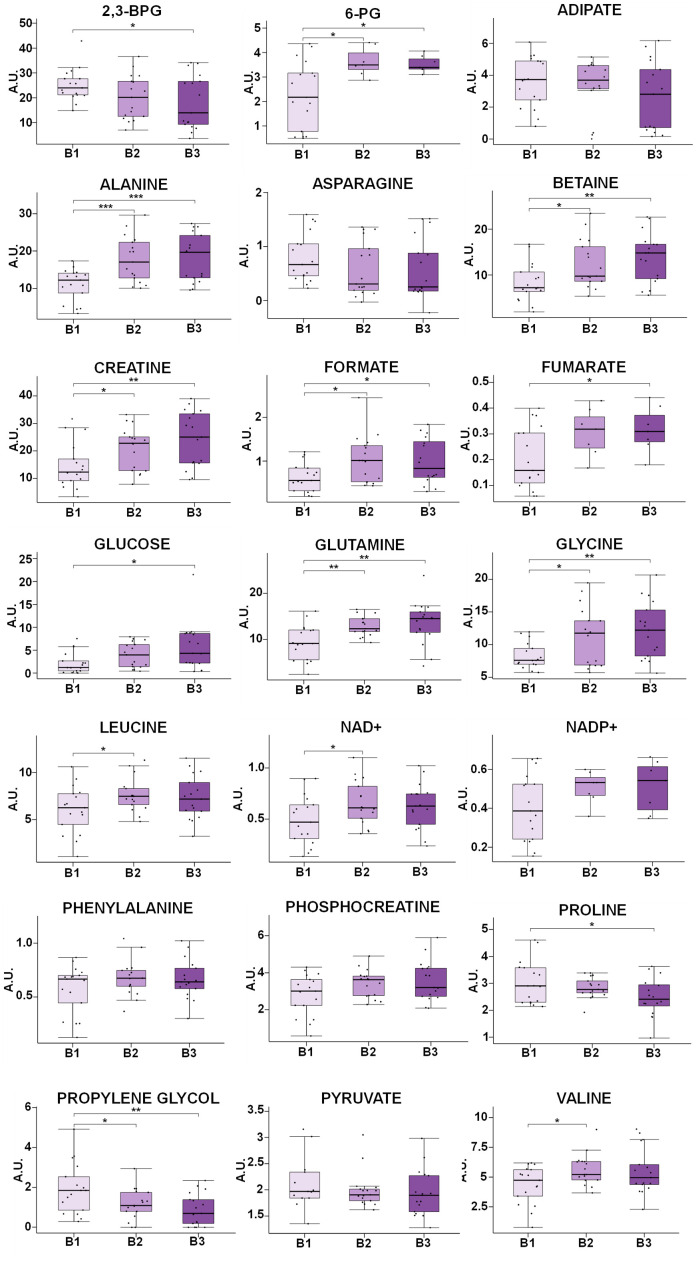
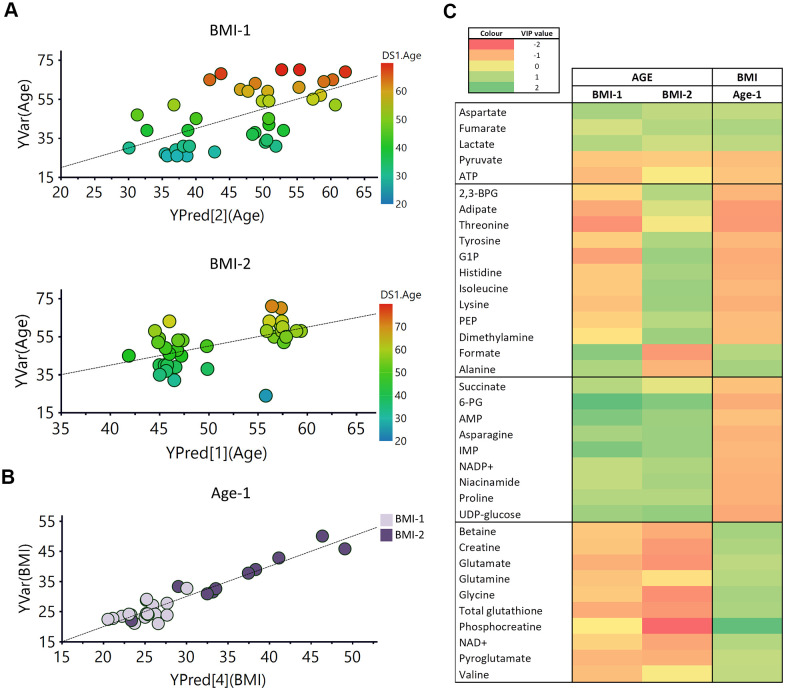
Aging is a physiological process whose underlying mechanisms are still largely unknown. The study of the biochemical transformations associated with aging is crucial for understanding this process and could translate into an improvement of the quality of life of the aging population. Red blood cells (RBCs) are the most abundant cells in humans and are involved in essential functions that could undergo different alterations with age. The present study analyzed the metabolic alterations experienced by RBCs during aging, as well as the influence of obesity and gender in this process. To this end, the metabolic profile of 83 samples from healthy and obese patients was obtained by Nuclear Magnetic Resonance spectroscopy. Multivariate statistical analysis revealed differences between Age-1 (≤45) and Age-2 (>45) subgroups, as well as between BMI-1 (<30) and BMI-2 (≥30) subgroups, while no differences were associated with gender. A general decrease in the levels of amino acids was detected with age, in addition to metabolic alterations of glycolysis, the pentose phosphate pathway, nucleotide metabolism, glutathione metabolism and the Luebering-Rapoport shunt. Obesity also had an impact on the metabolomics profile of RBCs; sometimes mimicking the alterations induced by aging, while, in other cases, its influence was the opposite, suggesting these changes could counteract the adaptation of the organism to senescence.
Keywords: NMR; RBCs; aging; metabolomics; obesity.
Conflict of interest statement
Figures


References
-
- United Nations. Department of Economic and Social Affairs. World population ageing 2019: Highlights. United Nations. Department of Economic and Social Affairs. 2019; 40–1307.
Publication types
MeSH terms
LinkOut - more resources
Full Text Sources
Other Literature Sources
Medical