Review
. 2021 Apr 5:215:113220.
doi: 10.1016/j.ejmech.2021.113220. Epub 2021 Jan 24.

Synthetic and medicinal perspective of quinolines as antiviral agents

Affiliations
Review

Synthetic and medicinal perspective of quinolines as antiviral agents

Ramandeep Kaur et al. Eur J Med Chem. .

Abstract

In current scenario, various heterocycles have come up exhibiting crucial role in various medicinal agents which are valuable for mankind. Out of diverse range of heterocycle, quinoline scaffold have been proved to play an important role in broad range of biological activities. Several drug molecules bearing a quinoline molecule with useful anticancer, antibacterial activities etc have been marketed such as chloroquine, saquinavir etc. Owing to their broad spectrum biological role, various synthetic strategies such as Skraup reaction, Combes reaction etc. has been developed by the researchers all over the world. But still the synthetic methods are associated with various limitations as formation of side products, use of expensive metal catalysts. Thus, several efforts to develop an efficient and cost effective synthetic protocol are still carried out till date. Moreover, quinoline scaffold displays remarkable antiviral activity. Therefore, in this review we have made an attempt to describe recent synthetic protocols developed by various research groups along with giving a complete explanation about the role of quinoline derivatives as antiviral agent. Quinoline derivatives were found potent against various strains of viruses like zika virus, enterovirus, herpes virus, human immunodeficiency virus, ebola virus, hepatitis C virus, SARS virus and MERS virus etc.

Keywords: Antiviral activity; COVID-19; Combes reaction; Ebola virus; Hepatitis C virus; Quinoline; Skraup reaction.


Conflict of interest statement

Declaration of competing interest The authors declare that they have no known competing financial interests or personal relationships that could have appeared to influence the work reported in this paper.

Figures
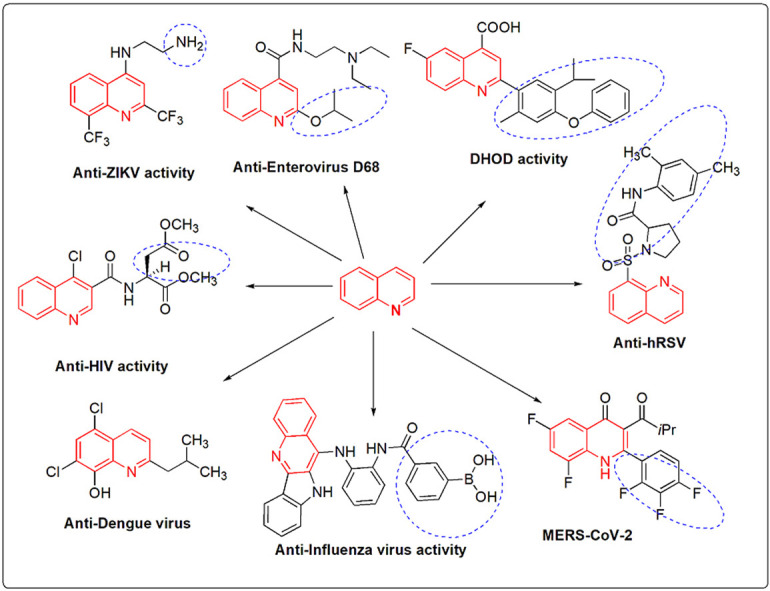
Image 1
Graphical abstract
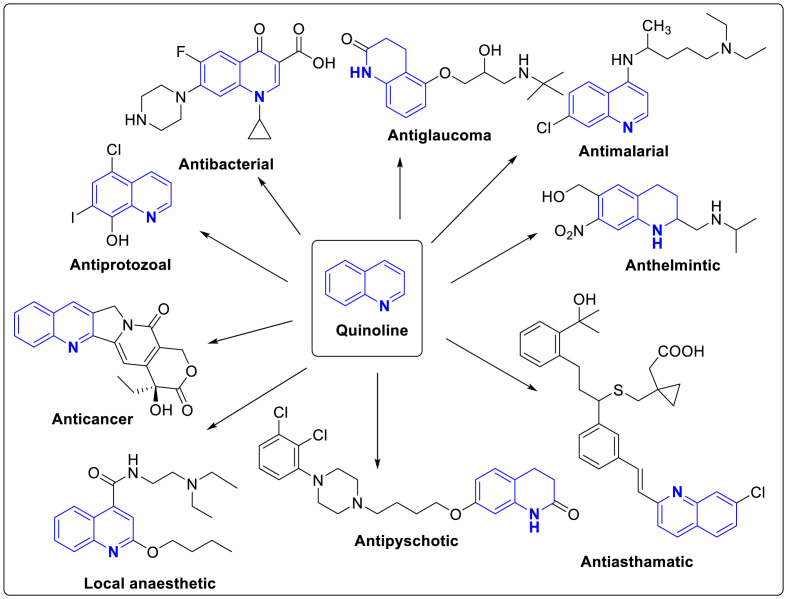
Fig. 1
Fig. 1
Broad spectrum biological activity of quinoline scaffold.
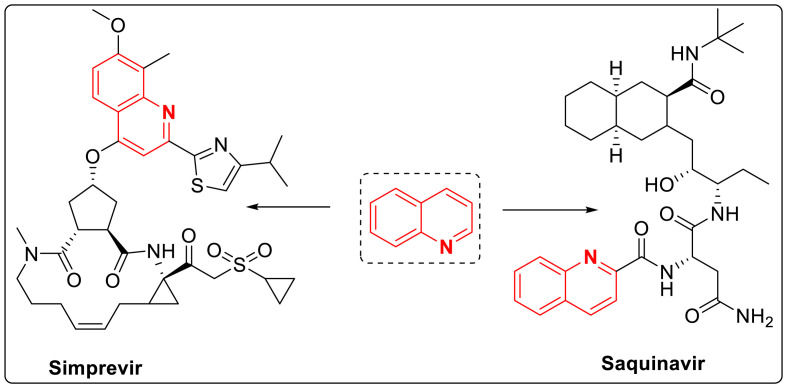
Fig. 2
Fig. 2
Marketed antiviral drugs with quinoline skeleton.
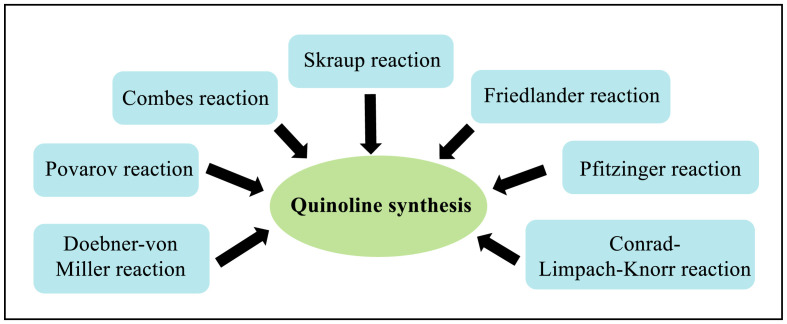
Fig. 3
Fig. 3
Various Classical approaches for quinoline synthesis.
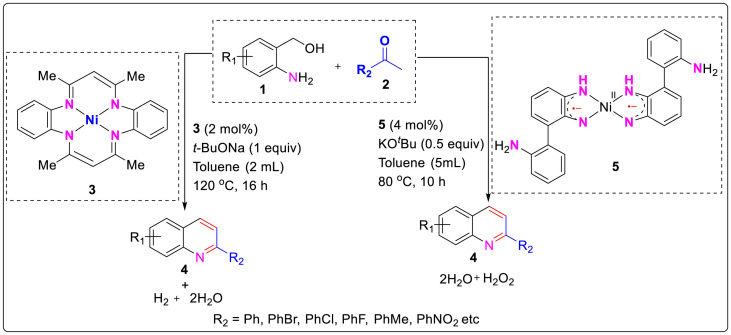
Scheme 1
Scheme 1
The nickel catalyzed synthesis of polysubsituted quinolines from α-2-aminoaryl alcohols.
Scheme 2
Scheme 2
Biomimetic method for the construction of polysubstituted quinolones.
Scheme 3
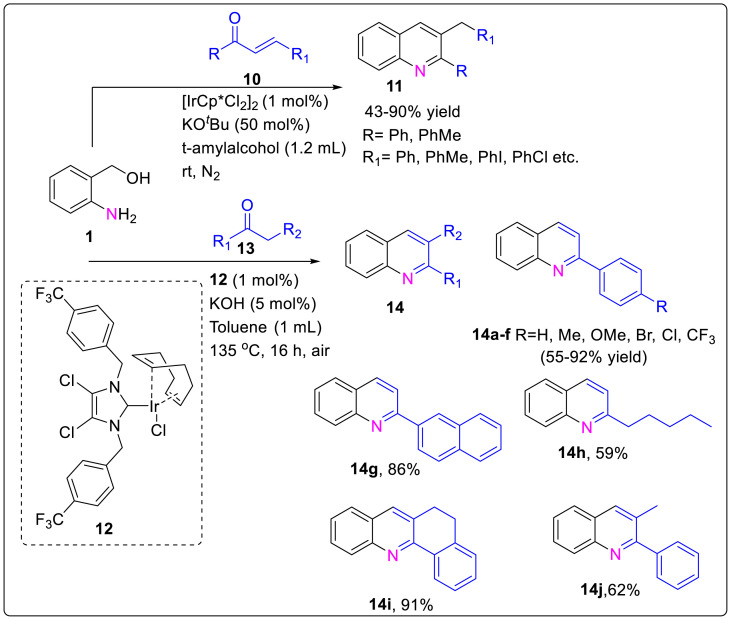
Scheme 3
Synthesis of quinoline through NHC-IrI complex and [IrCp∗Cl2]2/t-BuOK catalytic system.
Scheme 4
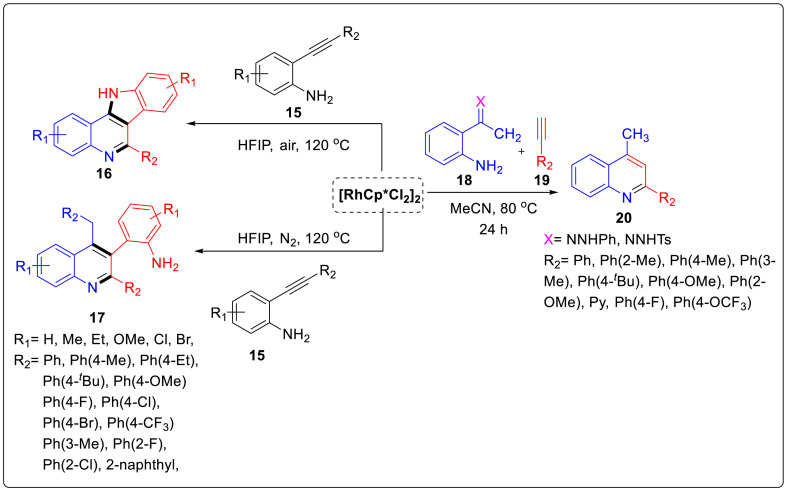
Scheme 4
Synthesis of functionalized quinoline using Rh catalyst.
Scheme 5
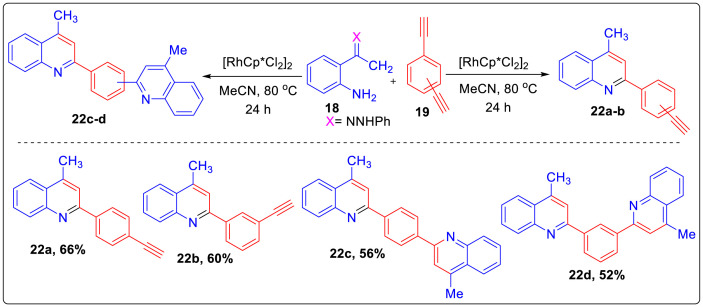
Scheme 5
Synthesis of mono- and bis-quinolines.
Fig. 4
Fig. 4
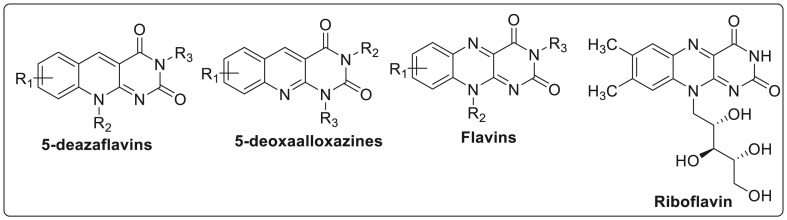
Some examples of pyrimidine fused with quinoline.
Scheme 6
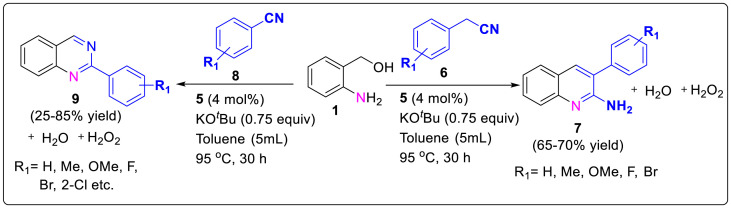
Scheme 6
Synthesis of pyrimidine fused quinolines using ligand free synthetic protocol.
Scheme 7
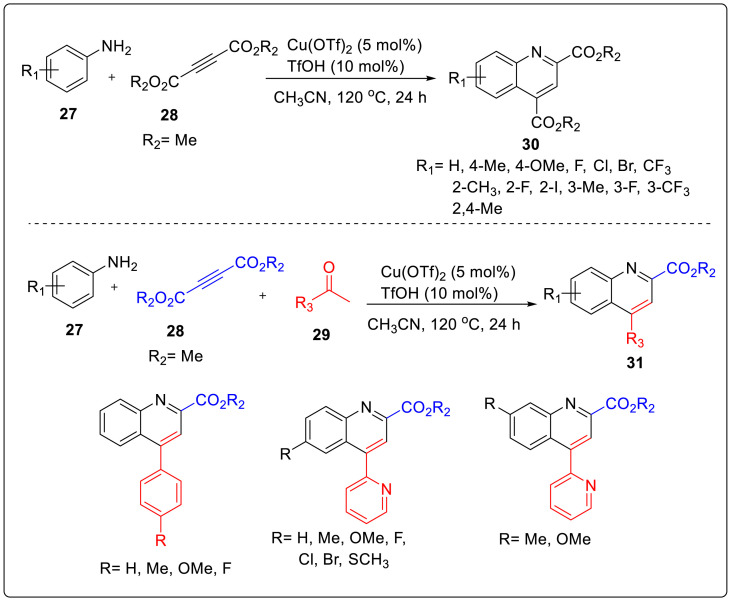
Scheme 7
Synthesis of 2,4-disubstituted quinolines using copper(II) catalyst.
Scheme 8
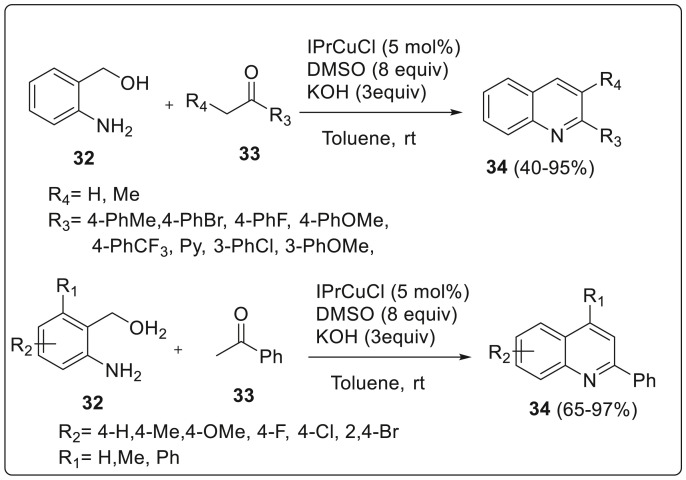
Scheme 8
Synthesis of quinolines through an N-heterocyclic carbene copper catalyst.
Scheme 9
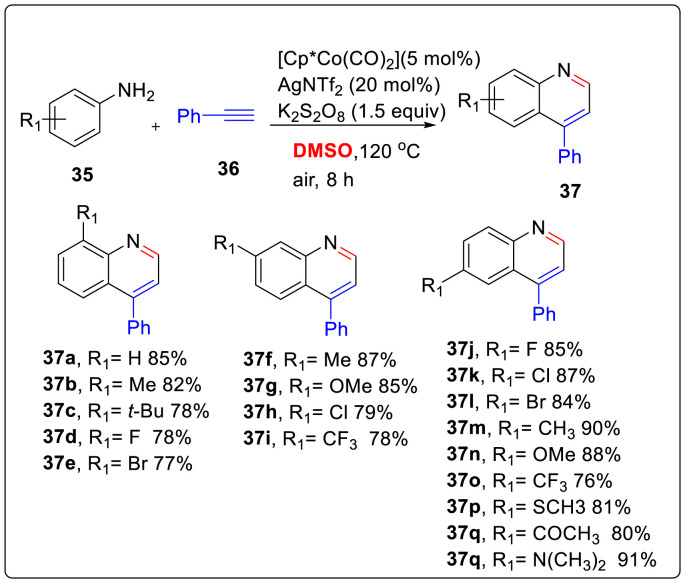
Scheme 9
Co (III) catalyzed- and DMSO involved C-H activation/cyclization for quinoline synthesis.
Scheme 10
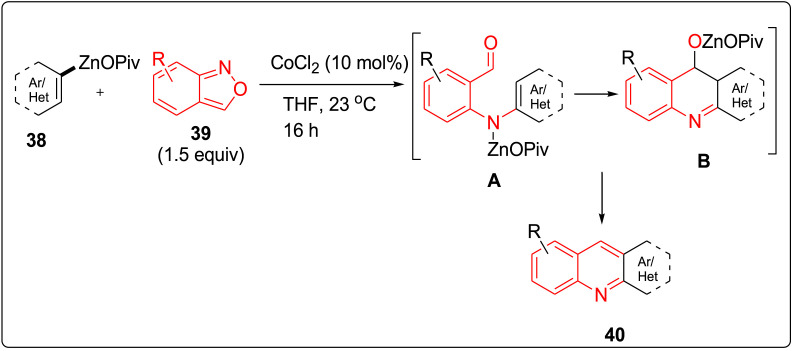
Scheme 10
Cobalt catalyzed electrophilic amination of anthranils.
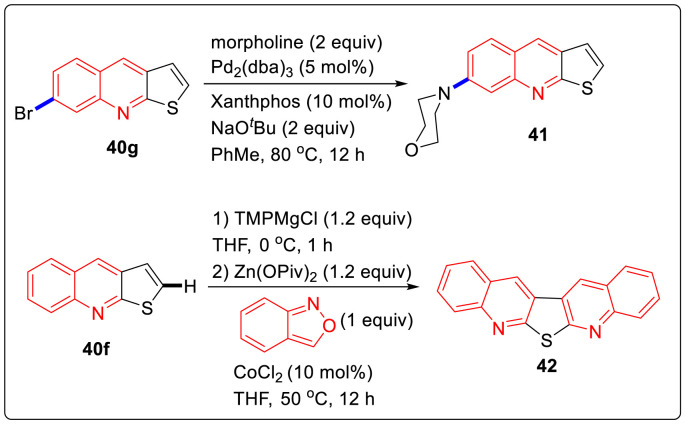
Scheme 11
Scheme 11
Functionalization of heterocycles by metalation.
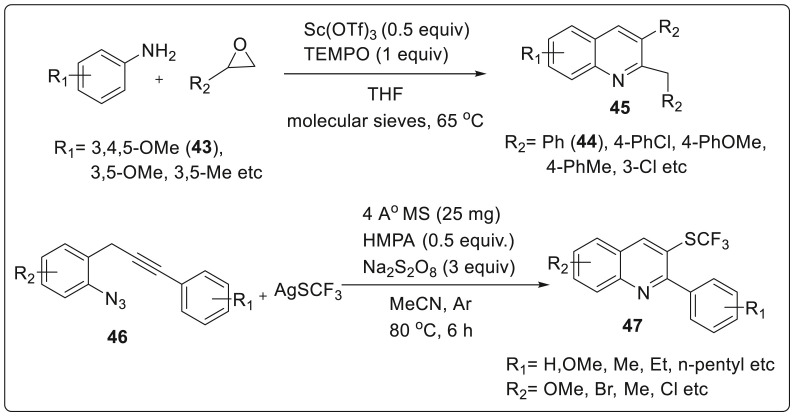
Scheme 12
Scheme 12
Synthesis of 2,3-disubstituted quinolines using Sc(OTf)3.
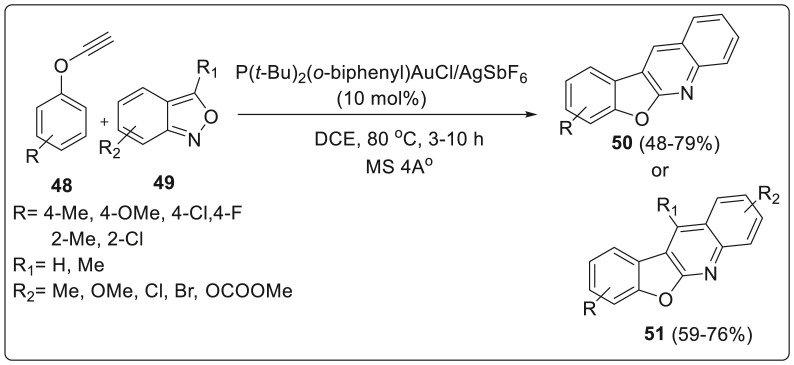
Scheme 13
Scheme 13
Gold catalyzed synthesis ofbenzofuro[2,3-b]quinoline and 6H-chrome no[3,4-b]quinolone scaffolds.
Scheme 14
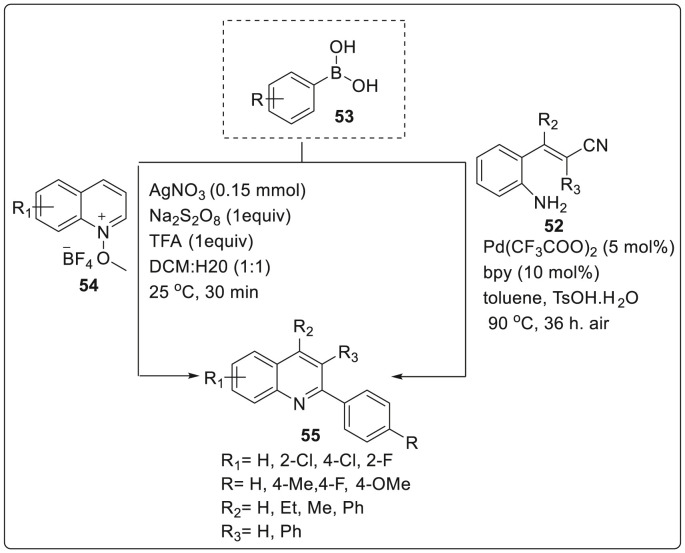
Scheme 14
Palladium-catalyzed and direct arylation reaction for the synthesis of 2-arylquinolines.
Scheme 15
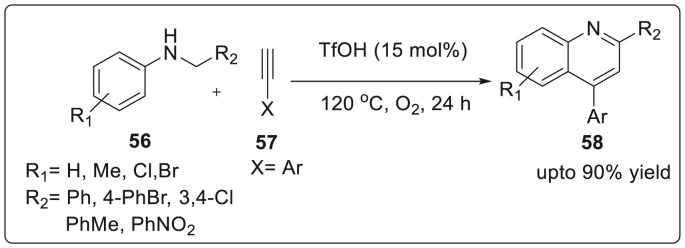
Scheme 15
Brønsted acid-catalyzed metal and solvent free Cross-Dehydrogenative Coupling.
Scheme 16
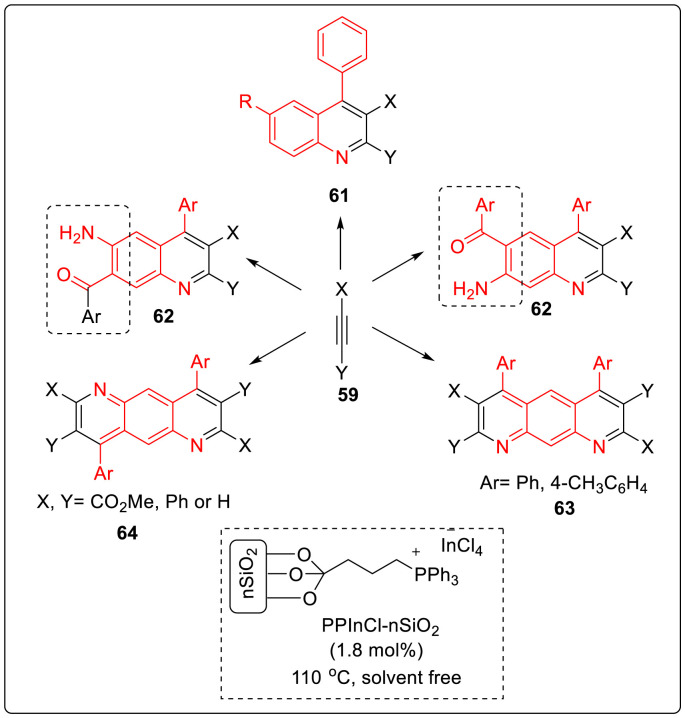
Scheme 16
Synthesis of pyrido[3,2-g or 2,3-g]quinolines using propylphosphonium tetrachloroindate ionic liquid.
Scheme 17
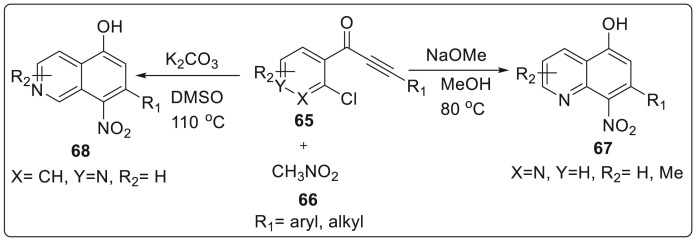
Scheme 17
Benzoannulation mediated synthesis for polyfunctional quinolines.
Scheme 18
Scheme 18
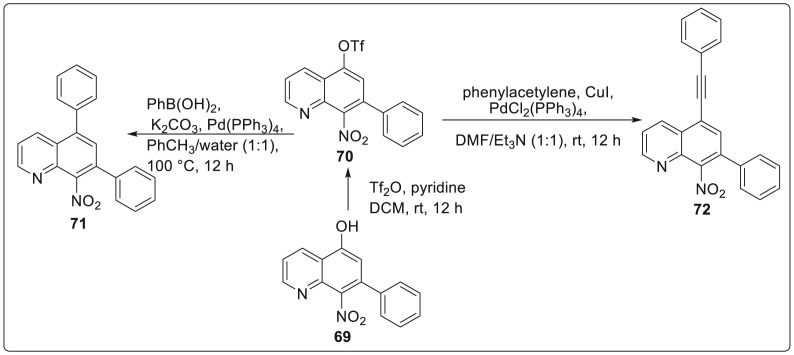
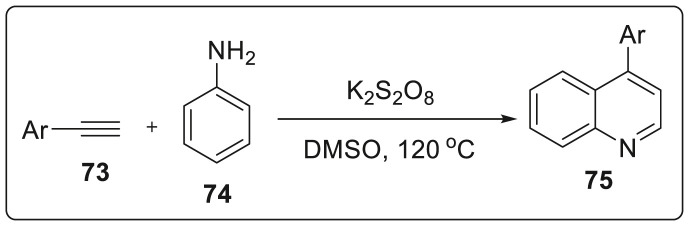
Coupling protocol for synthesis of quinolines.
Scheme 19
Scheme 19
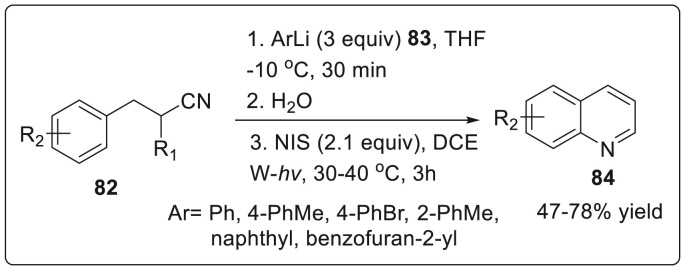
One-pot metal free synthetic protocol for quinolone synthesis.
Scheme 20
Scheme 20
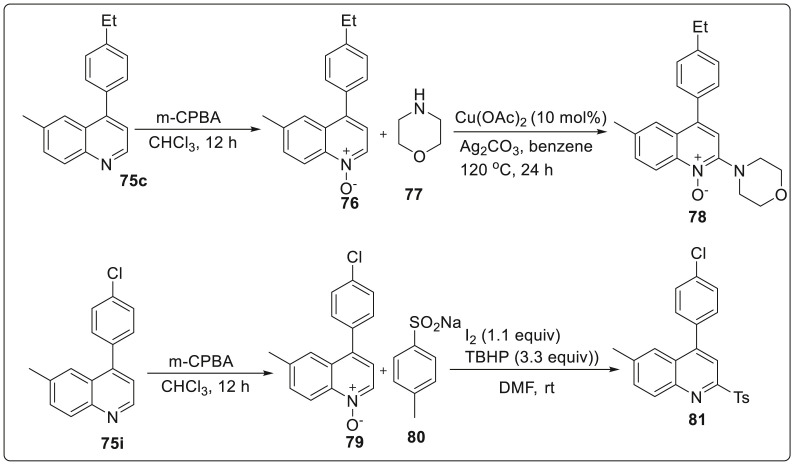
One-pot deoxygenation and direct sulfonylation to generate quinolone derivatives.
Scheme 21
Scheme 21
Iodine-promoted reaction for synthesis of 2-arylquinolines.
Scheme 22
Scheme 22
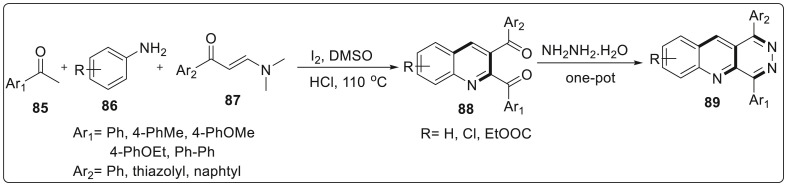
Quinoline skeleton synthesis bearing 1,4-carbonyl units via Povarov reaction pathway.
Scheme 23
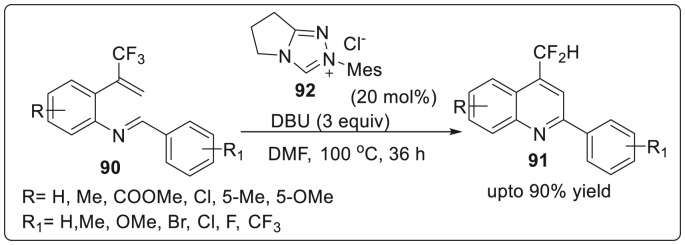
Scheme 23
NHC-catalyzed umpolung of aldimines.
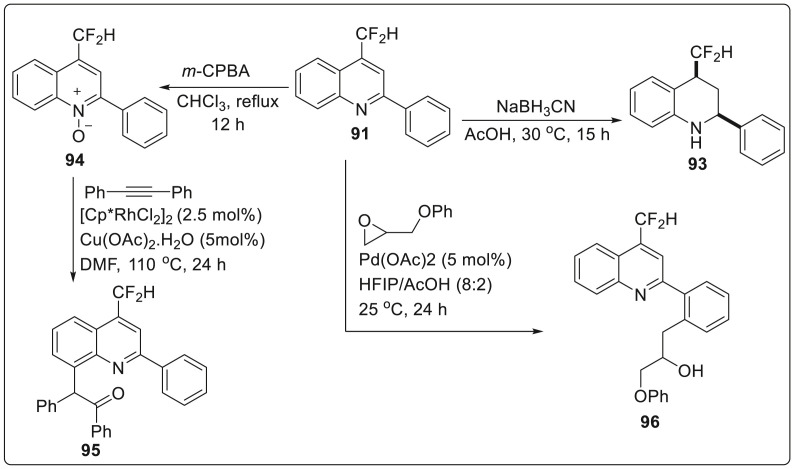
Scheme 24
Scheme 24
Functionalization of the quinolone skeleton.
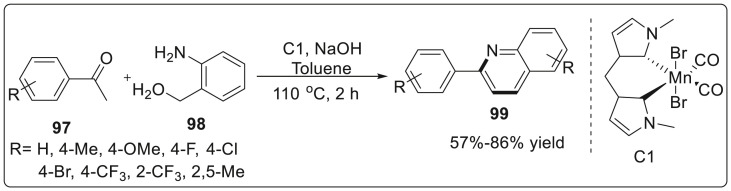
Scheme 25
Scheme 25
Non bifunctional outer-sphere strategy through an efficient N-heterocyclic based-Mn complex.
Scheme 26
Scheme 26
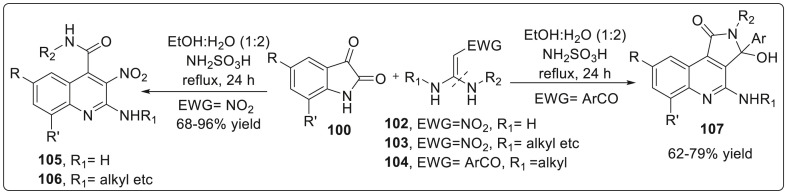
Synthesis of multisubstituted quinoline-4-carboxamides through a cascade reaction mechanism.
Scheme 27
Scheme 27
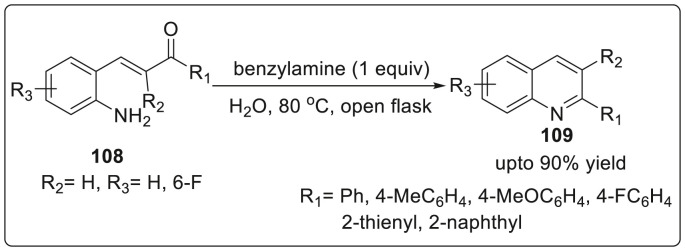
Reaction strategy for the on-water synthesis of quinolines using benzylamine as nucleophilic catalyst.
Scheme 28
Scheme 28
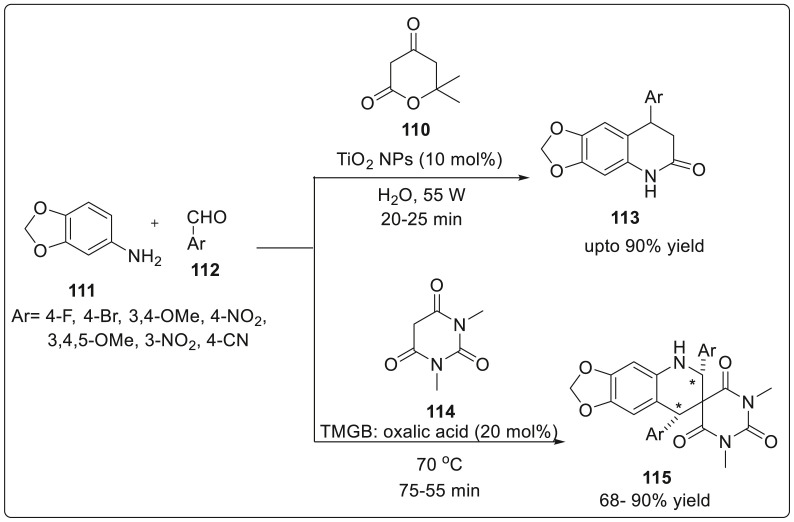
Three-component strategy for quinolone synthesis using a catalytic amount of TiO2 nanoparticles.
Scheme 29
Scheme 29
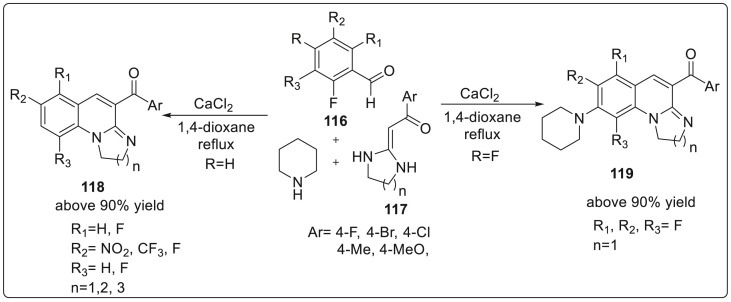
Convergent synthesis of 1,3-diazaheterocycle-fused [1,2-a] quinoline derivatives using heterocyclic ketene aminals (HKA).
Scheme 30
Scheme 30
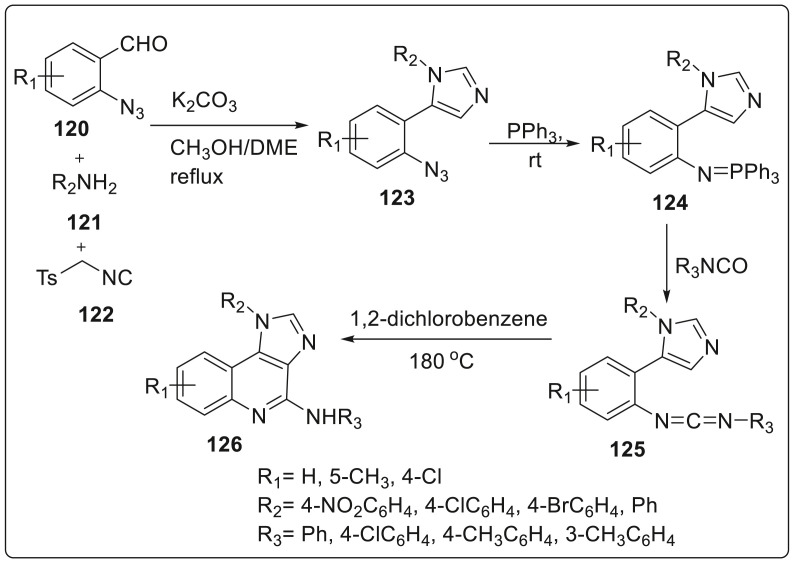
Synthesis of fused multisubstituted 1H-imidazo-[4,5-c]quinoline derivatives.
Scheme 31
Scheme 31
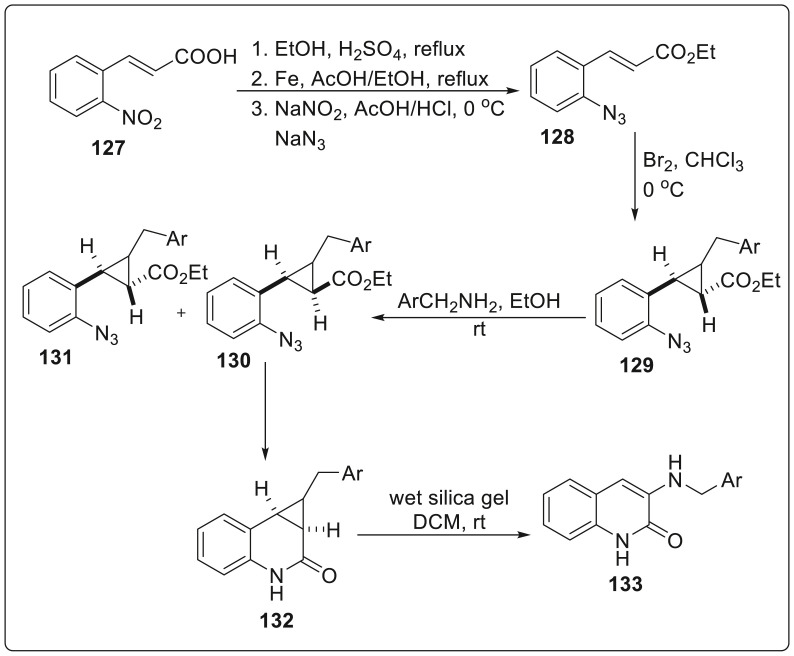
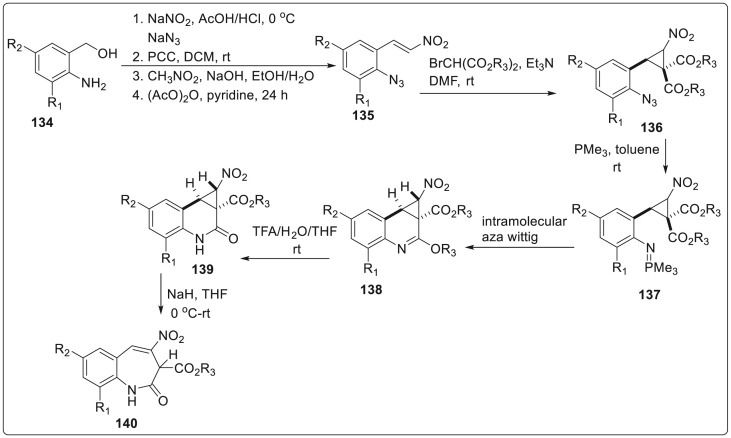
Ring opening and ring-expansion of cylclopropane ring.
Scheme 32
Scheme 32
Synthesis of cyclopropa[c]quinolones.
Fig. 5
Fig. 5
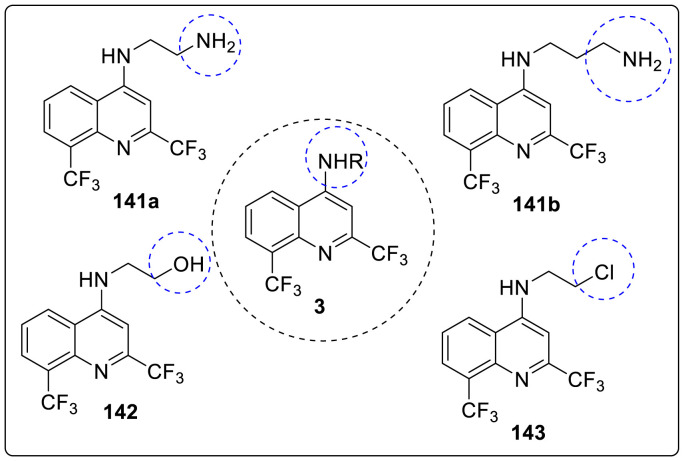
Compounds with reduced ZIKV RNA production.
Fig. 6
Fig. 6
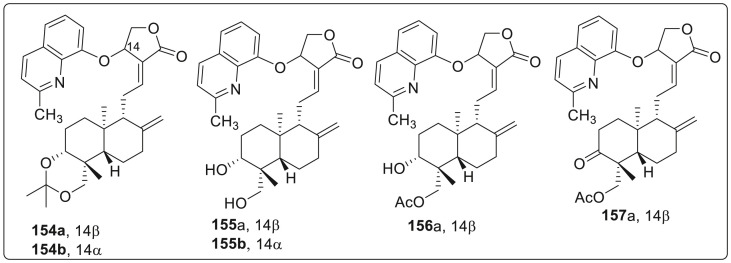
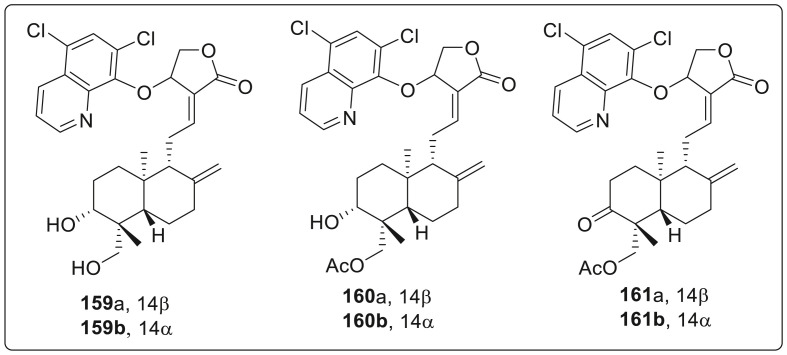
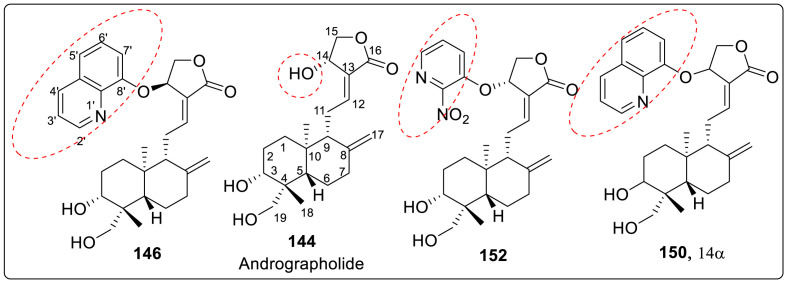
Natural product based derivatives active against Zika virus.
Fig. 7
Fig. 7
Structure of mild active quinolone compounds.
Fig. 8
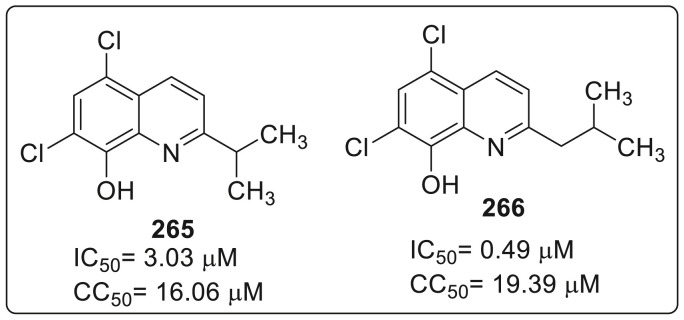
Fig. 8
5′,7′-dichloro-8′-quinolinol derivatives active against ZIKV.
Fig. 9
Fig. 9
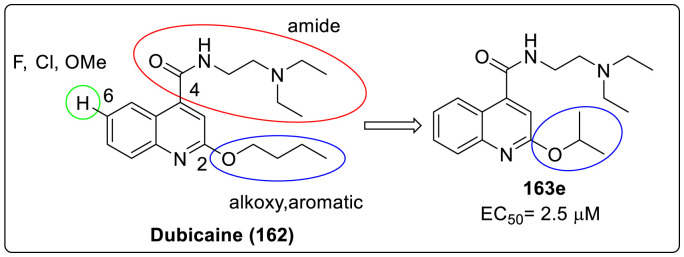
Established EV-D68 inhibitor and designed compound for EV-D68.
Fig. 10
Fig. 10
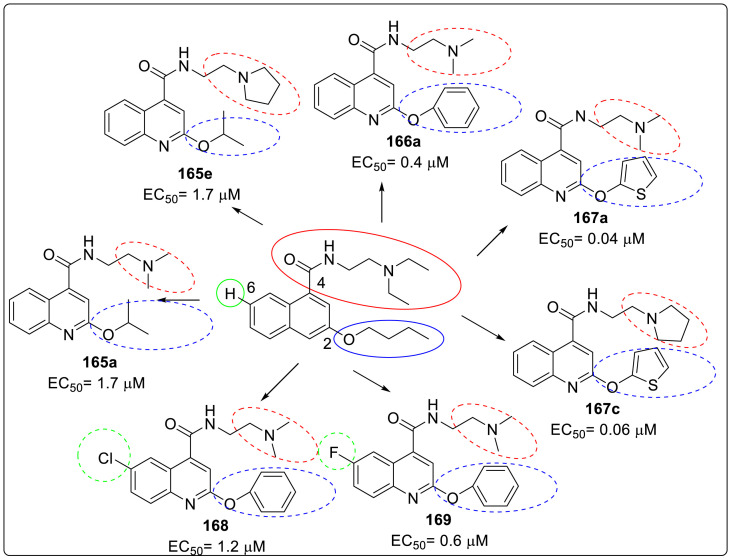
Potent molecules for EV-D68.
Fig. 11
Fig. 11
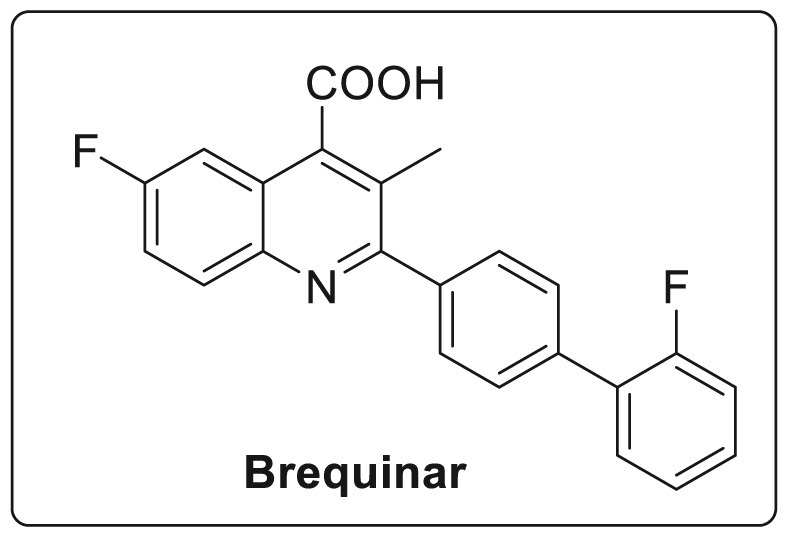
Structure of brequinar.
Fig. 12
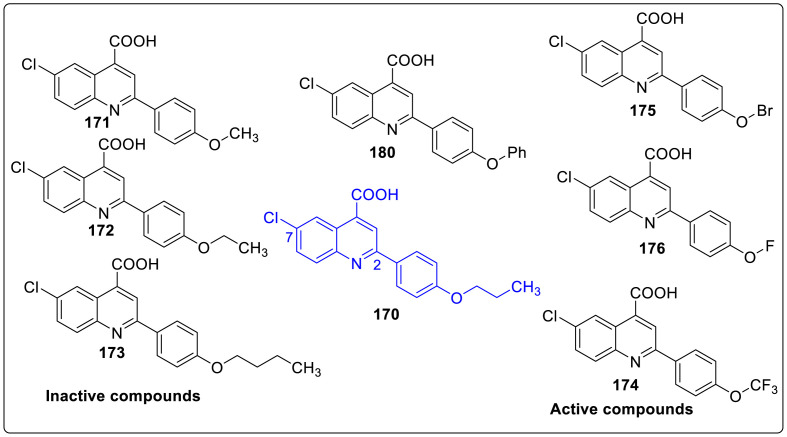
Fig. 12
Active and inactive compounds of 4-quinoline bearing carboxylic acid derivatives.
Fig. 13
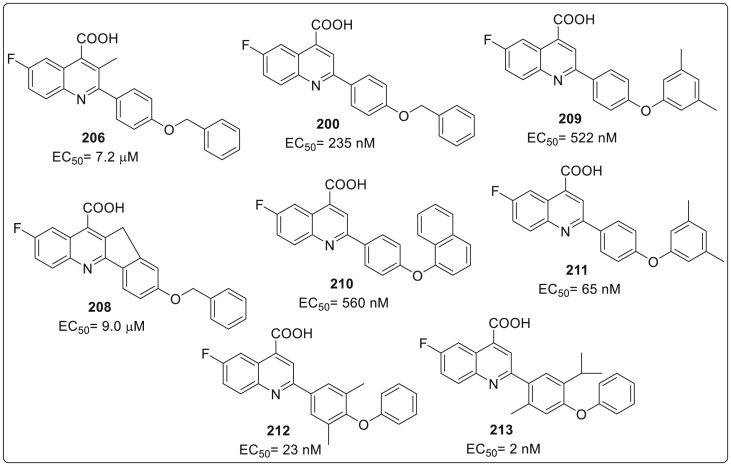
Fig. 13
VSV Inhibitor with diaryl ether analogues.
Fig. 14
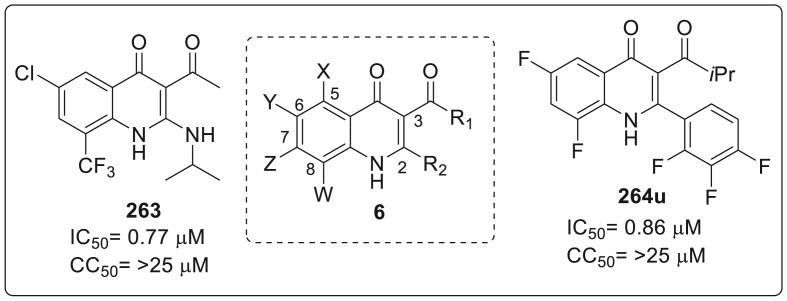
Fig. 14
MERS-CoV inhibitory activity of 3-acyl-2-amino-1,4-dihydroquinolin-4(1H)-one derivatives.
Fig. 15
Fig. 15
Potent quinoline derivatives against dengue virus serotype.
Fig. 16
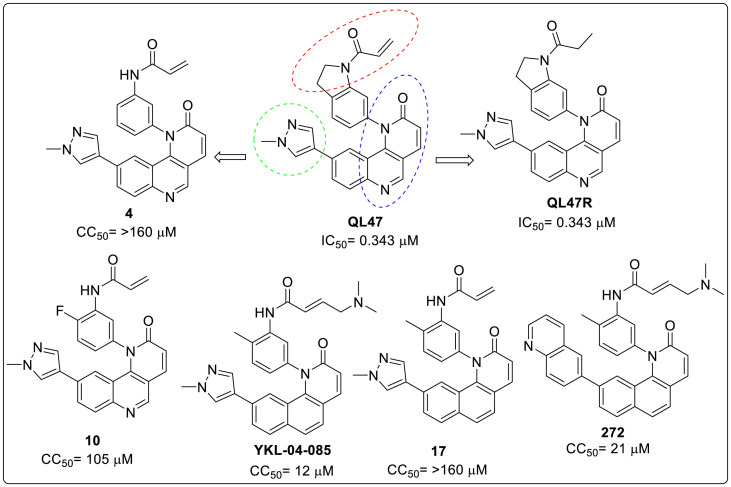
Fig. 16
Potent BTK/BMX kinase inhibitors.
Fig. 17
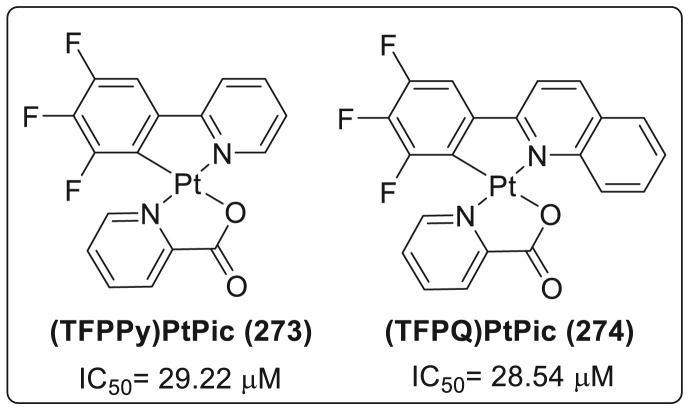
Fig. 17
Pt(II) complexes with inhibitory activity against HSV-1.
Fig. 18
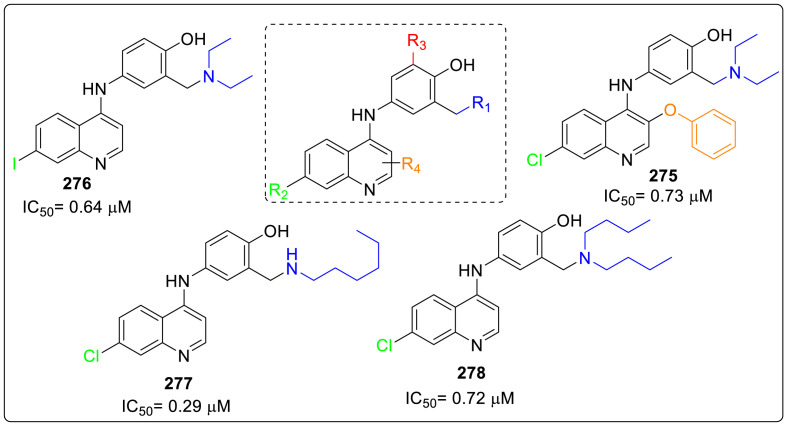
Fig. 18
Antiviral activity of amodiaquine derivatives against EBOV-GFP.
Fig. 19
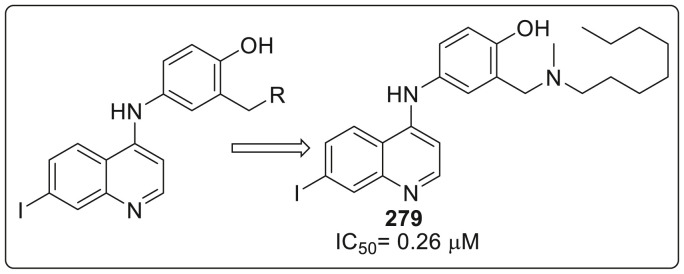
Fig. 19
SAR study result by using compound 276.
Fig. 20
Fig. 20
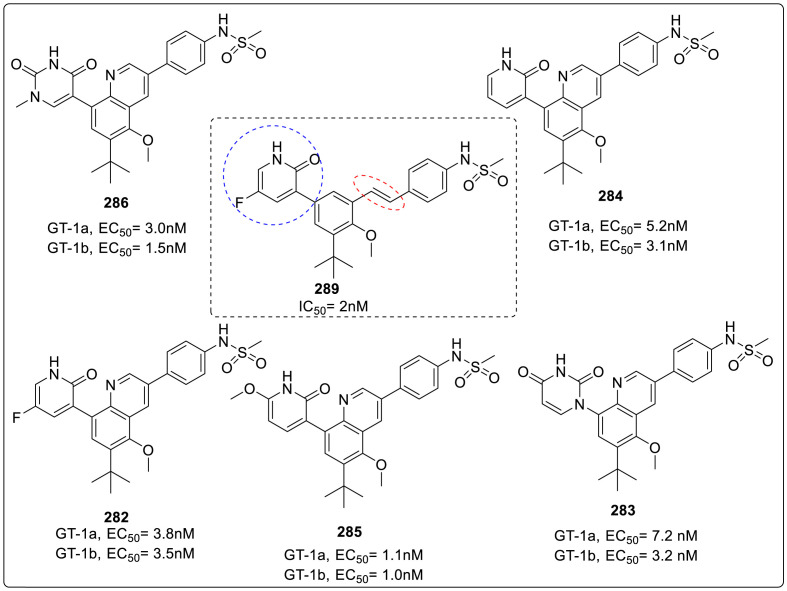
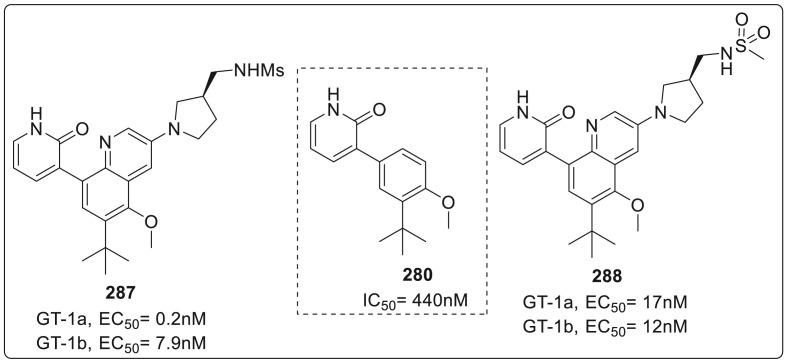
Bicyclic quinoline core possessing molecule with inhibitory activity against HCV.
Fig. 21
Fig. 21
Replacements of the phenyl linker with NS5B.
Fig. 22
Fig. 22
Synthesized quinolines with anti-HIV activity.
Fig. 23
Fig. 23
Quinoline derivatives active against HIV-1 integrase.
Fig. 24
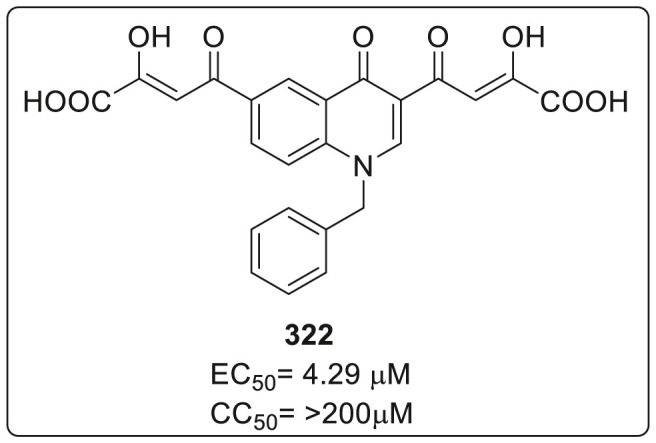
Fig. 24
Bifunctional β-diketo acid active against integrase (IN) and HIV-1 infected cells.
Fig. 25
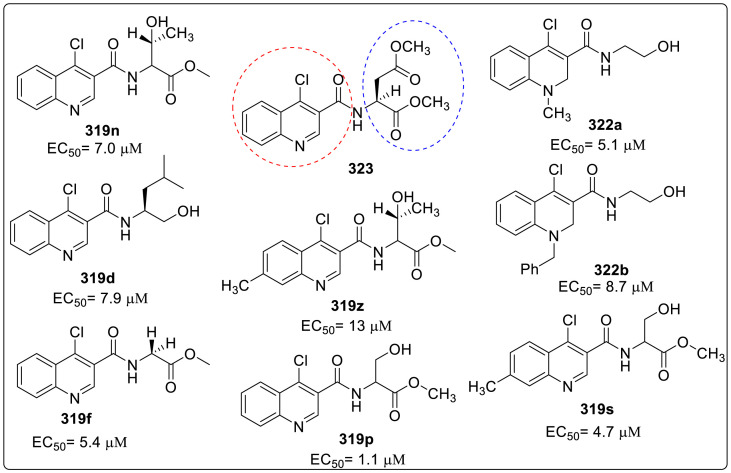
Fig. 25
Quinoline derivatives evaluated for Tat dependent HIV-1 LTR-driven CAT gene.
Fig. 26
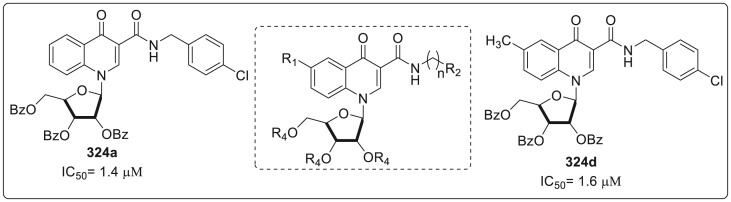
Fig. 26
4-oxoquinoline ribonucleoside derivatives against HIV-1 RT.
Fig. 27
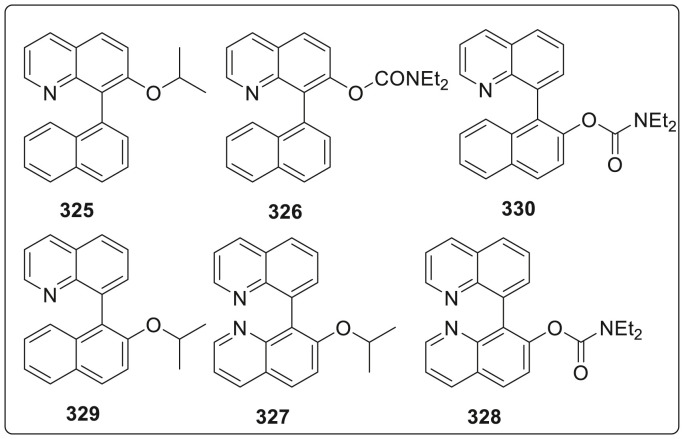
Fig. 27
Active azaBINOL derivatives against HIV-1RNase H activity.
Fig. 28
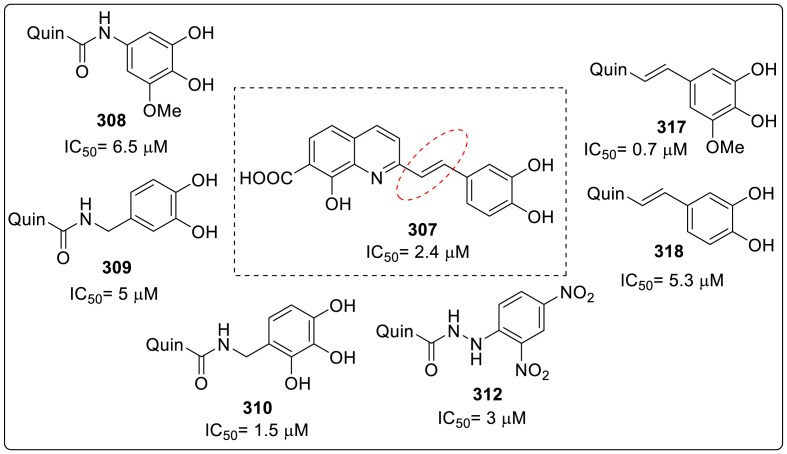
Fig. 28
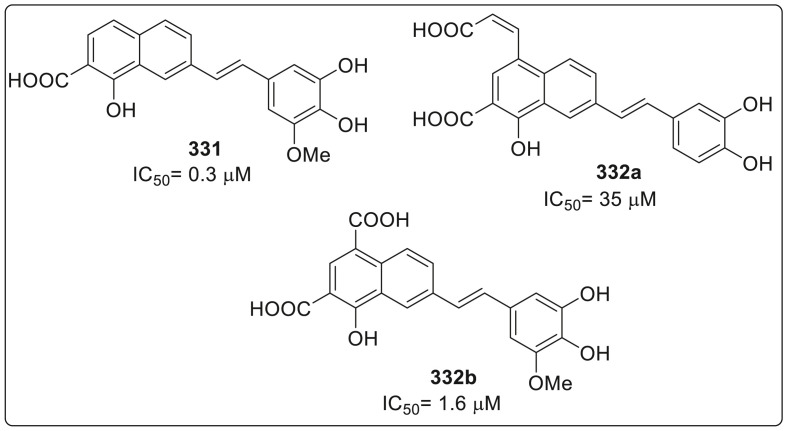
Polyhydroxylated styrylquinolines as potent HIV-1 integrase inhibitors.
Fig. 29
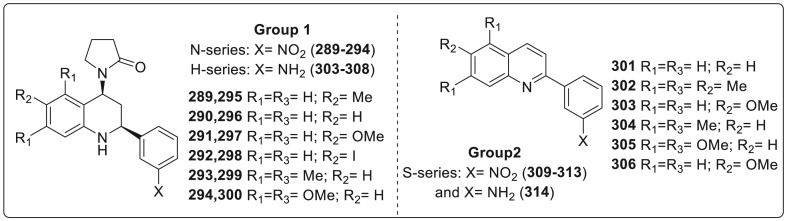
Fig. 29
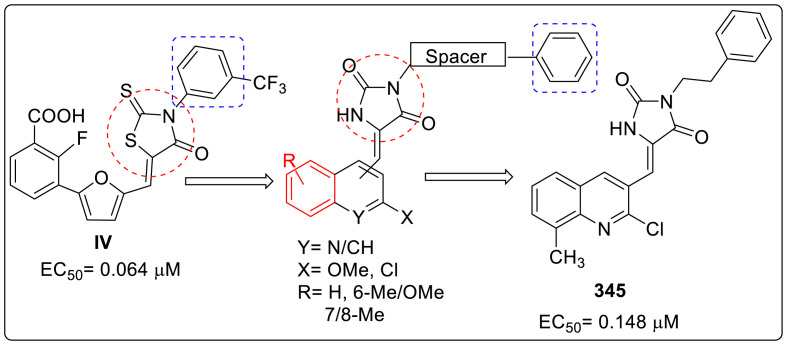
Series of compounds evaluated for HIV-1IIIB replication in MT-2 cells.
Fig. 30
Fig. 30
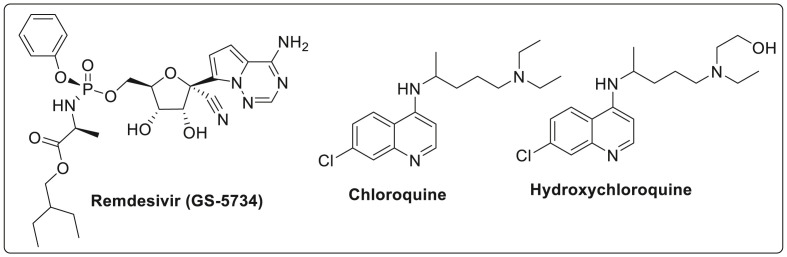
Active molecules against SARS-CoV-2 infection.
Fig. 31
Fig. 31
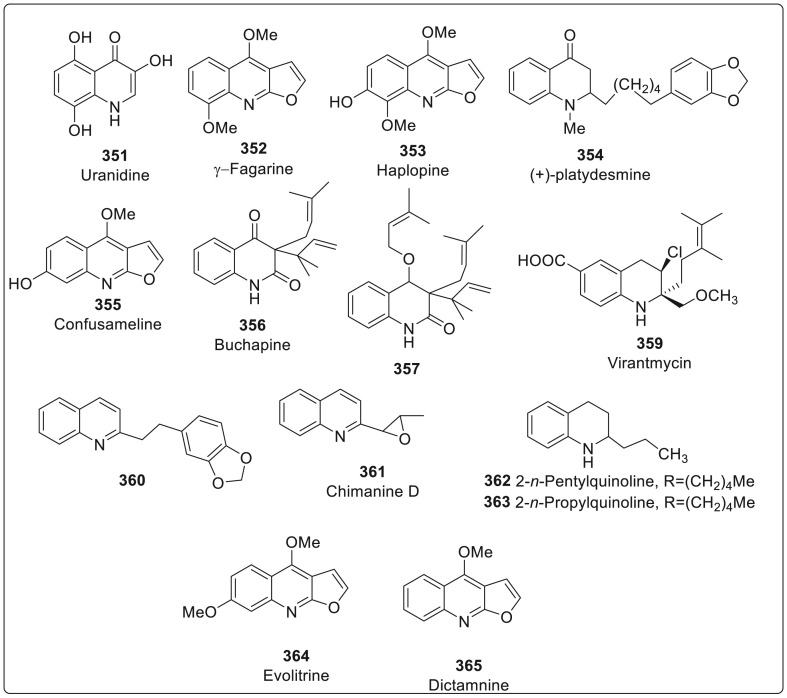
Natural quinoline alkaloids with antiviral activity.

References

    1. Marella A., Tanwar O.P., Saha R., Ali M.R., Srivastava S., Akhter M., Shaquiquzzaman M., Alam M.M. Quinoline: a versatile heterocyclic. Saudi Pharmaceut. J. 2013;21:1–12. - PMC - PubMed
    1. Afzal O., Kumar S., Haider M.R., Ali M.R., Kumar R., Jaggi M., Bawa S. A review on anticancer potential of bioactive heterocycle quinoline, Eur. J. Med. Chem. 2015;97:871–910. - PubMed
    1. Kumar S., Bawa S., Gupta H. Biological activities of quinoline derivatives. Mini Rev. Med. Chem. 2009;9:1648–1654. - PubMed
    1. Kaur K., Jain M., Reddy R.P., Jain R. Quinolines and structurally related heterocycles as antimalarials. Eur. J. Med. Chem. 2010;45:3245–3264. - PubMed
    1. Aribi F., Panossian A., Vors J.-P., Pazenok S., Leroux F.R. 2,4-Bis(fluoroalkyl)quinoline-3-carboxylates as tools for the development of potential agrochemical ingredients. Eur. J. Org Chem. 2018;2018:3792–3802.

LinkOut - more resources