


Underutilization of epilepsy surgery: Part I: A scoping review of barriers
- PMID: 33610461
- PMCID: PMC8035287
- DOI: 10.1016/j.yebeh.2021.107837
Underutilization of epilepsy surgery: Part I: A scoping review of barriers
Abstract
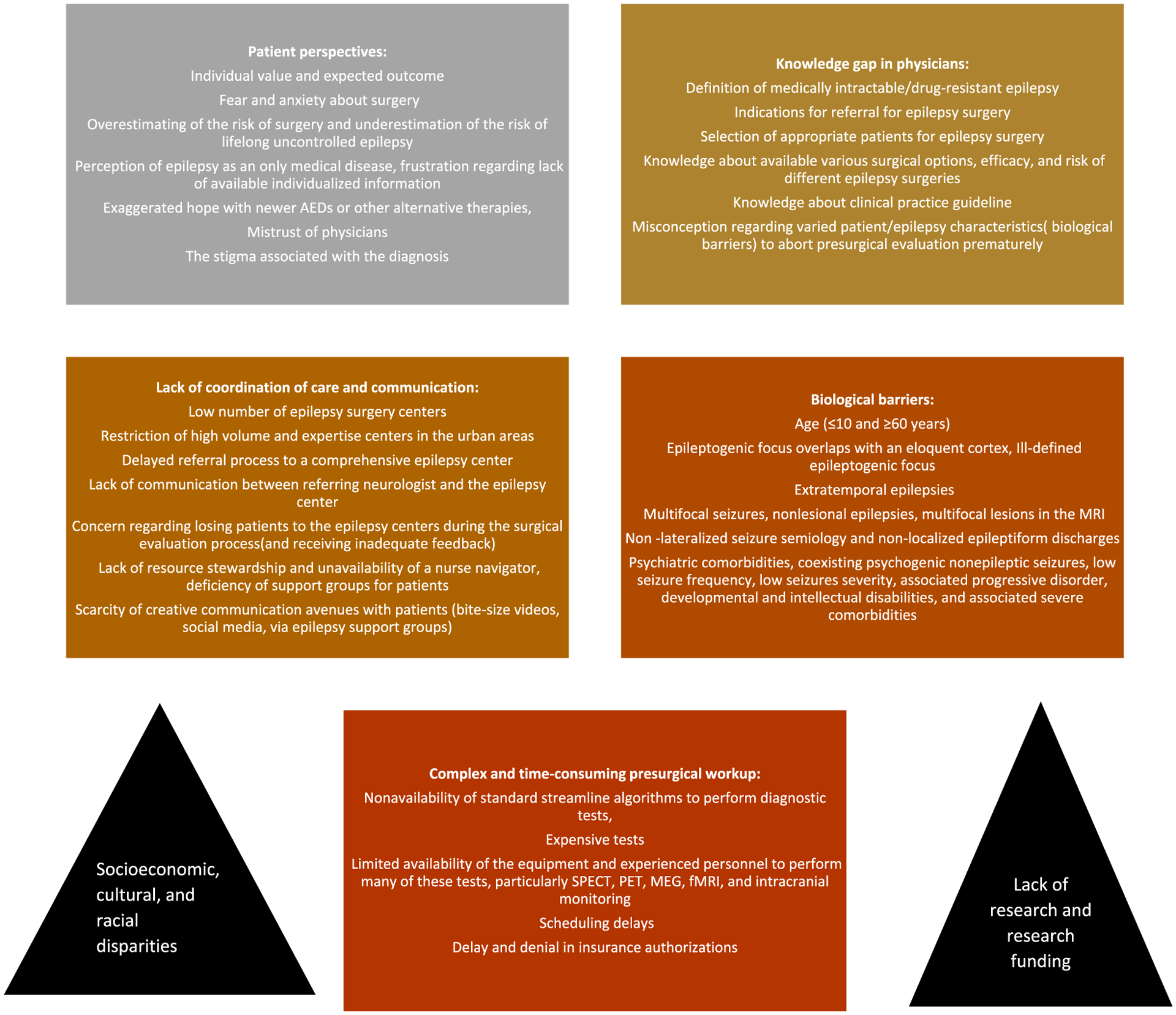
One-third of persons with epilepsy have seizures despite appropriate medical therapy. Drug resistant epilepsy (DRE) is associated with neurocognitive and psychological decline, poor quality of life, increased risk of premature death, and greater economic burden. Epilepsy surgery is an effective and safe treatment for a subset of people with DRE but remains one of the most underutilized evidence-based treatments in modern medicine. The reasons for this quality gap are insufficiently understood. In this comprehensive review, we compile known significant barriers to epilepsy surgery, originating from both patient/family-related factors and physician/health system components. Important patient-related factors include individual and epilepsy characteristics which bias towards continued preferential use of poorly effective medications, as well as patient perspectives and misconceptions of surgical risks and benefits. Health system and physician-related barriers include demonstrable knowledge gaps among physicians, inadequate access to comprehensive epilepsy centers, complex presurgical evaluations, insufficient research, and socioeconomic bias when choosing appropriate surgical candidates.
Keywords: Barriers to care; Drug-resistant epilepsy; Epilepsy; Epilepsy surgery; Medically resistant epilepsy; Underutilization.
Copyright © 2021 Elsevier Inc. All rights reserved.
References
-
- Wiebe S, Blume WT, Girvin JP, Eliasziw M. A randomized, controlled trial of surgery for temporal-lobe epilepsy. N Engl J Med 2001;345(5):311–8. - PubMed
-
- Dwivedi R, Ramanujam B, Chandra PS, Sapra S, Gulati S, Kalaivani M, et al. Surgery for drug-resistant epilepsy in children. N Engl J Med 2017;377 (17):1639–47. - PubMed
Publication types
MeSH terms
Grants and funding
LinkOut - more resources
Full Text Sources
Other Literature Sources
Medical
Miscellaneous
