


A systematic-review of olfactory deficits in neurodevelopmental disorders: From mouse to human
- PMID: 33610612
- PMCID: PMC8142839
- DOI: 10.1016/j.neubiorev.2021.02.024
A systematic-review of olfactory deficits in neurodevelopmental disorders: From mouse to human
Abstract
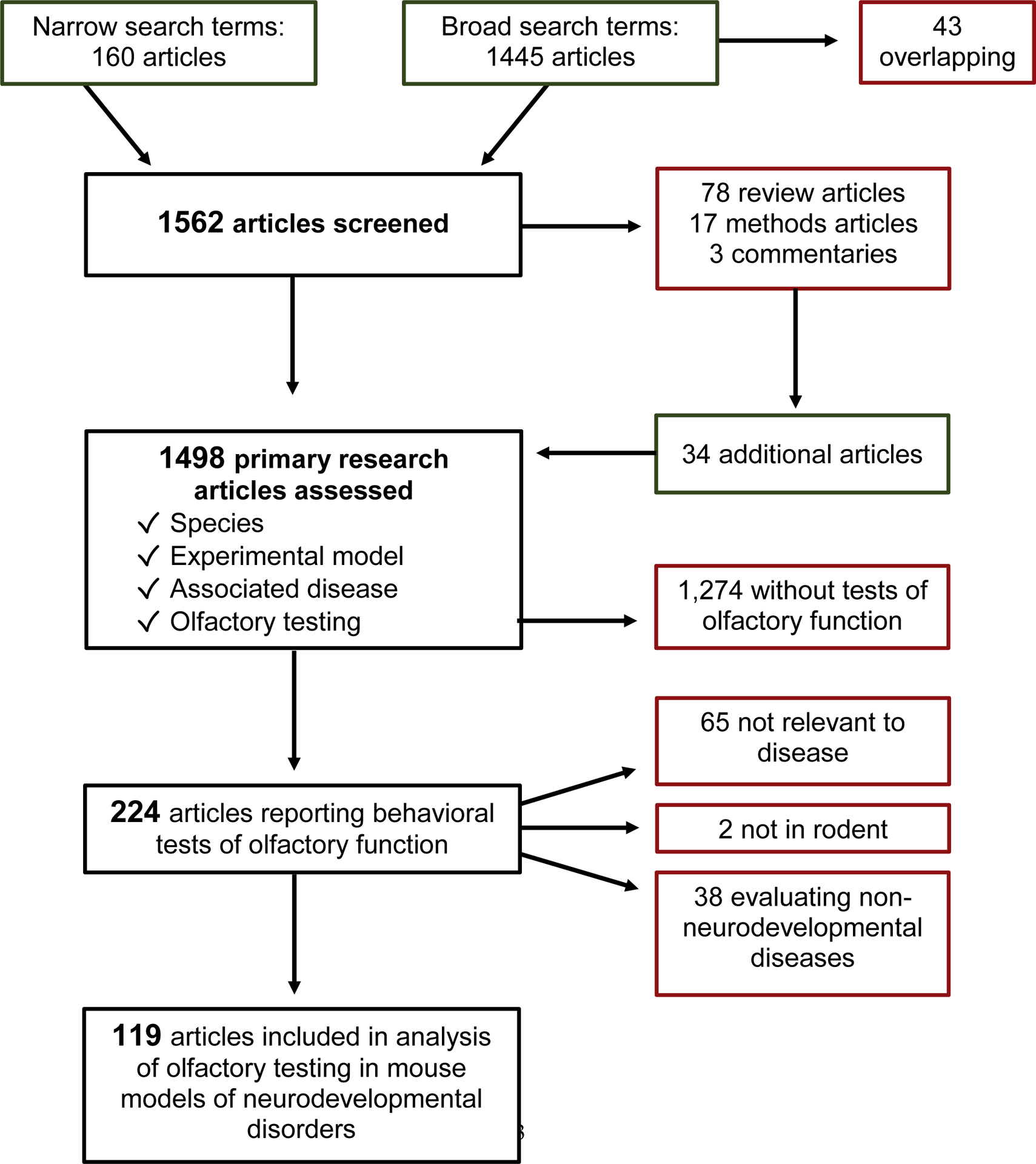
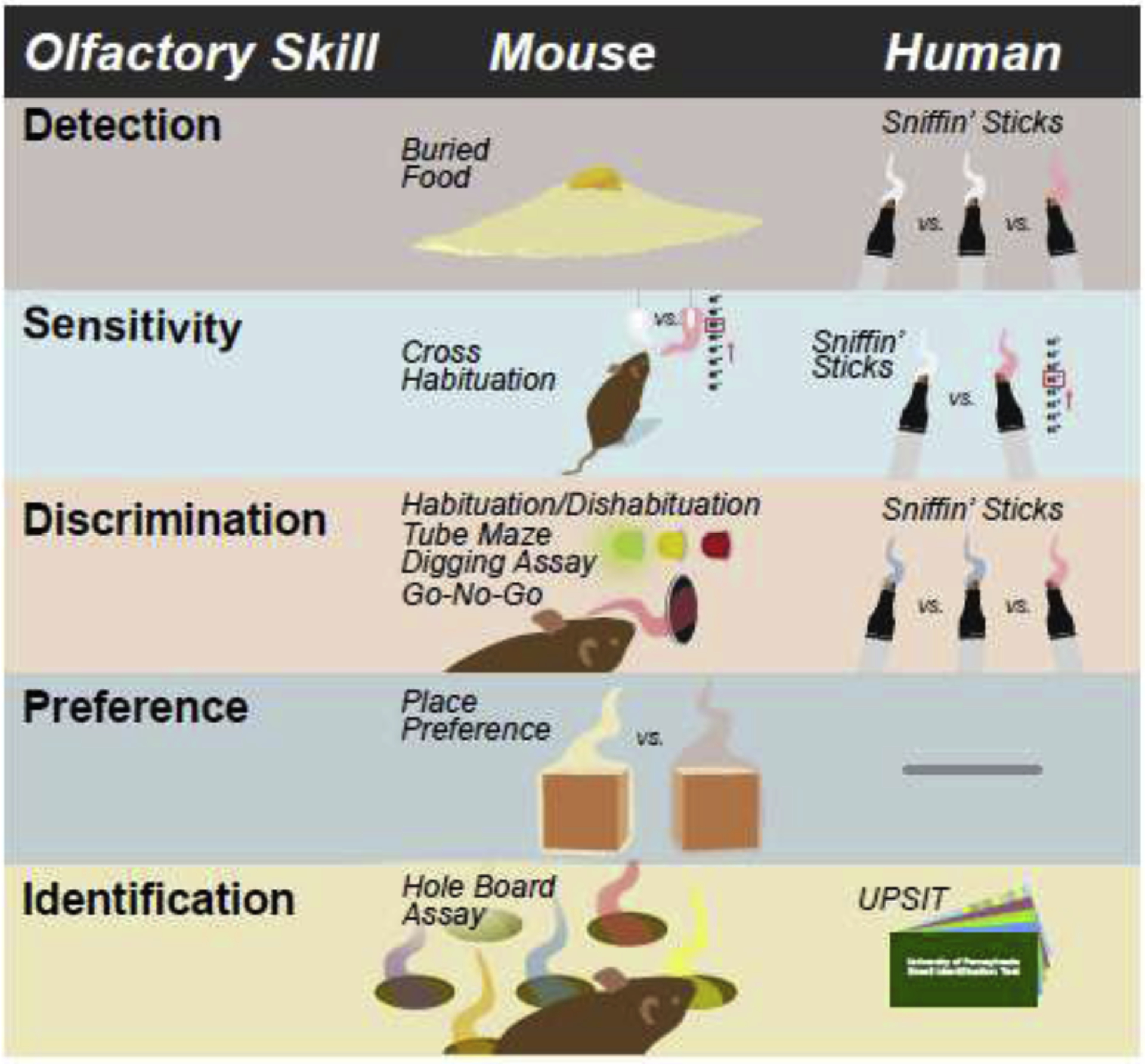
Olfactory impairment is a common clinical motif across neurodevelopmental disorders, suggesting olfactory circuits are particularly vulnerable to disease processes and can provide insight into underlying disease mechanisms. The mouse olfactory bulb is an ideal model system to study mechanisms of neurodevelopmental disease due to its anatomical accessibility, behavioral relevance, ease of measuring circuit input and output, and the feature of adult neurogenesis. Despite the clinical relevance and experimental benefits, olfactory testing across animal models of neurodevelopmental disease has been inconsistent and non-standardized. Here we performed a systematic literature review of olfactory function testing in mouse models of neurodevelopmental disorders, and identified intriguing inconsistencies that include evidence for both increased and decreased acuity in odor detection in various mouse models of Autism Spectrum Disorder (ASD). Based on our identified gaps in the literature, we recommend direct comparison of different mouse models of ASD using standardized tests for odor detection and discrimination. This review provides a framework to guide future olfactory function testing in mouse models of neurodevelopmental diseases.
Keywords: Anosmia; Hyposmia; Mouse models of neurological disease; Neurodevelopmental disorders; Olfaction; Sensory circuits.
Copyright © 2021 Elsevier Ltd. All rights reserved.
Figures
References
-
- Alvarez-Buylla A Mechanism of migration of olfactory bulb interneurons. Semin Cell Dev Biol. 1997. April;8(2):207–13. - PubMed
-
- Balasubramanian R, Crowley WF. Isolated Gonadotropin-Releasing Hormone (GnRH) Deficiency. In: Adam MP, Ardinger HH, Pagon RA, Wallace SE, Bean LJH, Stephens K, Amemiya A, editors. GeneReviews® [Internet]. University of Washington, Seattle; Seattle (WA): May 23, 2007.
Publication types
MeSH terms
Grants and funding
LinkOut - more resources
Full Text Sources
Other Literature Sources
Medical
