


The Second NINDS/NIBIB Consensus Meeting to Define Neuropathological Criteria for the Diagnosis of Chronic Traumatic Encephalopathy
- PMID: 33611507
- PMCID: PMC7899277
- DOI: 10.1093/jnen/nlab001
The Second NINDS/NIBIB Consensus Meeting to Define Neuropathological Criteria for the Diagnosis of Chronic Traumatic Encephalopathy
Abstract
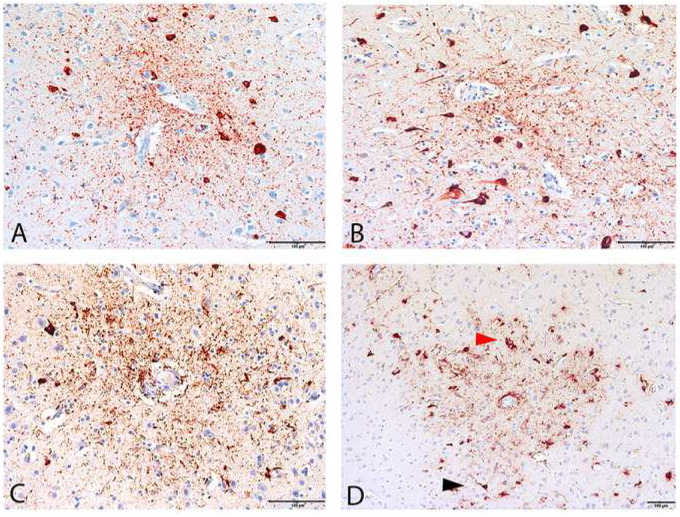
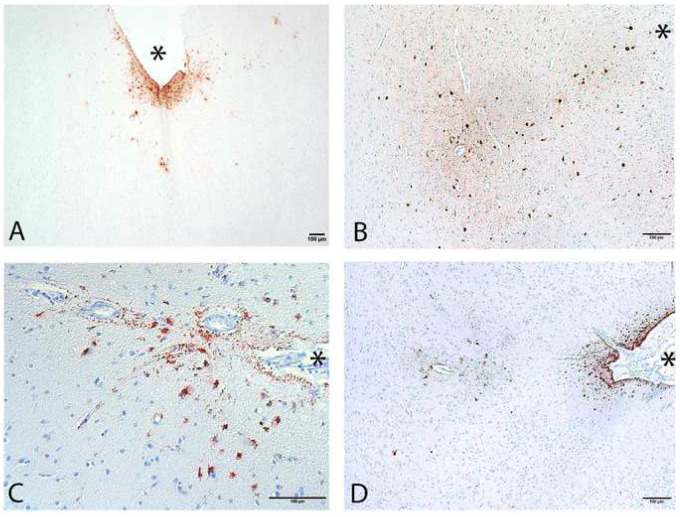
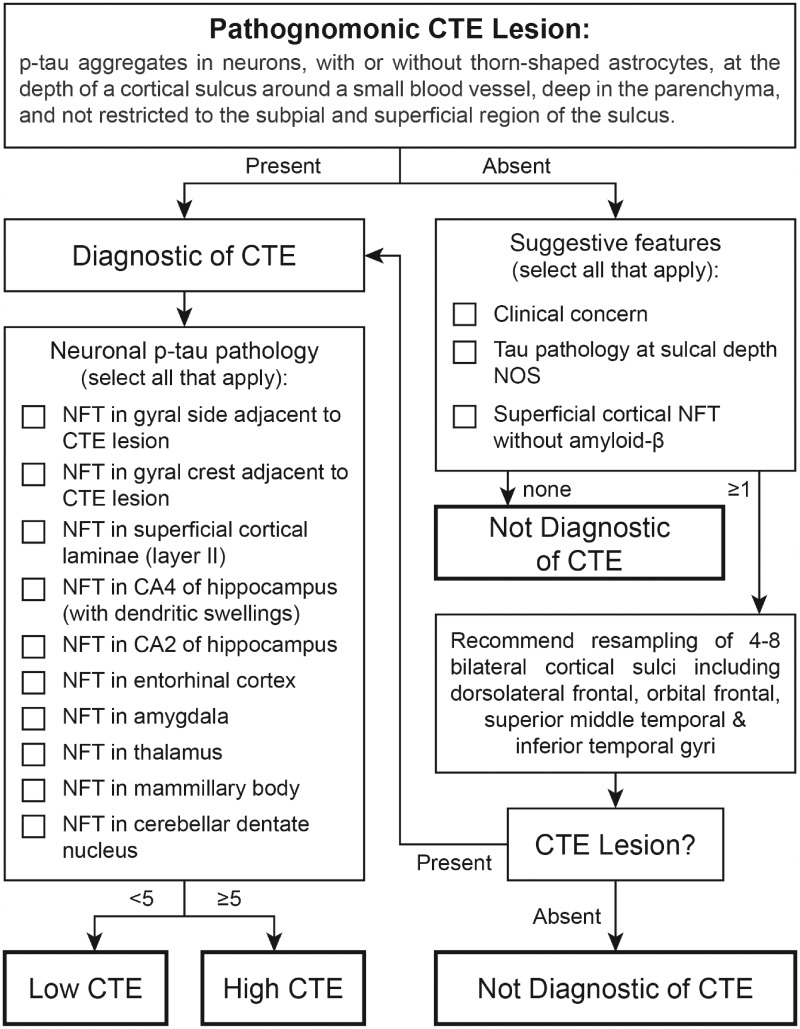
Chronic traumatic encephalopathy (CTE) is a neurodegenerative disorder associated with exposure to head trauma. In 2015, a panel of neuropathologists funded by the NINDS/NIBIB defined preliminary consensus neuropathological criteria for CTE, including the pathognomonic lesion of CTE as "an accumulation of abnormal hyperphosphorylated tau (p-tau) in neurons and astroglia distributed around small blood vessels at the depths of cortical sulci and in an irregular pattern," based on review of 25 tauopathy cases. In 2016, the consensus panel met again to review and refine the preliminary criteria, with consideration around the minimum threshold for diagnosis and the reproducibility of a proposed pathological staging scheme. Eight neuropathologists evaluated 27 cases of tauopathies (17 CTE cases), blinded to clinical and demographic information. Generalized estimating equation analyses showed a statistically significant association between the raters and CTE diagnosis for both the blinded (OR = 72.11, 95% CI = 19.5-267.0) and unblinded rounds (OR = 256.91, 95% CI = 63.6-1558.6). Based on the challenges in assigning CTE stage, the panel proposed a working protocol including a minimum threshold for CTE diagnosis and an algorithm for the assessment of CTE severity as "Low CTE" or "High CTE" for use in future clinical, pathological, and molecular studies.
Keywords: Brain trauma; Chronic traumatic encephalopathy; Neurodegenerative disorders; Tauopathy; Traumatic brain injury.
© 2021 American Association of Neuropathologists, Inc.
Figures
Comment in
-
Authors' Response.J Neuropathol Exp Neurol. 2021 Oct 26;80(10):1008-1010. doi: 10.1093/jnen/nlab066.001. J Neuropathol Exp Neurol. 2021. PMID: 34718652 Free PMC article. No abstract available.
-
Re: The Second NINDS/NIBIB Consensus Meeting to Define Neuropathological Criteria for the Diagnosis of Chronic Traumatic Encephalopathy. J Neuropathol Exp Neurol 2021;80(3):210-9.J Neuropathol Exp Neurol. 2021 Oct 26;80(10):1007-1008. doi: 10.1093/jnen/nlab066. J Neuropathol Exp Neurol. 2021. PMID: 34718653 Free PMC article. No abstract available.
-
Chronic traumatic encephalopathy (CTE)-features and forensic considerations.Forensic Sci Med Pathol. 2023 Dec;19(4):620-624. doi: 10.1007/s12024-023-00624-3. Epub 2023 Apr 14. Forensic Sci Med Pathol. 2023. PMID: 37058211 Free PMC article.
References
-
- Martland HS, Beling CC. Traumatic cerebral hemorrhage. Arch Neurpsych 1929;22:1001–23
-
- Martland HS. Punch drunk. JAMA 1928;91:1103–7
-
- Bowman KM, Blau A. Psychotic states following head and brain injury in adults and children. In: Injuries of the Skull, Brain and Spinal Cord: Neuro-Psychiatric, Surgical, and Medico-Legal Aspects. Baltimore, MD: Williams & Wilkins Co. 1940:309–60.
-
- Montenigro PH, Corp DT, Stein TD, et al. Chronic traumatic encephalopathy: Historical origins and current perspective. Annu Rev Clin Psychol 2015;11:309–30 - PubMed
-
- Brandenburg W, Hallervorden J. Dementia pugilistica mit anatomischem Befund. Virchows Arch Path Anat 1954;325:680–709 - PubMed
Publication types
MeSH terms
Grants and funding
LinkOut - more resources
Full Text Sources
Other Literature Sources
Miscellaneous
