


Effect of 2-Hz Electroacupuncture Stimulation on Respiratory Function: A Randomized Controlled Trial
- PMID: 33613811
- PMCID: PMC7894034
- DOI: 10.1089/acu.2020.1418
Effect of 2-Hz Electroacupuncture Stimulation on Respiratory Function: A Randomized Controlled Trial
Abstract
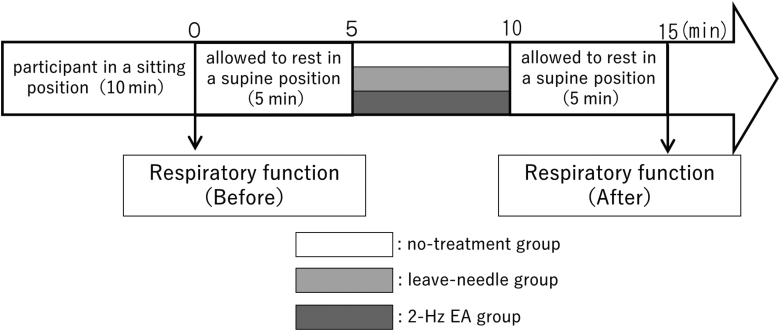
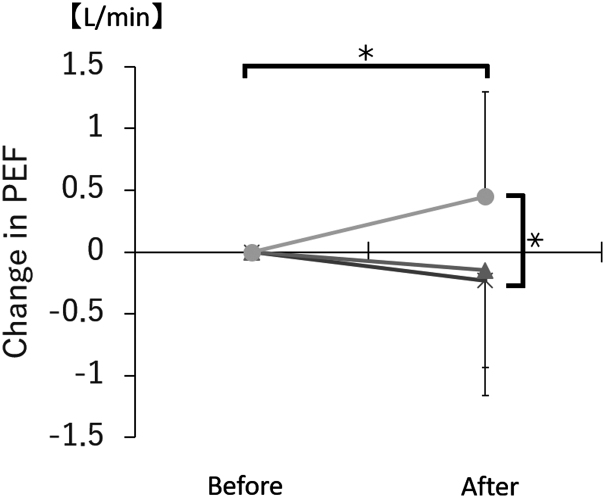
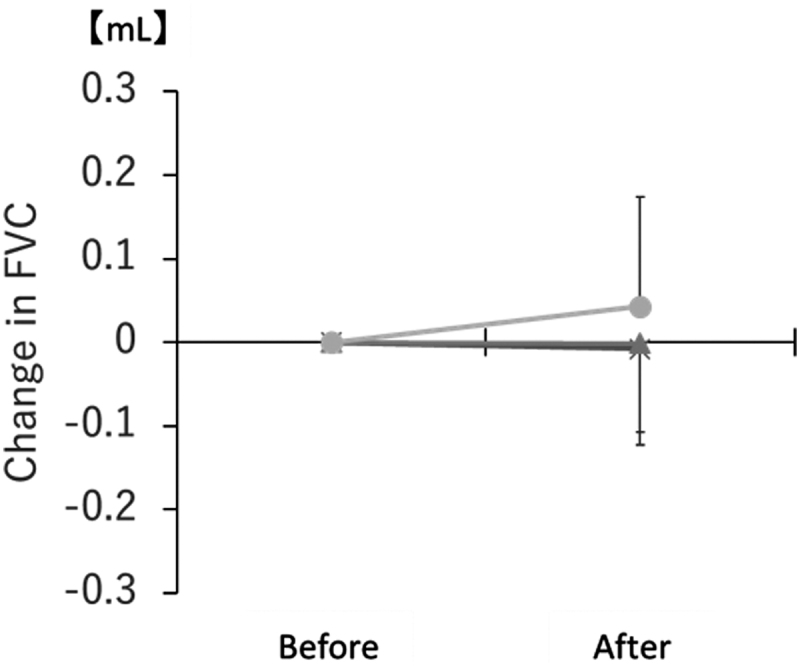
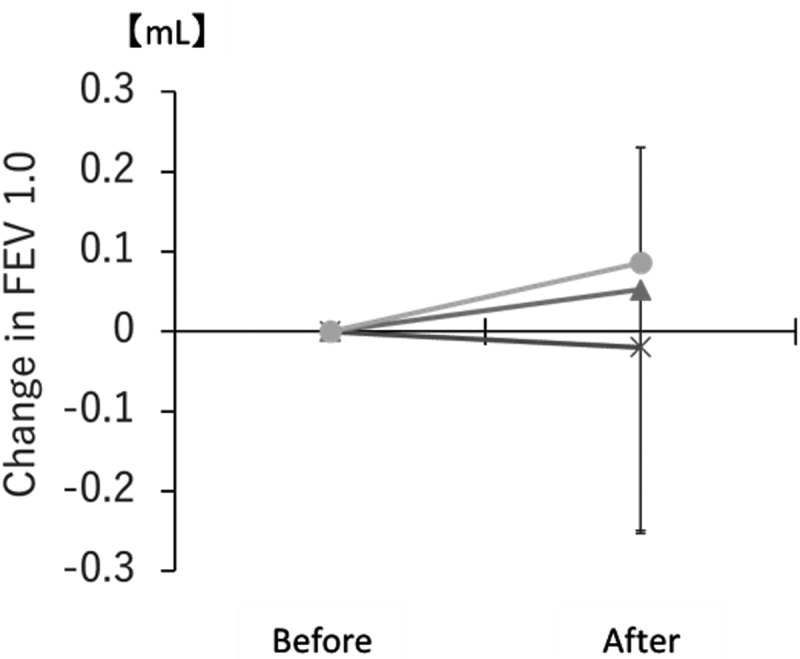
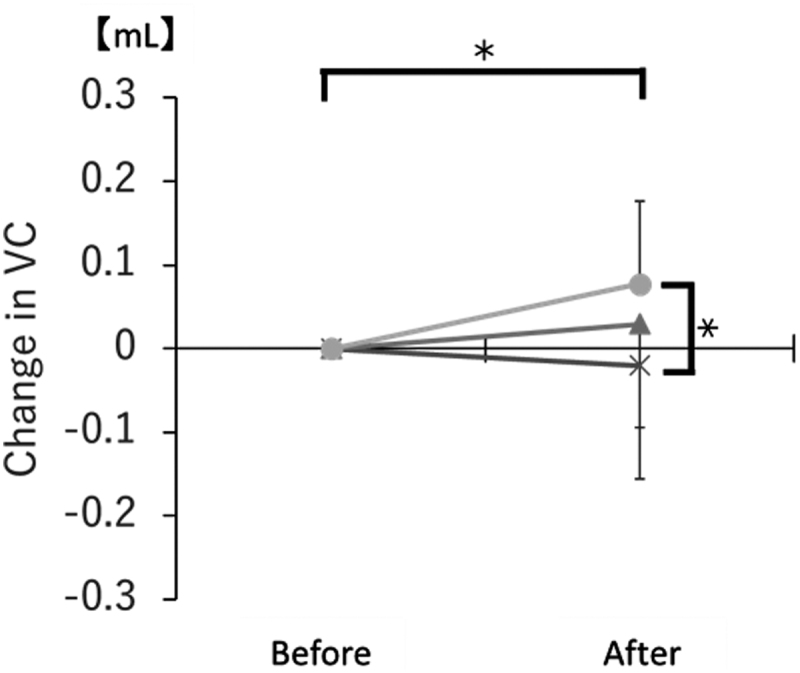
Objective: The autonomic nervous system is involved in the regulation of airway smooth muscle. This study examined the effect of acupuncture stimulation in the vicinity of the cervical-sympathetic ganglion on respiratory function in humans. Materials and Methods: Twenty-four healthy adults (19 males and 5 females) were randomly assigned to a no-treatment group, a leave-needle group, and an electroacupuncture (EA) group in a crossover trial. In all groups, respiratory function was initially tested. In both acupuncture groups, after 5 minutes of rest, a 5-minute acupuncture stimulus was delivered, followed by 5 minutes of rest. Thereafter, respiratory function was again tested in all groups. Acupuncture was delivered in the vicinity of the cervical ganglia at the height of the sixth cervical vertebra on the left side and the vertebral artery node; the EA stimulus was set to 2 Hz, and the stimulation intensity was set to a level at which no pain was felt by the participants. Results: The EA group had significant increases in peak expiratory flow (PEF) and vital capacity (VC) after the intervention, compared to before intervention. Additionally, the EA group had significant increases in these parameters, compared to the no-treatment group. Conclusions: These results indicated that stimulation with 2-Hz EA in the vicinity of the cervical-sympathetic trunk causes an increase in PEF and VC, and increased bronchial dilation.
Keywords: airway smooth muscle; cervical-sympathetic ganglion; respiratory function test.
Copyright 2021, Mary Ann Liebert, Inc., publishers.
Conflict of interest statement
No competing financial interests exist.
Figures
References
-
- Lacroix JS, Stjärne P, Anggård A, Lundberg JM. Sympathetic vascular control of the pig nasal mucosa: Reserpine-resistant, non-adrenergic nervous responses in relation to neuropeptide Y and ATP. Acta Physiol Scand. 1988;133(2):183–197 - PubMed
-
- Sato A, Sato Y, Suzuki A, et al. . Neural mechanisms of the reflex inhibition and excitation of gastric motility elicited by acupuncture-like stimulation in anesthetized rats. Neurosci Res. 1993;18(1):53–62 - PubMed
-
- Anton AH, Sayre DF. A study of the factors affecting the aluminum oxide-trihydroxyindole procedure for the analysis of catecholamines. J Pharmacol Exp Ther. 1962;138:360–375 - PubMed
LinkOut - more resources
Full Text Sources
Other Literature Sources