


Biotechnical development of genetic addiction risk score (GARS) and selective evidence for inclusion of polymorphic allelic risk in substance use disorder (SUD)
- PMID: 33614164
- PMCID: PMC7891477
- DOI: 10.15761/JSIN.1000221
Biotechnical development of genetic addiction risk score (GARS) and selective evidence for inclusion of polymorphic allelic risk in substance use disorder (SUD)
Abstract
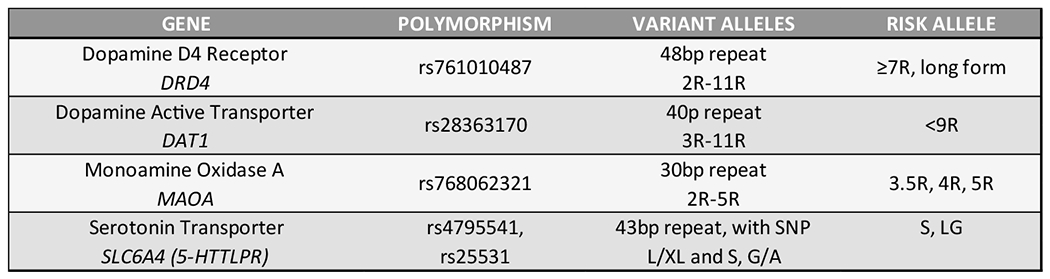
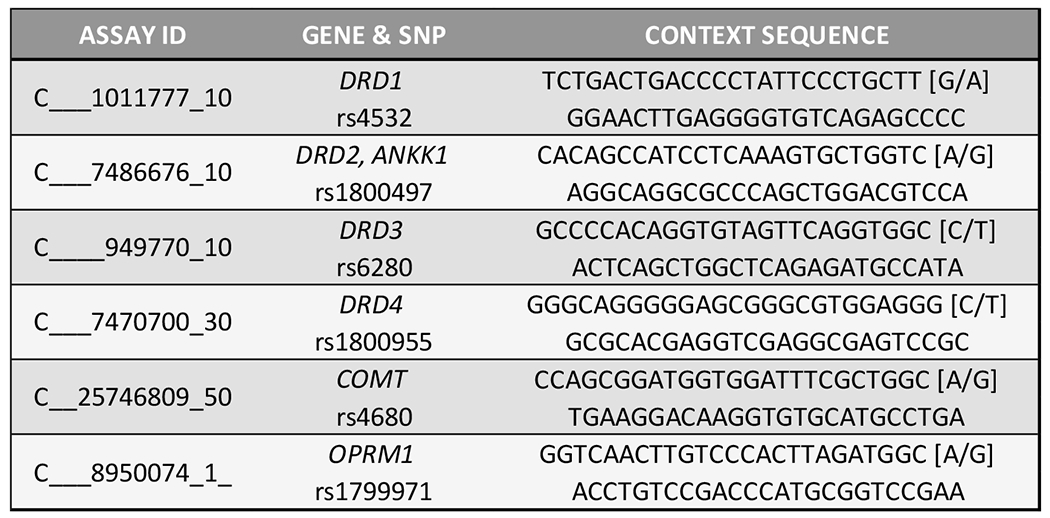
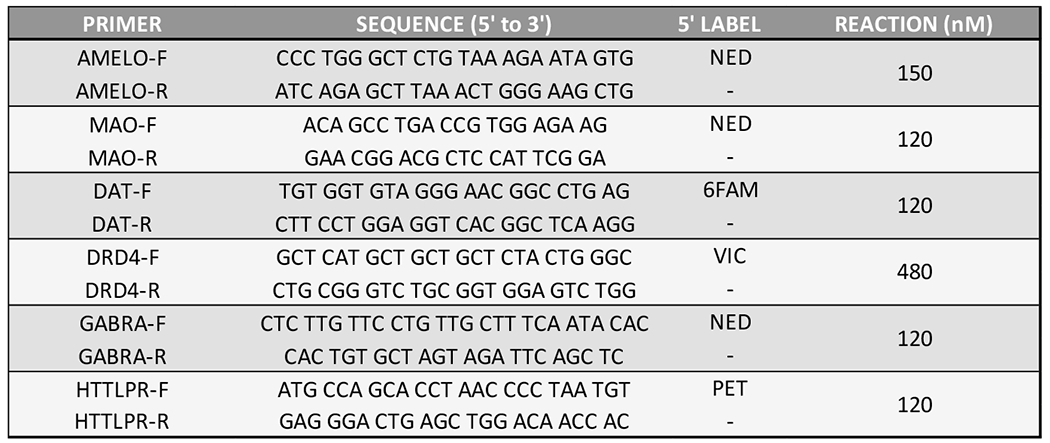
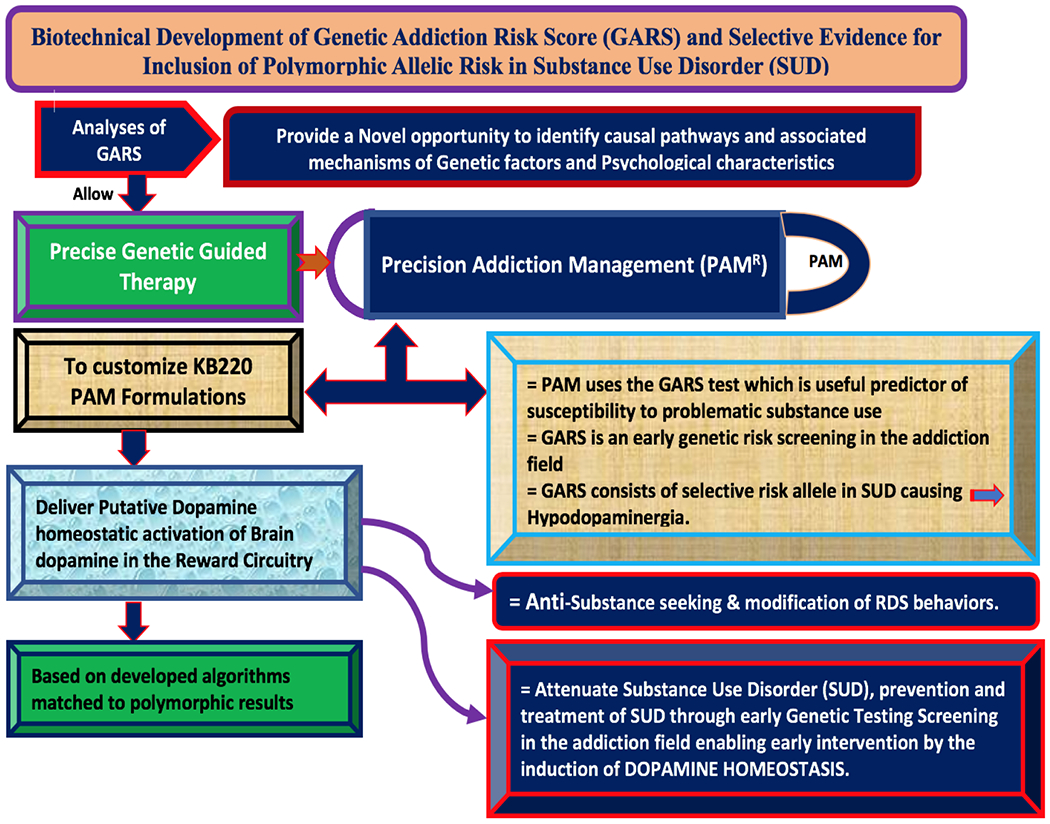
Research into the neurogenetic basis of addiction identified and characterized by Reward Deficiency Syndrome (RDS) includes all drug and non-drug addictive, obsessive and compulsive behaviors. We are proposing herein that a new model for the prevention and treatment of Substance Use Disorder (SUD) a subset of RDS behaviors, based on objective biologic evidence, should be given serious consideration in the face of a drug epidemic. The development of the Genetic Addiction Risk Score (GARS) followed seminal research in 1990, whereby, Blum's group identified the first genetic association with severe alcoholism published in JAMA. While it is true that no one to date has provided adequate RDS free controls there have been many studies using case -controls whereby SUD has been eliminated. We argue that this deficiency needs to be addressed in the field and if adopted appropriately many spurious results would be eliminated reducing confusion regarding the role of genetics in addiction. However, an estimation, based on these previous literature results provided herein, while not representative of all association studies known to date, this sampling of case- control studies displays significant associations between alcohol and drug risk. In fact, we present a total of 110,241 cases and 122,525 controls derived from the current literature. We strongly suggest that while we may take argument concerning many of these so-called controls (e.g. blood donors) it is quite remarkable that there are a plethora of case -control studies indicating selective association of these risk alleles ( measured in GARS) for the most part indicating a hypodopaminergia. The paper presents the detailed methodology of the GARS. Data collection procedures, instrumentation, and the analytical approach used to obtain GARS and subsequent research objectives are described. Can we combat SUD through early genetic risk screening in the addiction field enabling early intervention by the induction of dopamine homeostasis? It is envisaged that GARS type of screening will provide a novel opportunity to help identify causal pathways and associated mechanisms of genetic factors, psychological characteristics, and addictions awaiting additional scientific evidence including a future meta- analysis of all available data -a work in progress.
Keywords: dopamine. brain reward circuitry; genetic addiction risk score (gars®); precision addiction management (pam®); reward deficiency syndrome (rds); substance use disorder (sud).
Figures

Similar articles
-
In Search of Reward Deficiency Syndrome (RDS)-free Controls: The "Holy Grail" in Genetic Addiction Risk Testing.Curr Psychopharmacol. 2020;9(1):7-21. Curr Psychopharmacol. 2020. PMID: 32432025 Free PMC article.
-
The Benefits of Genetic Addiction Risk Score (GARS™) Testing in Substance Use Disorder (SUD).Int J Genom Data Min. 2018;2018(1):115. doi: 10.29014/IJGD-115.000015. Epub 2018 Jan 15. Int J Genom Data Min. 2018. PMID: 30198022 Free PMC article.
-
Genetic Addiction Risk Score (GARS): molecular neurogenetic evidence for predisposition to Reward Deficiency Syndrome (RDS).Mol Neurobiol. 2014 Dec;50(3):765-96. doi: 10.1007/s12035-014-8726-5. Epub 2014 May 31. Mol Neurobiol. 2014. PMID: 24878765 Free PMC article.
-
A Novel Precision Approach to Overcome the "Addiction Pandemic" by Incorporating Genetic Addiction Risk Severity (GARS) and Dopamine Homeostasis Restoration.J Pers Med. 2021 Mar 16;11(3):212. doi: 10.3390/jpm11030212. J Pers Med. 2021. PMID: 33809702 Free PMC article. Review.
-
A Review of DNA Risk Alleles to Determine Epigenetic Repair of mRNA Expression to Prove Therapeutic Effectiveness in Reward Deficiency Syndrome (RDS): Embracing "Precision Behavioral Management".Psychol Res Behav Manag. 2021 Dec 17;14:2115-2134. doi: 10.2147/PRBM.S292958. eCollection 2021. Psychol Res Behav Manag. 2021. PMID: 34949945 Free PMC article. Review.
Cited by
-
Family, Individual, and Other Risk Factors Contributing to Risk of Substance Abuse in Young Adults: A Narrative Review.Cureus. 2022 Dec 8;14(12):e32316. doi: 10.7759/cureus.32316. eCollection 2022 Dec. Cureus. 2022. PMID: 36505959 Free PMC article. Review.
-
A historical perspective on clonidine as an alpha-2A receptor agonist in the treatment of addictive behaviors: Focus on opioid dependence.INNOSC Theranostics Pharmacol Sci. 2024;7(3):1918. doi: 10.36922/itps.1918. Epub 2024 Jul 29. INNOSC Theranostics Pharmacol Sci. 2024. PMID: 39119149 Free PMC article.
-
Cannabis-Induced Hypodopaminergic Anhedonia and Cognitive Decline in Humans: Embracing Putative Induction of Dopamine Homeostasis.Front Psychiatry. 2021 Mar 30;12:623403. doi: 10.3389/fpsyt.2021.623403. eCollection 2021. Front Psychiatry. 2021. PMID: 33868044 Free PMC article.
-
Translational and Molecular Cytoarchitectural Genetic Guided Therapy to Induce Dopamine Homeostatic Neuro-signaling in Reward Deficiency and Associated Drug and Behavioral Addiction Seeking: A 60 Year Sojourn the Future is Now.EC Psychol Psychiatr. 2021 Jul 29;10(8):1-4. EC Psychol Psychiatr. 2021. PMID: 34708222 Free PMC article. No abstract available.
-
Evidence for the DRD2 Gene as a Determinant of Reward Deficiency Syndrome (RDS).Clin Exp Psychol. 2023 Jun 29;9(4):8-11. Clin Exp Psychol. 2023. PMID: 37560184 Free PMC article.
References
-
- Blum K, Noble EP, Sheridan PJ, Mlontgomeiy A, Ritchie T, et al. (1990) Allelic association of human dopamine D2 receptor gene in alcoholism. JAMA 263: 2055–2060. - PubMed
Grants and funding
LinkOut - more resources
Full Text Sources
Miscellaneous